



Use Wozber and land your dream job
Create CV
No registration required
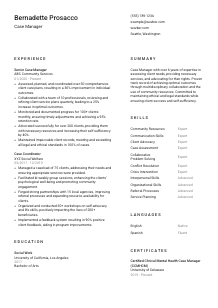
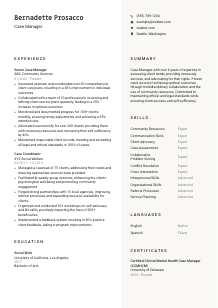
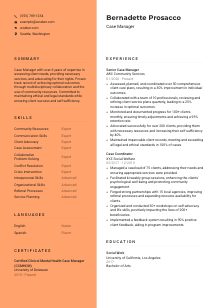
Coordinating cases but your CV feels out of order? Explore this Case Manager CV example, created with Wozber free CV builder. It shows how to present your problem-solving prowess to match job nuances, ensuring your career journey follows a clear and impactful trajectory!
Case management work sits at the point where assessment, advocacy, coordination, and documentation all affect a client's outcome. Hiring teams look for CVs that make that practice visible: how you built care plans, managed caseloads, worked across disciplines, connected clients to community resources, and kept records compliant with legal and ethical standards.
When those details are tailored to the posting, your background reads less like general social services experience and more like direct case management practice. Wozber's free CV builder helps you line up your language with the job description, keep an ATS-compliant CV structure, and bring forward the parts of your work history that show you can coordinate services, monitor progress, and advocate effectively from day one.
Case Manager CVs are often reviewed quickly for practical details before anyone studies your caseload results or service planning experience. This section should confirm who you are, how to reach you, and whether you meet any logistical requirement the employer named.
Put your full name at the top in a clean, readable format. Keep it slightly more prominent than the rest of the page so the document feels organised from the first line, especially in an ATS-friendly CV template where structure matters.
Place "Case Manager" directly under your name if that is the role you are pursuing. Matching the posted title helps frame the rest of your CV around care coordination, client advocacy, referral management, and service planning rather than broader human services work.
Include a current phone number and a professional email address you check regularly. In this field, responsiveness matters. If a hiring team wants to schedule an interview about your experience with care plans, multidisciplinary coordination, or community referrals, they should be able to reach you without friction.
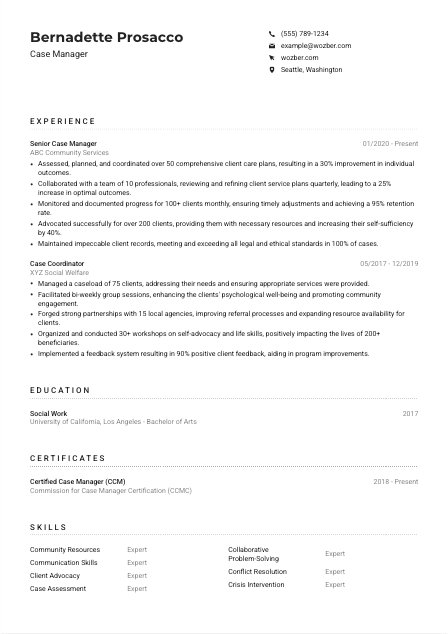
If the employer requires a specific location or relocation readiness, say so plainly in your city and state line. Here, listing Seattle, Washington directly answers a stated requirement and removes doubt about availability. Use this only when location is relevant to the application, not as a rule for every Case Manager CV.
Include LinkedIn or a professional website only if it strengthens your application. For case management, that usually means a profile with consistent job dates, credentials, and a work history that supports your CV, not a generic social link.
This section should quickly confirm identity, contact information, target role, and any location requirement. Once those basics are clear, the reader can focus on your client work, coordination experience, and outcomes.




The strongest Case Manager experience sections do more than list duties. They show how you assessed needs, managed caseloads, coordinated services, documented progress, and improved outcomes for clients, programs, or partner teams.
Read the responsibilities line by line and mark the verbs that define the job, such as assess, plan, coordinate, monitor, advocate, and maintain records. Then rewrite your past work so those same functions are visible through your own results. If a posting emphasizes comprehensive care plans and referral processes, your bullets should show where you handled those workflows in practice.
List jobs in reverse chronological order with title, employer, and dates. For case management roles, titles such as Case Manager, Senior Case Manager, Care Coordinator, or Social Worker should be easy to spot, because hiring teams often scan for direct service experience before reading deeper into the bullets.
Each bullet should pair a core case management action with a measurable result, scope, or service impact. The sample does this well with lines like coordinating more than 50 care plans and improving client outcomes by 30%. That kind of wording shows caseload responsibility, intervention scope, and the effect of your work in one sentence.
Use metrics that make sense for the field: caseload size, number of care plans, referral volume, retention, client feedback, workshop attendance, agency partnerships, or documented improvements in self-sufficiency and service access. In the example, monthly monitoring for 100+ clients and 95% retention gives a hiring manager a much clearer picture than a generic line about "tracking progress."
Prioritise experience that connects directly to client assessment, service planning, interdisciplinary collaboration, crisis support, community resource navigation, and compliant documentation. Even if part of your background sits in adjacent areas such as program support or outreach, frame it through the case management functions you performed, not through unrelated administrative tasks.
By the end of this section, a hiring manager should be able to see your caseload scope, your coordination methods, and the outcomes you influenced. That is what separates a generic social services CV from a Case Manager application with real traction.
For Case Manager roles, education is usually a qualification checkpoint, not a decorative section. It should quickly show that you have the academic background expected for client-facing work, care planning, behavioral support, or social services coordination.
If the posting asks for a bachelor's degree in Social Work, Psychology, or a related field, make sure that requirement is easy to find. A degree such as "Bachelor of Arts in Social Work" directly supports your eligibility and helps your CV pass early screening.
List degree, field of study, school, and graduation year in a consistent order. Clean formatting helps both human reviewers and ATS parsing, especially when the employer is screening for a specific academic background before moving on to experience and certifications.
Spell out the discipline instead of leaving it vague. "Social Work" or "Psychology" carries more value here than a broad label because it connects your training to assessment methods, client support principles, ethics, and service coordination.
If you are earlier in your career, coursework in counseling methods, crisis intervention, behavioral health, family systems, or community services can help bridge to practice. If you already have several years of case management experience, keep the focus lighter and let your work history carry more weight.
Additional training, specialised programs, or professional memberships can reinforce your foundation in client care and social services. Keep them relevant to the work, especially if they connect to referral systems, mental health support, trauma-informed practice, or care coordination.
This section does its job when the reader can immediately confirm that your education meets the baseline for case management work. Clear degree information helps your experience and certifications land faster.
Certifications are especially useful in case management because they signal continued professional development and, in some settings, a stronger grasp of standards, documentation, and coordinated care practice. They are often a differentiator when several applicants share similar frontline experience.
When a posting mentions case management certification as a plus, bring relevant credentials forward. For this opening, examples like CCM or other recognized case management certifications speak directly to the employer's language and can help distinguish your CV from applicants with experience alone.
List credentials that reinforce the core job: care coordination, client advocacy, behavioral health support, documentation standards, or social services case practice. The sample's Certified Case Manager and mental health case management credential are good illustrations because they match the service environment and responsibilities described.
Include the year earned and, when relevant, renewal or active status. That matters for certifications tied to current standards or continuing education, and it gives employers confidence that your knowledge is up to date.
As your career develops, add certifications that reflect the populations and settings you serve, whether that is behavioral health, disability services, hospital discharge planning, housing support, or community-based care. Choose development that sharpens your actual practice rather than padding the section.
A focused certifications section tells the employer that your knowledge has kept pace with the demands of coordinated client care. That extra layer can matter when the role calls for strong judgment, documentation discipline, and cross-functional service planning.
Case Manager skills should read like the toolkit you use to move clients through assessment, planning, referrals, follow-up, and advocacy. This section works best when it mirrors the language of the role while staying grounded in abilities you use in practice.
Start with the abilities named or implied in the posting. In this one, that includes knowledge of community resources, referral processes, communication, organisation, and collaborative care planning. Those terms belong in your skills section if they reflect your actual experience.
Lead with skills tied to client care and service delivery, such as case assessment, care planning, client advocacy, crisis intervention, community resource coordination, and collaborative problem-solving. General soft skills matter, but they carry more weight when surrounded by concrete practice skills that show how you work.
Avoid filling this section with every ability you have picked up across your career. A tighter list is easier to scan and more persuasive, especially when it includes terms that support the role directly, like referral processes, documentation, conflict resolution, and service planning.
A hiring team should be able to glance at this section and recognize the functions you can handle immediately. Make the list reflect real case management practice, not broad workplace traits.
Language ability can matter in case management because communication affects assessment quality, trust, service access, and follow-through. When language is listed on your CV, it should help the employer understand how you work with clients, families, and partner agencies.
If the employer requires strong English, list English clearly with an honest proficiency level. That is a direct screening point in this opening, so make it easy to find.
After the required language, include others that could strengthen client communication in your target setting. In the sample, Spanish is a practical addition because multilingual ability can support rapport, referrals, and service navigation in diverse communities, though it is an advantage rather than a universal requirement.
Terms like Native, Fluent, Professional, Conversational, or Basic are easier to understand than vague wording. Precision matters because language ability in client-facing work affects expectations around interviews, documentation, interpretation needs, and direct support.
Not every Case Manager role gives the same weight to multilingual ability. Community-based programs, behavioral health settings, family services, and public-facing agencies often value it more because communication barriers can affect engagement and outcomes.
Ongoing language study can be worth mentioning when it supports the populations you serve, but keep it brief. The priority is showing usable communication ability that helps with client interactions, service coordination, or community outreach now.
Done well, this section shows more than fluency. It tells the employer how you may broaden access, reduce communication barriers, and support clients more effectively.
A Case Manager summary should establish your practice area, experience level, and the kind of client outcomes you help produce. In a few lines, it should connect your background to the employer's need for coordinated care, resource navigation, and accountable follow-through.
Read the role closely before writing. If the employer emphasizes care planning, progress monitoring, multidisciplinary collaboration, and advocacy, those are the themes your summary should reflect rather than generic statements about helping people.
Open with your title and years of experience, such as "Case Manager with 6+ years of experience" or a closely accurate version of your background. That immediately gives context for the caseload complexity, service environments, and coordination responsibilities the reader can expect to see.
Choose details that connect your track record to the job, such as managing complex care plans, improving client outcomes, building referral partnerships, or maintaining compliant records. The sample summary works because it combines years of experience, advocacy, community resources, and multidisciplinary collaboration without drifting into vague claims.
Aim for a short paragraph that can be read quickly. In case management hiring, a summary works best when it sounds like practice, not philosophy. Focus on client needs assessment, service coordination, documentation standards, and outcomes rather than broad personal traits.
Your summary should make the rest of the CV easier to interpret. When it is tailored well, the employer already knows you understand client care coordination and can carry a caseload with structure, judgment, and follow-through.
A Case Manager CV works when each section supports the same hiring picture: you can assess client needs, coordinate services, work across teams, document accurately, and advocate with consistency. That clarity matters in both human review and ATS optimisation.
Use Wozber to tighten that alignment from top to bottom. Wozber's free CV builder, ATS CV scanner, and ATS-friendly CV format help you match your experience to the posting, surface missing keywords naturally, and present your work in a structure that keeps care coordination, client outcomes, and compliance easy to read.
When your CV reflects the real mechanics of case management, the employer can quickly see you are prepared to step into the caseload and contribute.




