



Use Wozber and land your dream job
Create CV
No registration required
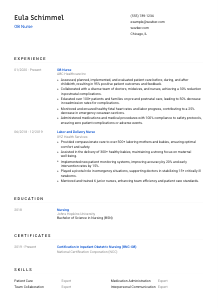
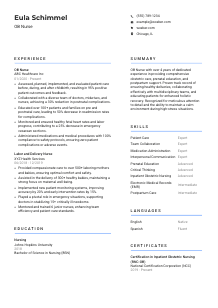
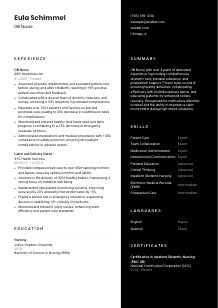
Welcoming new lives, but your CV still feels like it's in the nursery? Check out this OB Nurse CV example, created with Wozber free CV builder. It shows how to present your compassionate care in line with job requirements, setting your career on its way to growth and fulfillment!

OB nursing sits at the point where clinical judgment and steady patient support have to work together in real time. Hiring teams read these CVs looking for clear proof that you can monitor labour safely, respond to changes in maternal or fetal status, educate families, and stay composed in a high-acuity unit where every handoff and intervention matters.
The fastest way to make that visible is to tailor your CV around obstetric care tasks and outcomes, not general nursing language. Wozber's free CV builder helps you shape an ATS-compliant CV around the terms a maternity unit is already using, so your labour monitoring, postpartum care, patient education, and team-based clinical work are easier to recognize from the first scan.
In hospital hiring, the top of the CV should answer practical questions quickly. For an OB Nurse, that means showing a clear professional identity, reliable contact information, and any location detail that removes friction for scheduling, licensure review, or relocation planning.
Use your full name in a clean, readable format so it stands out immediately. In nursing hiring, clarity matters more than styling. The header should feel professional and easy to scan, especially when your CV is being reviewed alongside other RN candidates from labour and delivery, postpartum, or broader acute care backgrounds.
Place "OB Nurse" directly under your name if that matches the role you are pursuing. This helps position you for obstetric openings right away and keeps your CV aligned with the posting. If your recent title was "Labour and Delivery Nurse," you can still tailor the heading toward the target role when your experience clearly covers antepartum, intrapartum, or postpartum care.
Include a dependable phone number and a professional email address with no unnecessary extras. Double-check every character. A missed digit or typo can delay an interview request, shift assignment follow-up, or credentialing conversation, which is avoidable and costly in fast-moving healthcare recruitment.
If the employer requires local availability, include your city and state. Here, listing "Chicago, IL" directly addresses the stated location requirement. If you are relocating, note that clearly instead of leaving the employer to guess. For nursing roles tied to state licensure and on-site unit work, location is often a practical screening point, not a minor detail.
Add LinkedIn only if it supports your candidacy with consistent work history, credentials, and nursing-focused detail. If your profile includes specialty certifications, hospital experience, precepting work, or EMR familiarity, it can reinforce the picture your CV is already building. Keep the content aligned with your CV dates and titles.
Your personal details section should remove questions, not create them. A clear name, matching title, accurate contacts, and any needed location detail help the employer move faster to the part that matters most, your obstetric nursing experience.




For OB Nurse hiring, experience carries the most weight when it shows what kind of patients you cared for, how you worked during labour and delivery, and what outcomes improved because of your care. Generic nursing bullets get lost. Specific obstetric responsibilities, measurable results, and team-based clinical context do the real work here.
Read the posting closely and pull out the actual care functions it names. For this role, that includes assessing patients before, during, and after childbirth, monitoring fetal heart rates and labour progress, administering medications, educating families, and coordinating with multidisciplinary teams. Your experience bullets should use that language where it reflects your real work, so the match is clear to both an ATS and a nurse manager.
List your most recent nursing role first, then work backward. For each position, include your job title, employer, and dates so the reader can track your progression from broader labour and delivery care into more specialised obstetric responsibility. This format works especially well when you already meet the posting's minimum of 2 years in OB nursing or labour and delivery.
Each role should show what you handled and what changed because of your work. In OB nursing, strong bullets often reference patient volume, complication reduction, delivery support, fetal monitoring, readmission outcomes, safety compliance, or family education. The sample CV does this well by connecting care planning to 95% positive patient outcomes and team collaboration to a 30% reduction in postnatal complications.
Use numbers that fit how obstetric care is measured. That can include number of patients educated, deliveries supported, reduction in emergency cesarean sections, readmission rates, adverse event rates, compliance figures, or improvements in monitoring accuracy. Metrics like "educated 100+ patients and families" or "assisted in 300+ healthy deliveries" give hiring teams a practical sense of your pace, reliability, and impact in a maternity setting.
Keep the section focused on nursing work that supports your candidacy for obstetric care. If an older role is outside healthcare, include it only if it fills a timeline gap or adds something directly relevant, such as patient communication in high-stress environments. Otherwise, use the space for labour support, postpartum care, emergency response, charting systems, or cross-functional collaboration with physicians, midwives, and neonatal staff.
A hiring manager should be able to scan your experience and picture you on the unit. When your bullets show labour support, fetal monitoring, patient education, safety, and measurable care outcomes, your CV starts to read like someone ready for obstetric practice, not just general bedside nursing.
Education is usually a quick check in nursing recruitment, but it still needs to be exact. For an OB Nurse opening, the degree line confirms that you meet the nursing education threshold and gives the employer one more reason to keep moving your application forward.
Start with the degree the employer asked for. This posting accepts a BSN or ADN from an accredited institution, so list your nursing degree exactly and avoid vague abbreviations without context. If you hold a BSN, as in the example CV, that should be visible at a glance because it directly satisfies the requirement.
Keep the entry simple: degree, field, school, and graduation year. Nursing education sections do not need extra decoration. Recruiters and clinical leaders usually want to confirm the credential quickly before moving on to licensure, specialty training, and relevant unit experience.
If you have multiple degrees, lead with the nursing credential that qualifies you for the role. For obstetric positions, your RN pathway matters more than unrelated academic history. A clearly listed BSN in Nursing or ADN keeps the CV focused on what the employer must confirm first.
If you are newer to practice, relevant coursework or clinical rotations can strengthen the section. Maternal-newborn nursing, neonatal care, women's health, or labour and delivery practicum experience can add useful context when your full-time OB record is still developing. If you already have solid bedside experience, the degree alone is usually enough.
Dean's List, nursing honors, or leadership in student nursing organizations can support your profile if they are recent and relevant. Keep these additions brief. The main value of this section is confirming your nursing education, not turning it into a long academic narrative.
Your education section should confirm, in seconds, that you meet the role's nursing requirement. Once that is clear, the employer can focus on licensure, obstetric experience, and the kind of patient care you have delivered on the floor.
In obstetric nursing, certifications do more than decorate the page. They show legal eligibility to practice and, in some cases, deeper specialty commitment to maternal and newborn care. This section should make those credentials easy to spot and current.
Put your active RN license on the CV and include any obstetric specialty certification that matches the posting. Here, the essentials are a valid Registered Nurse license and, preferably, the RNC-OB credential. Those two items immediately signal that you are both qualified to practice and engaged in the specialty.
List certifications that matter for labour, delivery, postpartum, or inpatient maternal care before broader or less relevant credentials. If space is limited, an OB-focused certification, RN license, and any high-value maternity or acute-care credentials should come before unrelated continuing education items.
Include the year earned and, when applicable, the active date range or renewal status. In regulated clinical roles, current credentials matter. The example CV handles this well by showing both the RNC-OB certification and Illinois RN license as active, which removes doubt during initial screening.
If you are working in labour and delivery now, continuing education and specialty certification can help you compete for stronger OB roles. Staying current with obstetric standards, fetal monitoring practices, and inpatient maternal care expectations shows that your clinical development is moving with the specialty, not standing still.
This section should quickly confirm that you can practice and that you have invested in obstetric nursing as a specialty. When licensure and relevant certifications are easy to find, the employer can move on with confidence to your unit experience and patient outcomes.
The skills section works best when it reflects how obstetric nursing is actually performed. That means a blend of bedside care, labour support, clinical judgment, communication, and coordination with physicians, midwives, and other nursing staff. Keep it specific enough to support the posting, but concise enough to scan quickly.
Start with the exact capabilities the employer mentions, then add closely related skills you genuinely use. In this case, patient care, communication, critical thinking, medication administration, and multidisciplinary collaboration are core. From there, add specialty-relevant skills such as fetal monitoring, postpartum care, prenatal education, EMR documentation, or inpatient obstetric nursing when those reflect your background.
Give priority to skills that distinguish you from a general RN applicant. "Inpatient Obstetric Nursing," "Prenatal Education," and "Postpartum Care" say more about your fit than a long list of broad nursing traits. The sample CV balances this well by pairing foundational skills like medication administration with OB-specific strengths and EMR experience.
Keep the list tidy and easy to interpret. You can separate technical and interpersonal skills if the format allows, or simply order the list so the most relevant clinical competencies appear first. Avoid filling the section with every soft skill you can name. In OB hiring, targeted skills tied to labour support, patient education, documentation, and safe care delivery carry more weight.
A useful skills section reinforces the kind of nurse you are. When it reflects real obstetric workflows and patient care responsibilities, it helps the reader place you in the role much faster.
OB nurses spend much of their shift explaining, reassuring, documenting, and coordinating. Language ability matters because labour support, discharge teaching, and family communication all depend on being understood clearly, especially when patients are anxious, in pain, or processing complex instructions.
If the posting calls for English fluency, list English clearly with an accurate proficiency level. That directly answers a stated requirement and confirms you can handle patient education, charting, provider communication, and shift handoffs in the expected language of the unit.
Lead with the language the employer specifically requires. For this opening, English should appear first so there is no ambiguity during screening. This is especially useful in healthcare roles where communication affects informed consent, medication instructions, and escalation of care.
Additional languages can be a meaningful advantage in maternity settings that serve diverse communities. The example includes fluent Spanish, which can strengthen patient rapport and help with education around prenatal care, labour expectations, and postpartum recovery. Treat extra languages as a value-add, not a substitute for core clinical experience.
Use honest labels such as native, fluent, intermediate, or basic. In patient care, overstating language ability can create real communication risk. Only claim a level you can use confidently in clinical conversations, family education, or care coordination.
If your hospital or target employer serves multilingual patient populations, language skills may deserve more emphasis. In some OB settings, bilingual ability helps with bedside teaching, discharge instructions, and emotional support during labour. Include it when it reflects real capability and is likely to matter in practice.
Language skills matter most when they improve care delivery. Listed accurately, they show that you can educate, reassure, and coordinate with the clarity obstetric nursing requires.
Your summary should quickly tell the reader what kind of obstetric nurse you are, how much relevant experience you bring, and which parts of the work you do especially well. In a few lines, it should connect your background to labour support, maternal-newborn care, and the clinical environment you are ready to step into.
Review the posting before you write. For this role, the summary should reflect obstetric patient care, labour and delivery experience, teamwork, education of patients and families, and sound clinical judgment. Starting from those priorities keeps the top of your CV aligned with what the employer needs most.
Your first line should identify you as an OB Nurse or labour and delivery nurse and state your years of relevant practice. The sample summary does this effectively with "over 4 years of dedicated experience," which immediately establishes specialty depth and timeframe.
Use the remaining lines to highlight the parts of your work that matter most for the role. That could include fetal monitoring, safe medication administration, patient and family education, postpartum support, emergency response, or collaboration across the care team. If you mention accomplishments, keep them grounded in outcomes that fit obstetric care rather than broad claims about being passionate or hardworking.
Aim for three to five lines with no filler. A concise summary gives the reader a fast clinical snapshot before they move into your experience section. Focus on specialty, scope, and patient-care strengths, and leave the full detail for your bullet points below.
When written well, the summary tells the employer exactly what kind of obstetric nurse is on the page. It should make your labour and delivery background, patient-care focus, and unit-level value clear before the reader reaches the first job entry.
An effective OB Nurse CV shows more than compassion. It shows how you monitor labour, support safe deliveries, educate families, document accurately, and work alongside physicians, midwives, and fellow nurses under pressure.
Use Wozber's free CV builder to organise that experience into an ATS-friendly CV template, then refine the language with the ATS CV scanner so the requirements in the posting connect naturally to your licensure, obstetric experience, and patient-care results.
When those pieces are clear, your CV gives hiring teams a straightforward read on whether you are ready to step into labour, delivery, and postpartum care with confidence.




