



Use Wozber and land your dream job
Create CV
No registration required
Tending to patients, but your CV feels a bit under the weather? Inject some health into your career with this Nurse CV example, created with Wozber free CV builder. Learn how to showcase your bedside manner and medical expertise to match job requirements, nurturing your nursing journey just as you do your patients!
Nursing CVs are read through the lens of patient care. Hiring teams want to see how you assess changing conditions, administer treatment safely, document accurately, and communicate with patients, families, and clinicians under real clinical pressure. If those parts are buried under generic duty lists, your CV will not reflect how nurses are actually trusted on the floor.
A tailored CV makes your clinical background easier to sort quickly, especially when the role asks for items like RN licensure, BLS or CPR, care plan documentation, and team-based care. Wozber's free CV builder helps you shape that experience into an ATS-compliant CV with the right nursing language, so the screening process picks up both your credentials and the patient-care work behind them.
In nursing, the top of the CV should answer the practical questions immediately: who you are, what role you hold, and how a recruiter or nurse manager can reach you. Keep this section clean and professional so attention stays on your license, clinical experience, and care delivery background.
Use your full name in a larger, readable font so it anchors the page. This sounds basic, but in healthcare hiring, fast scanability matters, especially when recruiters are moving through many RN applications tied to specific units or shifts.
Place "Nurse" or the more specific title you are targeting, such as "Registered Nurse" or "Clinical Nurse," directly under your name. Aligning your headline with the posting helps frame the rest of your CV and keeps your clinical identity clear from the first line.
Include a reliable phone number and a professional email address. In a field where interviews can move quickly around staffing needs, make it easy for a recruiter, unit manager, or HR coordinator to contact you without hesitation.
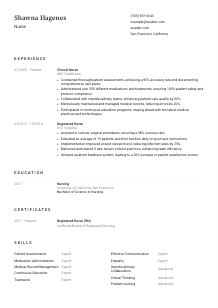
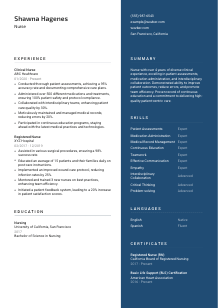
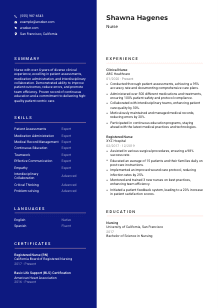
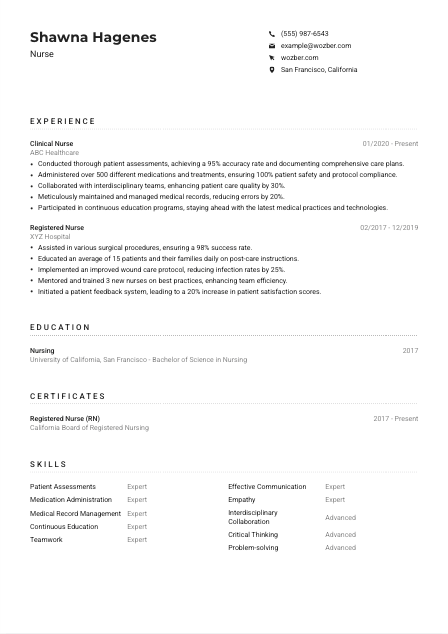
If the employer wants someone already based in a certain area or open to relocation, include your city and state. In the example, listing "San Francisco, California" immediately addresses the posting's location requirement without taking up extra space.
Add LinkedIn or another professional profile if it supports your nursing background with consistent job titles, education, licenses, or healthcare-related achievements. Skip social links unless they directly strengthen your professional presentation.
Keep the personal details section simple, accurate, and job-aligned. It should remove logistical questions right away and leave the reader ready to focus on your patient care experience.




For a nurse, experience is where clinical credibility is built. This section should show the settings you have worked in, the patient care you handled, the standards you followed, and the outcomes you influenced through assessment, treatment, education, and collaboration.
Start by marking the responsibilities and requirements that define the role. For this position, that includes patient assessments, medication administration, care plan education, interdisciplinary teamwork, accurate medical records, and at least 2 years of clinical experience. Those are the themes your bullets should reflect, using natural nursing terminology for ATS optimisation rather than vague corporate wording.
List your current or most recent nursing role first, then work backward. Include job title, employer, and dates clearly. That layout helps a hiring manager quickly understand your recent level of responsibility, care setting, and progression from earlier bedside or unit-based roles to broader clinical scope.
Nursing work is full of expected responsibilities, so your bullets need to show how well you carried them out. Instead of writing that you "administered medications," show scale, safety, or consistency. The sample does this well with details like administering more than 500 medications and treatments while maintaining full protocol compliance.
Quantify outcomes where the numbers reflect actual nursing performance. Accuracy rates, reduced charting errors, infection-rate improvements, patient satisfaction, number of patients educated, or quality gains from team coordination all give substance to your work. The example's 95% assessment accuracy rate and 20% reduction in record errors make routine responsibilities more concrete and credible.
Prioritise bullets that show patient monitoring, treatment execution, documentation quality, family education, care coordination, and clinical judgment. If you have unrelated work history, condense it so your CV stays centered on bedside care, healthcare settings, and the nursing skills most relevant to the role you are targeting.
Your experience section should show more than time in a healthcare setting. It should show how you delivered safe care, worked with the clinical team, and improved patient outcomes in ways that matter to a nursing manager.
Education carries real weight in nursing because it confirms your formal training and eligibility path into practice. Present it clearly so the reader can immediately see that your degree supports your RN credentials and clinical background.
Read the posting carefully and make sure your education reflects the level requested. Here, the employer accepts a Bachelor's or Associate's degree in Nursing from an accredited institution, so that credential should appear clearly and without abbreviations that create ambiguity.
List the degree, field of study, school name, and graduation year or date. That is usually enough for an experienced nurse. A clean structure helps both ATS parsing and quick review by recruiters who need to confirm nursing education before moving to licensure and experience.
Mirror the language of the job posting when it accurately reflects your degree. For example, writing out "Bachelor of Science in Nursing" instead of only "BSN" can help the credential register more clearly in both ATS screening and human review.
If you are early in your nursing career, relevant clinical rotations, senior practicum work, or specialty coursework can help show exposure to med-surg, pediatrics, behavioral health, or other settings. If you already have several years of RN experience, keep the focus on the degree and let your experience carry the detail.
Honors, leadership in nursing student organizations, or research tied to patient care, public health, or clinical quality can strengthen this section, especially for newer nurses. For more experienced candidates, include them only if they reinforce a specialty area or demonstrate a pattern of professional commitment.
Make your nursing education easy to confirm at a glance. Once that foundation is clear, the reader can move quickly to the credentials and bedside experience that carry the rest of your application.
For nurses, this section is not optional polish. It confirms whether you can legally practice, meet unit requirements, and step into patient care without avoidable delays. Put the most relevant credentials where they are easy to spot.
Pull the mandatory items from the posting and make sure they appear exactly and prominently. In this case, that means a valid state RN license and current BLS or CPR certification. If a role also asks for ACLS, PALS, or a specialty credential, move those up as well.
Focus on licenses and certifications that support the position you want. A concise list keeps attention on the qualifications tied to safe clinical practice, onboarding readiness, and the care environment rather than on unrelated training.
Include issue or active dates when relevant, especially for credentials that require renewal. In the sample, both the RN license and BLS certification are shown as active, which helps reassure the employer that the candidate is current and eligible to practice.
Nursing practice changes with protocols, technologies, and standards of care. If you maintain additional clinical certifications or complete recognized continuing education in a specialty area, include them when they strengthen your relevance for the job.
Licenses and certifications should answer one question immediately: are you qualified and current for this nursing role? When that answer is clear, the rest of the CV carries more weight.
A nurse's skills section should reflect how care is actually delivered. That means balancing technical competencies such as medication administration and charting with the communication, teamwork, and judgment needed in patient-facing clinical work.
Review the job description for both stated and implied skills. Here, interpersonal communication, teamwork, critical thinking, problem-solving, patient assessments, documentation, and safe treatment administration all belong on the CV because they map directly to the daily work.
Every skill you list should be backed by your experience, certifications, or summary. If you claim strength in interdisciplinary collaboration, your experience section should show real examples such as working with physicians, therapists, or care teams to improve outcomes.
Include a mix of hard and soft skills that reflect real nursing practice. Skills like patient assessments, medication administration, medical record management, and care-plan education pair naturally with empathy, communication, teamwork, and critical thinking. The sample skill list works because it stays close to bedside care and team-based clinical work rather than drifting into generic CV language.
Choose skills that reflect actual nursing work and match the role's care environment. A concise, relevant list tells the reader what you can walk in and do safely, consistently, and well.
Language skills can matter greatly in nursing, especially when patient understanding, discharge instructions, and family communication affect care quality. List them clearly when they strengthen your ability to work with the population served.
Check whether the employer names a required language. This posting asks for effective English in a professional setting, so English proficiency should appear clearly if it is not already obvious elsewhere in your application.
Order languages by relevance to patient care and workplace communication. If you speak the primary language used in charting, handoffs, and education, place it at the top with an honest proficiency level such as native, fluent, or professional.
Additional languages can be a real advantage in hospitals, clinics, and community settings serving diverse populations. In the example, Spanish adds practical value because it may help with patient education, rapport, and clearer communication during care.
Use accurate labels for your speaking ability. In healthcare, overstating proficiency can create risk during patient interactions, education, and consent-related conversations, so clarity matters more than ambition here.
When language skills are relevant, they show more than communication range. They suggest stronger patient trust, smoother family discussions, and fewer misunderstandings around treatment instructions or follow-up care.
If your language ability helps you educate patients, support families, or communicate across a diverse care setting, make that visible. It can be a meaningful advantage in nursing roles built on trust and clarity.
The summary should quickly place you in the right clinical lane. For a nurse, that means stating your experience level, patient-care strengths, and the kind of impact you have had in settings where safety, documentation, and teamwork matter every shift.
Review the posting and identify the few priorities your summary needs to cover. In this case, the employer is looking for clinical experience, patient assessments, safe medication and treatment delivery, teamwork, communication, and sound judgment. Use those themes to shape the opening lines.
Start with a direct statement that gives your title and years of experience. A line like "Nurse with over 4 years of clinical experience" works because it immediately establishes role relevance and meets the posting's request for at least 2 years in a healthcare setting.
Choose strengths that matter in practice, not generic personality claims. Patient assessments, medication administration, record accuracy, patient and family education, and interdisciplinary collaboration are all stronger summary material than broad terms that could belong to any profession.
Finish with one concise line about the results you contribute, such as improving care quality, reducing errors, or supporting efficient team-based care. The sample summary does this well by linking experience to better outcomes, fewer errors, and patient-centered care without becoming too long.
Your summary should make the reader expect a capable nurse before they reach the first job entry. Keep it brief, clinically relevant, and aligned with the kind of care environment you want to join.
A nurse CV works best when it shows the realities of practice clearly: clinical experience, active credentials, safe medication and treatment delivery, documentation accuracy, patient education, and dependable collaboration across the care team. When each section reflects those priorities, hiring managers can quickly see whether you are ready for the floor, the unit, or the specialty area they need to staff.
Use Wozber's free CV builder to shape your content into an ATS-friendly CV format, align your language with the posting, and strengthen ATS optimisation without losing the clinical detail that makes your background credible. The final result should make one thing easy to judge: you can deliver patient care with competence, professionalism, and trust.