




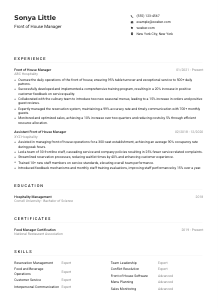
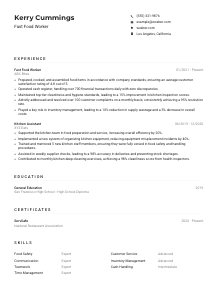
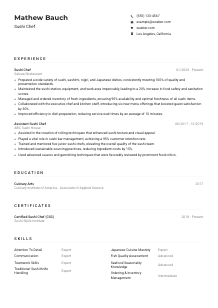
Use Wozber and land your dream job
Create CV
No registration required
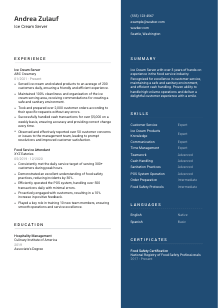
Scooping silky swirls, but your CV leaves you feeling melty? Check out this Ice Cream Server CV example, made with Wozber free CV builder. Learn how to layer your dessert devotion to match any job sundae, ensuring your career path is as sweet as the toppings bar!
Ice Cream Server work looks simple on the surface, but hiring teams notice the details fast. They want to see someone who can keep service moving, handle custom orders accurately, stay calm during rushes, and keep the counter clean and food-safe while still making customers feel welcome. Your CV should make that day-to-day reliability visible, not just say you are friendly.
A tailored CV changes what stands out first. When your experience, skills, and summary reflect service speed, POS accuracy, sanitation habits, and product knowledge, the employer can quickly connect your background to front-counter work. Wozber's free CV builder helps organise that into an ATS-compliant CV with language that matches the posting, so your application reads like someone ready to serve customers well from day one.
For an Ice Cream Server, the top of the CV should feel straightforward and work-ready. This section is not where you add personality flourishes. It is where you make it easy to contact you, place you, and connect you to the job immediately.
Place your full name at the top in a slightly larger font than the rest of the CV. Keep it clean and professional. In a customer-facing role where first impressions matter, a clear header sets the same tone as a tidy service counter.
Add "Ice Cream Server" directly beneath your name if that is the position you are applying for. Matching the posted title helps the employer instantly understand your intent and keeps your CV aligned with the role instead of sounding generic food service.
Include a phone number you answer, a professional email address, and only links that add value. If you include a website or LinkedIn profile, make sure it matches your CV and reflects service experience, hospitality work, or customer-facing achievements rather than unrelated content.
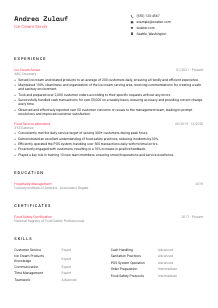
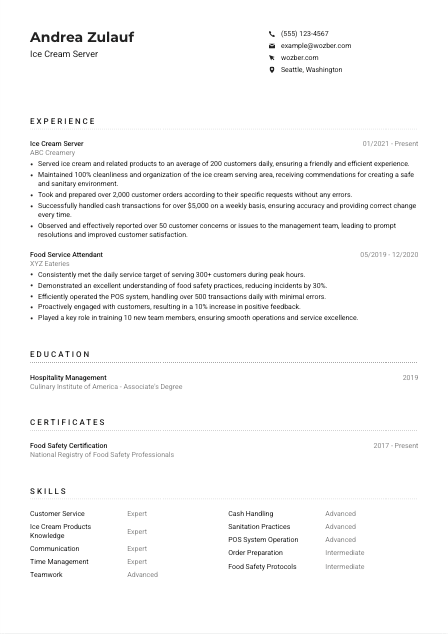
If the job asks for local availability, include your city and state. Here, listing Seattle, Washington directly addresses the employer's stated preference and removes a practical question before it slows your application down. For other openings, use location only when it helps clarify availability.
A LinkedIn profile can help if it reinforces your work history, food service background, or certifications. Leave it off if it is outdated or bare. For this kind of role, consistency matters more than having every possible link.
Your personal details should answer the basics immediately: who you are, what role you want, how to reach you, and whether location is already covered. That keeps attention on your service experience instead of administrative gaps.




Experience does the heaviest lifting on an Ice Cream Server CV. Managers want to picture you handling customer flow, preparing orders correctly, taking payments without mistakes, and keeping the serving area clean during busy shifts. Your bullets should read like actual front-of-house performance, not vague claims about being a people person.
Start by marking the responsibilities and requirements that define the job. For this opening, that includes serving customers efficiently, preparing orders to request, handling cash and POS transactions, keeping the area sanitary, and communicating concerns to management. Then match each of those points to something you have already done in customer service or food service.
Put your most recent and most relevant position first. Include job title, employer, and dates. For this kind of CV, recent front-counter, café, dessert shop, concession, or broader food service work usually matters more than older unrelated experience because it shows current pace, customer interaction, and cash-handling habits.
Each bullet should show what you handled and how well you handled it. Instead of writing "responsible for serving customers," write bullets that show volume, accuracy, cleanliness, or customer response. The sample CV does this well with points like serving an average of 200 customers daily and preparing more than 2,000 orders without errors.
Quantify performance where you can. Useful metrics for this role include customers served per shift or day, orders completed, transaction volume, cash totals handled, error rates, cleanliness scores, training support, or customer feedback. Numbers like "$5,000 handled weekly" or "300+ customers during peak hours" make service pace and trustworthiness much more concrete.
Prioritise experience that supports this job directly. Customer interaction, food prep, sanitation, teamwork, and POS use belong here. If an older role does not add anything to those areas, trim it back or leave it off. A shorter, focused experience section is usually stronger than a longer one filled with unrelated tasks.
After reading your experience section, a manager should be able to tell that you can handle a busy service environment, protect food safety standards, process orders accurately, and keep customers moving through the line without losing the human side of service.
Education rarely decides an Ice Cream Server hire on its own, but it can still strengthen the application. It helps most when it connects to hospitality, food service, customer care, or general reliability and follow-through.
Some service jobs do not ask for a degree, and this one does not require a specific academic background. That means education should support your CV, not dominate it. Keep the emphasis on experience unless your schooling is especially relevant to hospitality or food operations.
List the school name, degree, field of study, and graduation year or date. A simple entry such as an Associate's Degree in Hospitality Management works well because it adds service context without taking space away from customer-facing experience.
If your degree, diploma, or training relates to hospitality, food handling, business operations, or customer service, make that connection clear. In the example, Hospitality Management supports the front-of-house nature of the role even though it is not a formal requirement.
If you are early in your career or have limited work experience, a short note about courses in food safety, hospitality operations, customer relations, or retail service can add substance. If you already have several years of strong food service experience, coursework is usually less important.
Student activities, projects, or awards can stay if they show something useful for the role, such as teamwork, customer interaction, event service, or leadership. Leave out details that do not strengthen the case for working effectively in a fast-moving food service setting.
Treat education as supporting material. Include enough detail to show your background, and let it reinforce service ability, hospitality awareness, or food-related training without overshadowing the experience section.
Certifications carry real weight in customer-facing food roles when they connect to safety, sanitation, or responsible handling. For an Ice Cream Server, even one relevant certificate can strengthen trust immediately.
When a posting mentions Food Safety or Food Handler certification, put any related credential in this section clearly. That is one of the most directly relevant additions you can make because it connects to sanitation, safe service practices, and day-to-day compliance.
Choose certificates that support the actual work. Food safety, sanitation, allergen awareness, customer service training, or POS-related training all make more sense here than broad certificates with no link to front-counter operations.
Include the certificate name, issuer, and date, especially if it is active or renewed. In food service, current status matters because hiring managers want to know your knowledge reflects present-day safety standards, not outdated training.
Even when certification is listed as preferred rather than required, it can still separate you from another candidate with similar service experience. If you do not yet have one, earning a Food Handler or Food Safety certificate is a practical upgrade for future applications in cafés, dessert shops, and other quick-service settings.
A relevant certificate tells the employer you are already familiar with safe food handling and service expectations. For a role built around cleanliness and customer trust, that is useful information to surface quickly.
The skills section should mirror how the work actually gets done. For an Ice Cream Server, that means balancing customer interaction, product knowledge, hygiene, speed, and basic transaction accuracy. Skip vague filler and list the abilities you can use on shift.
Start with the language in the posting. Here, the clearest choices include customer service, communication, teamwork, knowledge of ice cream products and flavors, cash handling, POS system operation, sanitation practices, and English proficiency. These are the terms most likely to match what the employer expects to see.
Put the most job-relevant skills first rather than listing everything you have ever done. For this role, customer service, order preparation, cash handling, and cleanliness usually carry more hiring value than generic strengths like "hardworking" or "positive attitude." The sample skill list works because it stays tied to the counter, the product, and the customer.
Use realistic proficiency levels if your format includes them, and avoid inflating weaker areas. A smaller list of accurate, role-specific skills is more credible than a long list with little connection to the job. If you claim expert product knowledge, your experience should also show you can make recommendations and answer customer questions confidently.
Your skills should reinforce that you can serve efficiently, speak with customers clearly, handle money responsibly, and maintain a safe, organised station. If the list reads like it belongs in a dessert shop or busy food counter, you are on the right track.
Language skills matter more in service work than many candidates realize. A busy counter depends on clear order-taking, quick clarification of customer requests, and smooth communication with teammates and supervisors.
Since the posting says you must be able to operate effectively in English, list English at the top with your actual proficiency level. That immediately addresses a stated requirement and supports the communication side of taking orders, handling concerns, and working with the team.
If you speak another language, add it even at a basic or conversational level if that is true. In customer-facing environments, another language can help with greetings, simple order questions, and making a wider range of guests feel comfortable. Basic Spanish, as shown in the example, can be a useful extra without becoming the focus of the CV.
Use straightforward levels such as Native, Fluent, Advanced, Intermediate, or Basic. Hiring managers need a realistic sense of what kind of customer interaction or team communication you can manage in each language.
Do not overstate this section or turn it into a language profile unless multilingual service is central to the role. For most Ice Cream Server jobs, English is the key requirement and any additional language is a bonus that supports customer experience.
If you are actively improving another language, update the proficiency level when it is genuinely stronger. Accurate language details matter in service jobs because miscommunication affects orders, payment, and customer satisfaction in real time.
Language details should make it easy to see that you can communicate clearly on shift, especially in English, and that any extra language ability would support smoother customer service.
The summary sits at the top of the CV, so it should quickly define your service background in terms that matter to an ice cream shop or similar food business. Focus on experience, pace, accuracy, sanitation, and customer interaction rather than broad personality claims.
Your summary should reflect the opening you are targeting. For an Ice Cream Server, that usually means highlighting customer service experience, food service familiarity, product knowledge, cash handling, and cleanliness. Use the posting to decide which strengths belong in the first few lines.
Begin with a concise professional description. The example does this effectively with "Ice Cream Server with over 3 years of hands-on experience in the food service industry." That kind of opening tells the employer right away whether your background matches the level of the job.
After your opening line, mention the abilities that most directly support the role. Good options here include friendly high-volume service, sanitary work habits, accurate cash handling, product recommendations, or smooth order preparation. Choose strengths you can back up elsewhere on the CV.
Aim for 3 to 5 lines. That is enough space to show service experience and a few role-specific strengths without repeating your entire experience section. A concise summary is especially effective when each phrase connects to real front-counter responsibilities.
By the time someone finishes your summary, they should already understand your level of food service experience and why you can be trusted to serve customers accurately, keep the area clean, and contribute to a smooth shift. That is the right note to carry into the rest of the CV.
An effective Ice Cream Server CV makes everyday service work visible. It shows that you can welcome customers, prepare orders accurately, handle cash responsibly, keep the station sanitary, and work well with the team during busy hours.
Use Wozber's free CV builder to shape that experience into an ATS-friendly CV format, and use the ATS CV scanner to check how well your wording matches the job posting. When the details line up cleanly, your CV gives the employer a clear read on whether you are ready to step behind the counter and deliver dependable service.