



Use Wozber and land your dream job
Create CV
No registration required
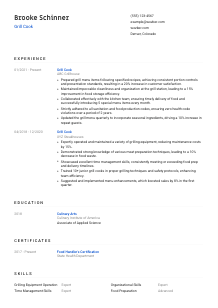
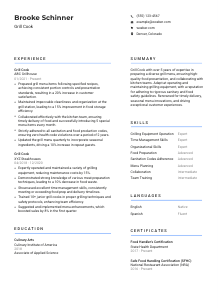
Searing flavors, but your CV feels half-baked? Learn from this Grill Cook CV example, cooked to perfection with the Wozber free CV builder. It shows how to match your grilling genius to job specs, keeping your career as hot as the grill!
Grill cook hiring moves quickly because the work itself does. A CV for this role needs to show control under pressure: consistent doneness, clean station habits, solid timing on the line, and the discipline to follow recipes, portion standards, and food safety rules without slowing service down.
When those details are tailored to the posting, the difference is immediate. Wozber's free CV builder helps you line up your language with the job ad and shape an ATS-compliant CV that clearly shows grill experience, equipment handling, and sanitation knowledge, so a chef or kitchen manager can quickly see whether you can step onto the station and perform.
Kitchen hiring starts with practical basics. If your header is incomplete, inconsistent, or hard to scan, it creates friction before anyone reaches your food safety credentials or line experience. Keep this section clean, accurate, and easy to read.
Use your full name in a clear, slightly larger font so it stands out at the top of the page. In restaurant hiring, CVs are often reviewed fast between service prep, interviews, and scheduling. Make sure your name is easy to spot and looks professional.
Place the title "Grill Cook" directly under your name if that is the role you are applying for. This removes doubt about your focus and helps align your CV with the posting. If your recent background includes line cook or broiler cook work, your experience can show that range, but the title should match the opening.
Add a phone number you answer and a professional email address. Avoid nicknames or casual handles. A kitchen manager who needs to fill a station quickly should be able to call or message you without guessing which contact method is current.
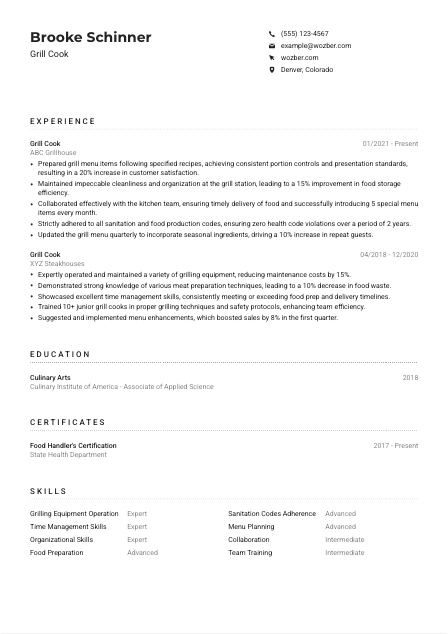
If the posting calls for someone based in a specific area, show your city and state. Here, listing Denver, Colorado directly supports the employer's stated requirement. You do not need a full street address. A concise location line is enough to confirm local availability.
Include a portfolio, LinkedIn profile, or personal site only if it supports your application. For grill cooks, that might mean hospitality experience, menu work, or certifications shown on a professional profile. If you include a link, make sure it is current and matches the experience on your CV.
Your header should answer the first practical questions fast: who you are, what role you want, how to reach you, and whether you meet any location requirement. Keep it tight so the reader can move straight to your kitchen experience.




This is the section that carries the most weight for a grill cook. Hiring teams want to see what you handled on the line, how you worked with the kitchen, and whether you can maintain quality during rush periods without slipping on sanitation, timing, or portion control.
Read the posting closely and highlight the actual work: preparing grill menu items to recipe, maintaining the grill station, operating grilling equipment, holding proper temperatures, coordinating with the kitchen team, and contributing seasonal items. Those are the phrases to reflect in your bullet points when they match your real background.
Start with your most recent kitchen position, then work backward. Include the restaurant name, your title, and dates. For grill-focused hiring, recent line experience matters because it shows your current pace, station familiarity, and exposure to modern food safety expectations.
Do not stop at listing tasks like "cooked meats" or "cleaned station." Show how well you performed them. Useful bullets mention recipe consistency, ticket timing, prep discipline, menu execution, or teamwork during service. The sample CV does this well by tying grill production to customer satisfaction, special menu items, and station organisation instead of repeating a generic job description.
Metrics make kitchen work easier to understand when they are concrete and believable. You might show lower food waste, faster ticket fulfillment, zero health code violations, improved guest satisfaction, reduced maintenance costs, or increased repeat business after menu updates. In the example, results like a 10% drop in food waste and two years without health code violations make the candidate's impact much easier to trust.
Prioritise experience that proves you can handle meat preparation, cooking temperatures, grill equipment, station cleanliness, and communication with expo or fellow cooks. Leave out older or unrelated work that does not strengthen that story. A tailored experience section should make it obvious that you can step into a high-volume grill station and contribute from day one.
By the end of your experience section, the reader should understand your station ownership, your pace during service, and your standards around food quality and sanitation. That is the combination that gets interviews for grill cook roles.
Education usually plays a supporting role for experienced grill cooks, but it still adds value when it connects to culinary technique, food handling knowledge, or formal training. Present it clearly and keep the emphasis on what strengthens your kitchen background.
If you completed culinary school, a culinary arts program, or food service training, list that first. Formal instruction can support your practical knowledge of meat prep, cooking methods, kitchen organisation, and sanitation, even when your strongest proof comes from the line.
Include the school name, degree or program, field of study, and graduation year. Keep the layout clean and easy to scan. For most grill cook applications, that is enough to confirm your training without taking space away from experience and certifications.
If you are early in your career, you can briefly note relevant instruction such as butchery basics, protein cookery, food safety, or menu development. If you already have years of grill experience, detailed coursework is less important unless it directly supports the job's requirements.
Add honors, awards, or culinary competitions only if they strengthen your case. For example, recognition in a practical kitchen lab, team service project, or culinary showcase can help newer candidates show discipline and technical promise. Keep it brief and tied to the work.
For candidates with several years on the grill, education should stay concise while experience carries the story. The sample CV handles this well with a simple culinary degree entry that supports, rather than competes with, five years of hands-on kitchen results.
Education should reinforce your training, not distract from your station performance. Keep it relevant, easy to scan, and proportional to your level of kitchen experience.
Certifications carry real weight in back-of-house hiring because they speak directly to safety, compliance, and day-to-day kitchen discipline. For a grill cook, the right credential can strengthen your CV immediately, especially when the posting mentions food handling or sanitation requirements.
If the employer asks for a food handler's certification or a state-accepted food safety course, place that credential prominently. Matching the language of the job ad helps both ATS screening and human review. In this case, a Food Handler's Certification or similar safe food handling credential belongs near the top of the section.
Include certifications that relate to food safety, sanitation, allergen awareness, kitchen operations, or relevant equipment handling. You do not need to list unrelated courses. A short section with two or three useful credentials is stronger than a long list with weak relevance.
List the certificate name, issuer, and date or validity range. For food service roles, current status matters because expired credentials may not satisfy restaurant policy or local code expectations. A "present" date range makes it clear that your certification is active.
Renewed or updated certifications suggest that you stay current on safe storage, cross-contamination prevention, holding temperatures, and sanitation procedures. That matters on a grill station where raw proteins, hot surfaces, and fast service create little room for error.
Relevant certifications tell a hiring manager that you understand the rules behind the station, not just the cooking. When food safety is part of the posting, this section can quickly strengthen your credibility.
A grill cook skills section works best when it reflects actual station demands. Focus on abilities that affect food quality, service speed, kitchen coordination, and safe handling, not broad traits that could belong on any CV.
Use the job description as your filter. For this role, that includes grilling equipment operation, meat preparation techniques, proper cooking temperatures, time management, sanitation, food storage, labeling, and teamwork. If you have those skills, name them in the same language the employer uses.
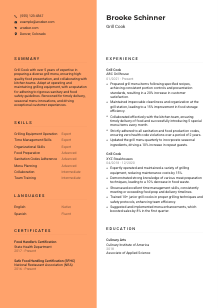
Hard skills should lead here: grill station setup, temperature control, portioning, recipe execution, safe food storage, and equipment maintenance. Then add a few operational strengths such as communication, coordination with the line, and training junior cooks if that reflects your experience. The sample CV's mix of grilling equipment operation, food preparation, sanitation codes adherence, and team training is a solid model.
Do not overload this section with every skill you have ever used in a kitchen. Choose the skills that best support this job and that also appear elsewhere in your experience. A focused list makes your qualifications easier to read and gives your ATS optimisation a cleaner match with the posting.
Your skills list should reinforce the picture already built by your experience: a cook who can manage the grill, maintain standards, and keep service moving. If a skill cannot be backed up in your work history, leave it off.
Language ability matters in food service when it affects training, safety, and speed during service. For grill cooks, clear communication can shape ticket accuracy, coordination with the line, and compliance with food handling procedures.
If the posting says English fluency is essential, list English prominently and state your level clearly. That requirement matters because recipes, safety instructions, labeling, and kitchen communication often depend on it.
If you speak other languages, include them when you can use them professionally. In many kitchens, bilingual communication helps with training, shift coordination, and smoother teamwork across prep, line, and front-of-house interactions.
Use honest levels such as Native, Fluent, Conversational, or Intermediate. Overstating language ability creates problems quickly in a fast-paced kitchen where directions, allergy notes, and safety calls need to be understood the first time.
Additional languages can be especially useful in diverse teams or guest-facing operations, but they are a bonus, not a substitute for required English fluency. In the provided CV, English is listed first and Spanish adds extra value without distracting from the core requirement.
Language sections should be easy to scan. Name the language and your level, then move on. The value comes from clarity, not from long explanations.
This section should confirm that you can follow instructions, communicate safely, and work smoothly with the team. For this role, clear English proficiency needs to be unmistakable.
Your summary sits at the top of the CV, so it should quickly establish your kitchen level, grill specialization, and the kind of results you deliver. Keep it specific enough to sound real and broad enough to support different grill cook openings.
Start with the requirements that define the job: grill experience, equipment knowledge, meat preparation, cooking temperatures, pace, sanitation, and teamwork. Those are the themes your summary should reflect if they are central to your background.
State that you are a Grill Cook and mention your years of experience right away. This gives the reader an instant frame for your level. Phrases like "2+ years" or "over 5 years" work well when they are accurate and supported by your work history.
Choose strengths that hiring managers actually care about, such as consistent recipe execution, temperature control, sanitation compliance, timing during rushes, equipment upkeep, or menu contribution. The sample summary works because it combines operational strengths with outcomes like seasonal menu innovation and reliable food quality.
Aim for a short paragraph, not a full biography. Avoid generic phrases about being hardworking or passionate unless you immediately ground them in kitchen work. A tighter summary reads better in an ATS-friendly CV format and gives the chef a clear snapshot before they review your bullets in detail.
A good summary should make your value clear within a few lines: how long you have worked the grill, what standards you maintain, and what kind of kitchen contribution you make. That is enough to set up the rest of the CV well.
A well-tailored Grill Cook CV should now show the essentials without clutter: relevant experience, safe food handling, strong station habits, and the ability to keep quality consistent during fast service. That combination matters to both ATS screening and the chef reviewing applications between shifts.
Use Wozber's free CV builder to organise your content in an ATS-friendly CV template, then refine it with the ATS CV scanner so the language matches the posting naturally. When your CV is this clear, it becomes much easier for an employer to see that you can step into the kitchen and handle the grill with confidence.




