



Use Wozber and land your dream job
Create CV
No registration required
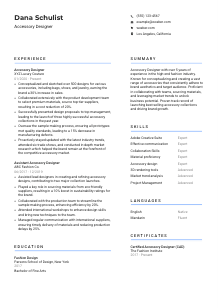
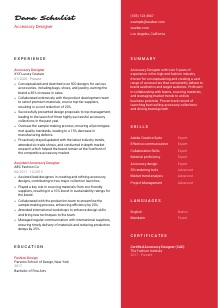
Jazzing up garments, but your CV seems under-accessorized? Splice your style with this Accessory Designer CV example, created with Wozber free CV builder. Learn how to thread your design flair with job demands, so your career accessory collection is always a perfect match!
Accessory design hiring moves fast when a CV shows more than taste. Teams want to see how you translate brand direction into bags, shoes, jewelry, or small leather goods that can actually be developed, sampled, and sold. Your CV should make that link between concept, material choice, prototype oversight, and commercial outcome visible from the start.
When that story is tailored to the posting, hiring teams can quickly separate pure sketch talent from designers who can work across sourcing, product development, and production. Wozber's free CV builder helps shape an ATS-compliant CV around the language of the role, so your experience with design software, sample-making, and market-led product decisions is easier to read in both an ATS scan and a design review.
In accessory design, presentation matters, but clarity matters first. Your personal details should read like the header of a professional line sheet: clean, current, and aligned with the role so there is no friction before the portfolio and experience sections do their work.
Use your full name in a clean, readable format at the top of the page. Avoid decorative styling that competes with the content below. In a design field, restraint usually reads better than flourish, especially when a hiring manager is scanning quickly between CVs, portfolios, and product decks.
Place "Accessory Designer" directly under your name if that matches the position you are targeting. This creates immediate alignment with the posting and helps frame the rest of your CV around the right design discipline, whether your work has focused more on handbags, footwear, jewelry, or a broader accessory range.
Include a phone number, professional email address, and website or portfolio link if you have one. For this profession, a portfolio URL often carries as much weight as a LinkedIn profile because employers want to connect your CV claims to actual design output, materials, silhouettes, and collection range.
Some accessory design roles are tied closely to studio access, sample reviews, vendor meetings, or in-person collaboration with product development. Here, the posting specifically asks for Los Angeles, California, so listing Los Angeles, California in the header removes an immediate screening question. Treat location this way when it is a stated requirement, not as a default rule for every application.
If you include LinkedIn, a portfolio site, or a professional website, make sure the content matches your CV in titles, dates, and level of work. For an accessory designer, that means showing the categories you mention on the CV, such as bags, shoes, or jewelry, and ideally reflecting your design process, collection work, or sample-to-final product range.
This section should confirm that you are easy to contact, properly positioned for the role, and ready for review. Once those basics are handled cleanly, the hiring team can focus on your design judgment, product development experience, and commercial impact.




Accessory design CVs are strongest when experience shows the path from concept to finished product. Hiring teams look for designers who can sketch compelling ideas, develop them with the right materials and suppliers, respond to feedback, and keep quality intact through sampling and production.
Read the job description closely and pull out the repeat themes. In this case, the priorities include conceptual sketching, collaboration with product development, material and supplier decisions, presentation to management, sample oversight, and trend awareness. Those should shape the language of your bullets so your past work clearly maps to how accessory design is done in the target role.
List positions in reverse chronological order with job title, company name, and dates first. For accessory design, progression matters. Moving from assistant-level support into ownership of collections, supplier choices, or prototype review shows increasing authority in the product lifecycle.
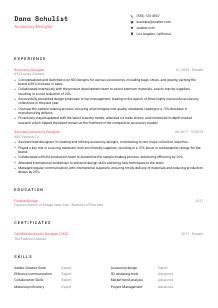
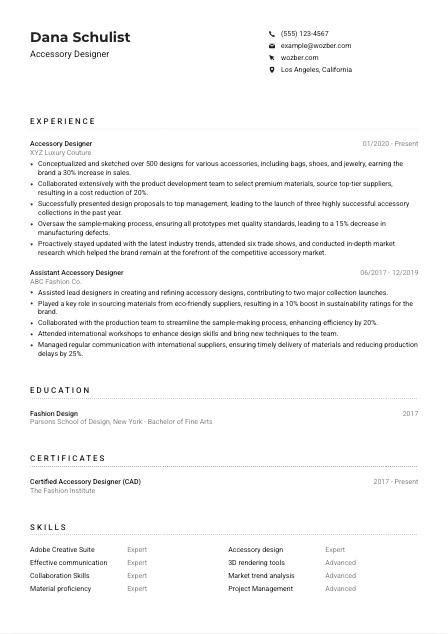
Focus each bullet on what you designed, influenced, or improved. Instead of saying you were responsible for accessories, show the output and scope. The example CV does this well with specifics like designing more than 500 accessories and contributing to collection launches, which tells the reader both volume and category relevance.
Numbers carry weight when they reflect how accessory performance is measured. Sales lift, defect reduction, cost savings from sourcing, faster sample cycles, number of collections launched, or fewer production delays all help. The sample's 30% sales increase, 20% cost reduction, and 15% drop in manufacturing defects are strong examples because they connect design decisions to business and production results.
Prioritise experience that supports luxury or fashion-led accessory work, cross-functional collaboration, material knowledge, and trend-informed design. If you include adjacent roles, frame them through transferable work such as supplier management, sample development, CAD work, or collection support. Every bullet should strengthen your case for handling design and development in a real accessory workflow.
Your experience section should make it easy to picture you moving a concept from sketch to sample to sellable product. When the bullets show category range, collaboration, materials knowledge, and measurable results, the CV reads like a designer who can contribute from day one.
In accessory design, education carries the most weight when it anchors your technical base and design training. A degree in fashion design or a related field tells employers you have formal grounding in construction, aesthetics, materials, and the vocabulary used across studio and product development teams.
List your highest and most relevant degree first. Since this posting asks for a bachelor's degree in Fashion Design or a related field, make that information easy to spot. The example CV's Bachelor of Fine Arts in Fashion Design fits the requirement directly and helps clear an early qualification check.
Add the institution name, degree, field of study, and graduation year or date. In fashion hiring, a respected design school can add context, but clarity matters more than prestige alone. Keep the format clean so the reader can absorb it quickly while moving between your education, experience, and portfolio.
If you received honors, scholarships, or held leadership roles tied to fashion, accessories, or design competitions, include them when they add useful context. Choose details that reinforce your design discipline, technical training, or industry engagement rather than filling space with unrelated campus activity.
If you already have 3+ years in accessory design, your education section can stay concise. Experienced candidates are typically judged more on collections, category expertise, software fluency, and product results than on coursework. Give education enough space to confirm the requirement, then let your experience lead.
Accessory design changes with software, rendering workflows, sustainability standards, and material innovation. If you have recent training in Adobe Creative Suite, 3D rendering, material sourcing, or related design tools, add it when it sharpens your relevance. This is especially useful if the role emphasizes digital design presentation or technical visualization.
This section does not need to carry the whole CV. It should confirm the formal training behind your design work and support the technical and aesthetic judgment shown elsewhere.
Certifications are secondary to portfolio strength and experience in most accessory design hiring, but they can still add value. The right credential shows continued specialization, current knowledge, or formal training in an area that supports the role.
List credentials that strengthen your case for accessory design, fashion product development, materials, CAD workflows, or related specialization. A certification such as "Certified Accessory Designer (CAD)" works because it aligns directly with the discipline rather than feeling generic.
Employers usually care more about recent and relevant certifications than a long list. If a credential reflects current methods, design software, or category-specific training, place it higher than older or less connected coursework. Relevance beats volume here.
For each certificate, add the issuing organisation and the date or validity period. That small detail helps a hiring team understand whether the credential reflects current practice, especially when it relates to software, product development methods, or specialised fashion training.
Accessory categories, materials, and digital workflows keep changing. Refresh this section when you complete new training in rendering tools, sustainable sourcing, footwear development, handbag construction, or other areas that match the jobs you are pursuing. Keep it curated rather than exhaustive.
A short, well-chosen certificates section can reinforce your specialization without distracting from the work itself. Use it to support the parts of your CV that already show design execution, product knowledge, and industry engagement.
A strong skills section for an accessory designer should show both studio capability and product development fluency. Hiring managers want to see the tools you design with, the collaboration strengths you rely on, and the product knowledge that helps turn sketches into commercially viable accessories.
Start with the hard skills the posting names or strongly implies. Here that includes Adobe Creative Suite, 3D rendering tools, material knowledge, production techniques, and market trend awareness. These are the skills that support actual design workflows, from concept boards and renderings to supplier conversations and prototype review.
Accessory design is highly cross-functional, so soft skills should reflect how you work with others, not read like generic personality traits. Communication, collaboration, presentation, and project coordination matter because you will be aligning with product development, suppliers, management, and sometimes production partners. The sample CV handles this well by pairing design software with communication and collaboration strengths.
Choose skills that directly support the type of accessory role you want. A shorter, more targeted list usually reads better than a long inventory of broad abilities. If a skill does not help explain your design process, technical fluency, category knowledge, or cross-functional contribution, it can stay off the page.
This section should reinforce the way you work as a designer, not just decorate the CV with keywords. When the mix is right, employers can quickly see your software fluency, material knowledge, and ability to collaborate across the accessory development process.
Language ability matters in fashion when it affects communication with teams, suppliers, factories, or international partners. On an accessory designer CV, list languages when they support the role's stated requirements or add practical value to sourcing, development, or global brand work.
If the posting specifically requires English, include it clearly with an honest proficiency level. This role does, so English should appear in a way that leaves no doubt you can present ideas, discuss revisions, and collaborate across design and development conversations.
Additional languages can be valuable when a brand works with overseas suppliers, trade show contacts, or international development teams. For example, a second language such as Mandarin can support communication in sourcing or production contexts, but include it because it is genuinely useful, not just because it looks impressive.
State proficiency in straightforward terms such as Native, Fluent, Advanced, or Conversational. Clear labels help hiring teams understand whether you can handle presentations, supplier communication, or day-to-day collaboration without guesswork.
Some accessory design jobs are locally focused, while others involve international sourcing, trade fairs, or broader market coordination. If multilingual communication would help in those settings, your languages section can add real value. If not, keep it brief and factual.
Only list languages you can use professionally when needed. In design and product development settings, language skills matter most when they improve communication quality, reduce delays, or support smoother work with vendors and cross-border teams.
Used well, this section adds another layer of professional range. Keep it accurate and tied to the kind of communication the role actually involves, whether that is internal presentation, supplier coordination, or international market exposure.
Your summary should quickly position you within accessory design and show the level at which you work. The strongest versions combine category focus, years of experience, and one or two outcomes that tell the reader you understand both aesthetics and product performance.
Before writing, identify what matters most in the role. Here, that includes accessory category design, luxury or high-end context, software proficiency, materials knowledge, collaboration, and awareness of market trends. Your summary should reflect that mix without turning into a list of requirements.
Start with your title and experience level in a way that matches the role. The example summary uses "Accessory Designer with over 5 years of experience in the high-end fashion industry," which works because it immediately places the candidate in the right segment and seniority range.
Choose details that show how you contribute as an accessory designer. Strong examples include building successful collections, designing across multiple accessory categories, improving sourcing outcomes, or using trend research to support brand competitiveness. Focus on points that connect design decisions to launch success, quality, or revenue.
Aim for a short paragraph that can be read in seconds. Three to five lines is enough to establish your design focus, operating level, and standout value. Cut broad statements and make room for specifics that are native to accessory design work, such as category range, luxury brand experience, or product development collaboration.
When this section is working, the reader immediately understands what you design, the level you work at, and the kind of results that follow. That clarity sets up the rest of the CV to confirm the picture.
A polished accessory designer CV should show a clear through-line from concept development to finished product, with enough detail on materials, sampling, collaboration, and commercial results to support your portfolio. If the posting calls for luxury experience, software fluency, or a specific market context, make those points easy to find in your summary, skills, and experience bullets.
Wozber can help you tighten that alignment with an ATS-friendly CV template, AI-assisted tailoring, and an ATS CV scanner that highlights missing requirements and role-specific wording. The finished CV should make one thing immediately clear: you can design accessories that fit the brand, work in development, and hold up in the market.