



Use Wozber and land your dream job
Create CV
No registration required
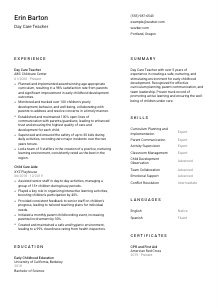
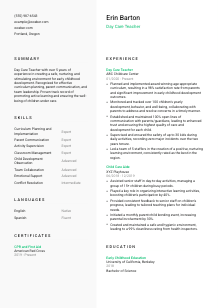
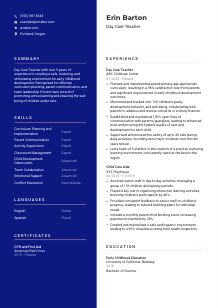
Nurturing tiny tots but your CV feels like playing peek-a-boo? Delight in this Day Care Teacher CV example, created with Wozber free CV builder. Learn how to naturally reflect your classroom magic and child development skills to fit job demands, setting your career as bright as a crayon box!
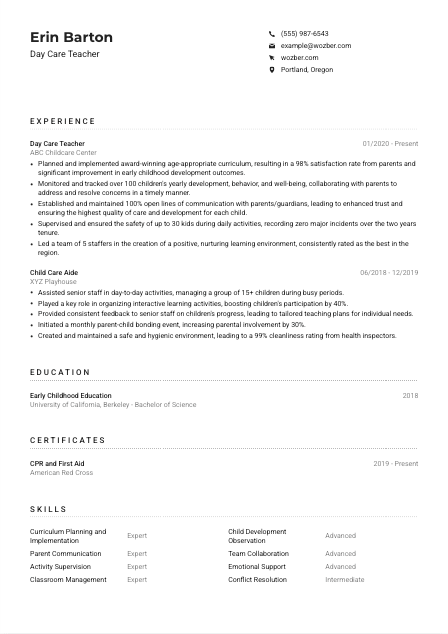
Day Care Teacher CVs are strongest when they show what daily care actually looks like: keeping children safe, guiding early learning, documenting development, and staying steady with families through everything from routine updates to behaviour concerns. Hiring teams look for people who can manage a room with warmth and structure, so your CV should make that visible through concrete classroom examples, child outcomes, and the age-appropriate learning environment you have helped build.
A tailored CV also helps separate general child care experience from licensed daycare teaching experience, which is often a key screening point. Using Wozber's free CV builder to align your wording with the posting and maintain an ATS-friendly CV format makes it easier to surface the right details first, such as curriculum planning, child observation, parent communication, and current safety credentials. That gives the employer a clearer read on whether you can step into the classroom and support children's development from day one.
In early childhood hiring, the header does quiet but important work. It should identify you clearly, show that you are easy to contact, and quickly confirm practical details that matter for this kind of centre-based role.
Use your full name in a slightly larger font than the rest of the header so it stands out right away. In a field built on trust and communication with parents, directors, and staff, clean presentation matters. Keep it simple and professional.
Place "Day Care Teacher" directly under your name if that is the role you are applying for. This helps frame your background around classroom care, lesson planning, supervision, and child development instead of broader education or general babysitting experience. If your recent title was different, such as Child Care Aide, the target title still helps position your CV correctly.
List one reliable phone number and a professional email address you check often. Directors and centre managers often move quickly when scheduling interviews or requesting certifications, references, or availability details, so your contact information needs to support that pace. A straightforward format like "firstname.lastname@email.com" works well.
If a role specifies a city or state, include that in your personal details. Here, Portland, Oregon is part of the requirement, so showing that location removes a basic eligibility question immediately. Treat this as tailoring to the posting, not as a standard rule for every Day Care Teacher CV.
A LinkedIn profile can be useful if it matches your CV and includes relevant daycare, preschool, or early childhood experience. If you maintain a professional website with lesson ideas, child development credentials, or family communication philosophy, include it only when it adds something concrete. For this role, polished and consistent matters more than having extra links.
This section should answer the basics in seconds: who you are, what role you do, how to reach you, and whether you meet practical requirements such as location. When those details are tidy, the reader can move straight to your classroom experience.




For Day Care Teachers, experience carries most of the hiring weight because it shows how you manage children in real settings. The best bullets cover supervision, curriculum delivery, developmental observation, family communication, and teamwork inside a licensed care environment.
Before editing your bullets, mark the responsibilities that define the role. In this case, that includes planning age-appropriate curriculum, tracking development and behaviour, communicating with parents, supervising children indoors and outdoors, and working closely with staff. Those duties should shape which accomplishments you lead with and which older points you cut.
List your jobs in reverse chronological order with employer name, title, and dates. For childcare roles, your title matters because hiring teams often distinguish between assistant-level support and lead classroom responsibility. If you have experience in a licensed daycare setting, make sure that setting is obvious from the employer or bullet content.
Generic lines like "responsible for children" do not show how well you performed. Replace them with bullets that show what you planned, monitored, improved, or resolved. The sample CV does this well by linking curriculum planning to parent satisfaction and development outcomes, and by showing ongoing developmental tracking rather than vague care duties.
Metrics make childcare work easier to understand when they reflect real scope. You can quantify class size, number of children tracked, parent satisfaction, incident-free supervision, participation in activities, or staff collaboration. For example, supervising up to 30 children with zero major incidents says far more than simply stating that you maintained a safe environment.
Keep the focus on daycare, preschool, early learning, and child supervision work that connects directly to the target role. If you have unrelated experience, include it only if it adds something useful such as behaviour support, family-facing communication, or health and safety responsibility. The reader should come away knowing you can run activities, observe children carefully, and contribute to a nurturing centre environment.
Your experience section should show that you can handle the rhythm of a daycare classroom, not just that you have worked around children before. Lead with licensed-setting experience, measurable classroom outcomes, and examples of safe, development-focused care.
Education matters in Day Care Teacher hiring because it shows preparation in child development, learning stages, and age-appropriate instruction. When the posting asks for a bachelor's degree in Early Childhood Education or a related field, your education section should make that match obvious.
If you have a bachelor's degree in Early Childhood Education or a closely related field, list it clearly and exactly. This is one of the first qualification checks for many daycare employers, especially when they want staff who can design developmentally appropriate activities and understand early learning standards.
Keep the entry easy to scan by listing degree, field of study, school, and graduation year. Childcare hiring rarely needs a complex academic layout. A clean structure helps the reviewer confirm your educational background quickly, especially when they are comparing several candidates at once.
If your degree directly matches the posting, do not bury that detail. "Bachelor of Science in Early Childhood Education" is much stronger than listing only "Bachelor's degree." The sample CV handles this well by stating the field clearly, which immediately supports the role's education requirement.
Recent graduates can use selected coursework to reinforce classroom readiness. Topics such as child development, behaviour guidance, literacy foundations, inclusive education, or curriculum design can help connect your academics to daycare teaching work. If you already have several years of strong experience, this is usually optional.
Honors, research projects, student teaching placements, or practicum work are worth adding when they point back to early childhood education. Focus on details that show applied understanding of child learning, classroom routines, or family engagement rather than general campus achievements.
This section should confirm that your classroom judgment is backed by formal preparation in early childhood education. Keep the degree clear, the field specific, and any extra academic detail tied to child development or classroom practice.
Certifications carry practical weight in daycare hiring because they relate directly to safety, compliance, and day-to-day responsibility. If a centre asks for CPR and First Aid for infants and young children, make those credentials easy to find.
When CPR and First Aid appear in the requirements, list them prominently. These certifications speak directly to classroom safety and emergency preparedness, which are central to childcare work. If you are still in the process of obtaining them, note that clearly and honestly.
Include certifications that strengthen your ability to work with young children, families, and centre policies. In addition to CPR and First Aid, that could include child abuse reporting, safe sleep training, food handling, or other state-recognized childcare credentials if they apply. Skip unrelated certificates that do not add to your case for a daycare teaching role.
For time-sensitive certifications, add the issue date or validity period so the employer can see that they are current. The sample CV includes "2019 - Present" for CPR and First Aid, which is a practical way to show the certification remains active. This small detail can save follow-up questions during screening.
Day Care Teachers are expected to keep up with safety practices, developmental guidance, and classroom standards. Updating your certifications shows that you take those responsibilities seriously. If you renew required credentials regularly, your CV should reflect that steady professional maintenance.
In early childhood settings, credentials are tied to real responsibilities, especially around safety and care. A focused, current certification section strengthens your case that you are ready for the classroom and prepared for the centre's compliance standards.
A Day Care Teacher skills section should read like the toolkit you use every day with children, families, and coworkers. Prioritise abilities tied to classroom management, developmental support, communication, and safe supervision over broad personality traits.
Start with the job description, then translate it into practical abilities. For this role, that means curriculum planning, child development observation, parent communication, activity supervision, conflict de-escalation, and collaboration with staff. These are the skills that connect directly to daily classroom performance.
Use terms that mirror the employer's language where they reflect your actual experience. This improves ATS optimisation and helps the reviewer immediately connect your background to the role. The sample skills list works because it uses phrases like "Curriculum Planning and Implementation" and "Parent Communication," which align closely with the responsibilities in the posting.
Do not crowd this section with every soft skill you have. Choose the capabilities most relevant to supervising children, supporting development, communicating with families, and contributing to a nurturing classroom environment. A shorter list with strong daycare-specific relevance is much more convincing than a long, generic inventory.
When this section is done well, a hiring manager can picture you in the room: planning activities, managing transitions, speaking with parents, and keeping children safe. That is the standard to aim for.
Language ability matters in daycare because the work depends on clear communication with children, families, and coworkers. If the posting names English as essential, your language section should confirm that immediately and then add any extra languages that could support family relationships.
List English first when the role specifically requires strong English communication. This matters in childcare settings where you may need to document observations, explain concerns to parents, follow licensing procedures, and coordinate with coworkers throughout the day.
Additional languages can be a real asset, especially in communities with diverse families. They may help with parent conversations, comfort children who are adjusting, or support inclusion during daily routines. In the sample CV, Spanish adds useful depth without overshadowing the required English proficiency.
Choose simple descriptions such as Native, Fluent, Intermediate, or Basic. Hiring teams need an accurate picture of how well you can communicate in real family and classroom situations, not inflated labels that create confusion later.
If you speak more than one language, think about how that supports your actual work. In daycare, the value often shows up in parent trust, smoother handoffs, and a more welcoming environment for children. Keep the section concise, but make sure the listed languages are credible and relevant.
For Day Care Teachers, language skills are most valuable when they support clear family communication and a welcoming classroom environment. Lead with required English proficiency, then add any other languages that strengthen that picture.
Your summary should quickly show the kind of classroom professional you are. In a few lines, connect your years of experience with the parts of the work that matter most: child safety, active learning, developmental support, and communication with families.
Start with your title and years of relevant experience, then anchor that experience in early childhood settings. This gives immediate context for the rest of the CV. A line like the sample's "Day Care Teacher with over 5 years of experience" works because it is direct and role-specific.
Choose two or three strengths that match the role closely, such as curriculum planning, developmental observation, family communication, classroom management, or maintaining a safe and nurturing environment. Keep the focus on what you consistently deliver in a daycare setting, not on broad claims about passion or dedication.
Use the summary to confirm major requirements without turning it into a checklist. If the job emphasizes active learning, child well-being, and parent communication, weave those ideas into one clear statement. The sample summary does this by combining curriculum planning, communication, and child well-being into a concise professional profile.
Aim for 3 to 5 lines that someone can absorb quickly before moving into your experience section. This is especially useful when directors or administrators are reviewing several CVs in one sitting. Strong summaries are compact, specific, and grounded in the real work of caring for and teaching young children.
Once your summary and supporting sections are aligned, use Wozber's free CV builder to tighten phrasing, keep an ATS-compliant CV structure, and check how well your wording reflects the target posting with the ATS CV scanner. The final result should make one thing clear right away: you can guide children's learning, protect their well-being, and communicate confidently with families and staff.
A Day Care Teacher CV works best when it makes the daily realities of the role easy to see: safe supervision, age-appropriate learning, developmental observation, parent communication, and dependable teamwork. When each section points back to that work, your experience feels relevant before the interview even starts.
Use Wozber to build, tailor, and refine an ATS-friendly CV that reflects the language of the job description without losing the human side of your classroom work. Then send out a CV that makes your childcare judgment, teaching practice, and readiness for the centre clear at a glance.