



Use Wozber and land your dream job
Create CV
No registration required
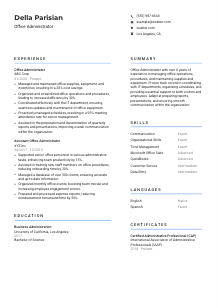
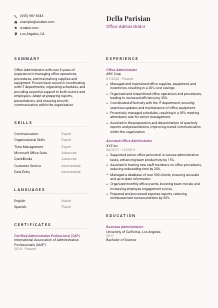
Keeping the office running, but your CV feels stagnant? Check out this Office Administrator CV example, created with Wozber free CV builder. Learn how to present your administrative acumen in line with job specifics, ensuring your career journey flows as smoothly as your well-managed workspace!
Office administration looks simple on paper until something slips. Schedules clash, supplies run short, reports go out late, or visitors and staff stop getting the support they need. Hiring teams reading an Office Administrator CV want to see steady operational control, the kind that keeps an office running without constant supervision. Your CV should make that control visible through the systems you manage, the coordination work you handle, and the practical improvements you delivered.
CV tailoring changes how quickly that operational value comes through, especially when an employer is sorting administrative candidates with similar titles. Wozber's free CV builder helps you shape an ATS-compliant CV around the exact language of the posting, so core details like office operations, scheduling, reporting, software use, and communication standards appear in the right places. That makes it easier for a hiring team to recognize whether you can keep daily office workflows organised from day one.
Office Administrator hiring starts with practical checks. Can this person be reached easily, are they applying for the right function, and do they meet any stated location requirement? Keep this section clean and direct so the employer can move straight to your administrative experience.
Use your full name as the header in a clear, readable font. It should be the most visible text on the page, without decorative styling or extra labels. Office administration is a detail-sensitive profession, so even this first line should reflect order and professionalism.
Place the job title "Office Administrator" directly below your name if that is the role you are pursuing. This removes ambiguity, especially when your prior titles include variations like Administrative Assistant, Office Coordinator, or Assistant Office Administrator. A direct title match helps both ATS systems and human reviewers connect your background to the opening faster.
List a current phone number and a professional email address that you check regularly. Administrative roles often move quickly from application to scheduling, so missed calls or an outdated inbox can cost you an interview. Keep the format simple and accurate, and avoid casual email handles that undercut the polished image expected in front-desk, scheduling, or office support work.
If the employer specifies a location requirement, show that you meet it. In the example job description, being based in Los Angeles, CA is part of the screening criteria, so listing "Los Angeles, CA" in the personal details section answers that question immediately. Use this kind of location tailoring only when it is relevant to the job you are targeting.
Include a LinkedIn profile or professional website only if it supports your application with consistent, up-to-date information. For Office Administrators, that can reinforce your experience with office operations, software, reporting, vendor coordination, or administrative support. Make sure dates, titles, and responsibilities match your CV exactly.
This section should answer the employer's first logistical questions in seconds. Clear contact information, the right target title, and any required location detail help the reader move quickly to the part that matters most: how well you run an office.




This section carries the most weight for Office Administrator hiring. Employers are looking for proof that you can handle recurring office tasks reliably, support internal teams, coordinate across departments, and improve the way work gets done. The strongest bullets show both the responsibility and the result.
Read the posting closely and mark the daily work it emphasizes. For this role, that includes managing supplies and inventory, organising office procedures, coordinating with IT, scheduling appointments, supporting visitors and employees, and preparing reports and presentations. Use those themes to decide which parts of your background deserve the most space on the page.
List your most recent position first, then work backward. For each role, include your title, employer, and dates of employment. This format lets employers quickly track how recently you've handled office administration work and whether your experience shows growth from support tasks into broader responsibility for operations, scheduling, records, or reporting.
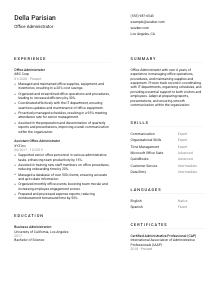
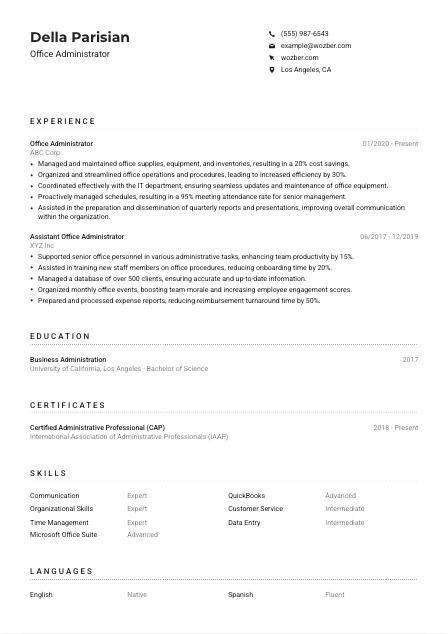
Each bullet should show what you handled and what changed because of your work. In office administration, useful outcomes include lower supply costs, faster reimbursement processing, improved meeting attendance, smoother onboarding, cleaner records, or more efficient office procedures. The sample CV does this well with bullets like reducing office supply costs by 20% and improving operational efficiency by 30%, which are the kinds of administrative wins employers remember.
Metrics make office work easier to evaluate when they reflect real administrative performance. Good examples include cost savings, turnaround time, attendance rates, inventory accuracy, onboarding speed, database size, or the frequency of reports you prepare. Even one measured detail in a bullet can turn a routine task like calendar management or expense processing into a clear business contribution.
Keep the focus on responsibilities that are central to office administration. Inventory control, vendor and equipment coordination, document preparation, calendar support, front-office communication, and process improvement all belong near the top. If you have unrelated experience, trim it or rewrite it so the transferable parts are obvious, such as recordkeeping, customer support, scheduling, or handling internal requests.
A hiring manager should be able to scan this section and see that you do more than complete tasks. You keep schedules accurate, supplies available, equipment issues moving, and routine reporting on track, with measurable results behind the work.
Education matters most when the posting names a degree requirement, as this one does. Keep the section straightforward so the employer can quickly confirm that your academic background meets the baseline and supports your administrative career path.
If the posting asks for a bachelor's degree in Business Administration or a related field, make that information easy to find. A degree such as "Bachelor of Science in Business Administration" aligns directly with the requirement and should appear exactly as awarded. This is especially helpful when education is one of the employer's initial screening filters.
Present each education entry with the degree, field of study, school name, and graduation year or date range. Keep the format consistent with the rest of your CV. Office administration values orderly records and clean documentation, so your education section should reflect the same discipline.
When your degree closely matches the job description, use the official wording that connects naturally to the role. In the example CV, "Business Administration" mirrors the stated requirement and removes guesswork. Do this only when the terminology is truthful to your actual credential.
Most experienced Office Administrators do not need a list of classes. Include relevant coursework, academic projects, or administrative training only if you are early in your career or if those details support a specific requirement, such as business operations, accounting basics, communication, or office systems.
Honors, scholarships, leadership roles, or relevant student organisation work can add value when they show organizational ability, communication, or process ownership. Keep them concise and include them only if they still support your current professional profile instead of distracting from stronger work experience.
This section does not need elaborate detail. It needs to confirm, quickly and cleanly, that your education meets the employer's stated requirement and supports the administrative work described elsewhere on the CV.
Certifications are not always required for Office Administrator roles, but the right one can add professional weight. They work best when they reinforce the kind of responsibilities the job actually includes, such as office procedures, communication, records, software use, or administrative coordination.
Start with the job description. If no certification is required, you still have an opportunity to include one that supports the role. For Office Administrators, the value comes from relevance, not from stacking unrelated credentials.
Choose certifications that support the work named in the role. A credential like "Certified Administrative Professional (CAP)" is a strong example because it connects directly to administrative operations, communication, and office support standards. That makes it more useful than a generic certificate with no clear link to the job.
If a certification is current, renewed, or recently earned, list the date or active range. This helps show that your knowledge is up to date, particularly when the role involves current office software, reporting processes, or changing administrative procedures.
Administrative work keeps evolving with new software, digital workflows, and reporting expectations. Ongoing certification or training in office systems, business communication, spreadsheet tools, bookkeeping basics, or workflow software can strengthen your profile, especially when paired with solid experience.
A well-chosen certification adds context to your experience. It tells the employer that your office skills are not only practiced on the job but also supported by formal professional development.
The skills section should read like a practical snapshot of how you operate in an office, not a list of generic strengths. For Office Administrator roles, that usually means a mix of software proficiency, organisation, communication, scheduling, records handling, and process support.
Use the job description to identify the core tools and capabilities the employer expects. In this case, that includes Microsoft Office Suite, office management software, communication, organisation, familiarity with office equipment, and basic accounting principles. These are the skills most likely to be screened in both ATS systems and early CV review.
Compare the posting's requirements with the tools and strengths you actually use. Then create a focused list that reflects real capability. The sample CV shows a solid mix with Microsoft Office Suite, organizational skills, time management, communication, QuickBooks, data entry, and customer service, which all connect naturally to office support work.
Office Administrators need software fluency and people skills in equal measure. Include hard skills such as Excel, Word, PowerPoint, QuickBooks, expense processing, records management, or scheduling systems alongside softer capabilities like communication, time management, multitasking, and visitor support. Keep the list selective so every skill points back to real office performance.
A useful skills section helps the employer picture you in the workflow. It should show that you can handle the tools, communication demands, and organizational load that keep an office functioning smoothly.
Language ability matters in administrative work because Office Administrators often serve as a communication hub. You may be greeting visitors, coordinating with vendors, writing emails, updating documents, or relaying information across teams. When language skills are relevant, present them clearly and honestly.
If the posting specifically requires strong English, list English prominently with an accurate proficiency level. For this job, English competence is stated directly, so it deserves clear placement rather than being buried among optional details. This is especially important when the role includes written communication, scheduling, and report support.
Additional languages can strengthen your application when the workplace serves diverse employees, visitors, clients, or vendors. In some offices, bilingual communication helps with front-desk interactions, internal coordination, or customer-facing support. Include extra languages only when you can use them in a professional context.
Use clear levels such as Native, Fluent, Advanced, or Intermediate. Administrative roles rely on accurate communication, so overstating language ability can quickly become a problem in interviews or on the job. Be precise about what you can actually handle in conversation, email, and document review.
Not every Office Administrator role needs multilingual ability, but some environments benefit from it. If the office supports a multilingual staff, receives walk-in visitors, or works with a broad client base, an additional language can become a practical asset rather than a nice extra. Keep the emphasis proportional to the role you are targeting.
Be clear, accurate, and relevant. When language ability supports communication in the workplace, it can add another layer of usefulness to your administrative profile.
Your summary should quickly establish the kind of Office Administrator you are. A hiring manager should come away with a clear sense of your experience level, the office functions you handle well, and the outcomes you tend to produce in administrative settings.
Before writing the summary, identify the few requirements that define the job most clearly. Here, that means office administration experience, software proficiency, communication, organisation, and support for office procedures, schedules, and reporting. Those priorities should shape the content and wording of your opening lines.
Lead with your professional identity and years of experience. A line such as "Office Administrator with 6+ years of experience" gives immediate context and helps the reader place your background quickly. Keep this opening factual and aligned with the level of responsibility shown in your work history.
Use the next lines to name the work you handle best and the results tied to it. Good summary material for this profession includes office operations, scheduling, equipment and supply coordination, report preparation, records management, communication support, and process improvement. The example summary works because it combines those core functions with a clear sense of day-to-day administrative ownership.
Aim for a compact paragraph of three to five lines. Office Administrator hiring often starts with a fast scan, so your summary should deliver a complete professional snapshot without drifting into a long narrative. Focus on role fit, tools, and practical scope, then let the experience section carry the detail.
A strong summary gives the employer an immediate read on your administrative range. By the time they move into your experience section, they should already expect to see organised office support, reliable coordination, and measurable follow-through.
You now have a clear structure for presenting yourself as an Office Administrator who can manage office operations, support people across the workplace, and keep recurring tasks under control. That is what hiring teams need to see, whether the role leans more toward front-office support, reporting, scheduling, or office coordination.
Use Wozber's free CV builder to organise each section, tailor the language to the posting, and create an ATS-friendly CV format that reflects your real experience accurately. Pair that with Wozber's ATS CV scanner to check alignment on requirements, software, and administrative terminology, so your CV makes your day-to-day office capability easy to judge.