



Use Wozber and land your dream job
Create CV
No registration required
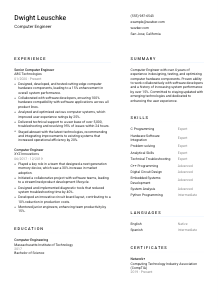
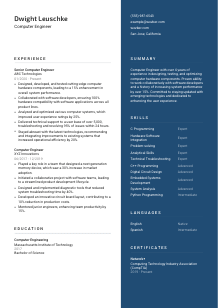
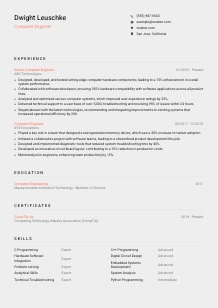
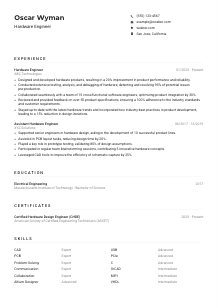
Building digital wonders, but your CV feels a bit binary? Browse this Computer Engineer CV example, created with Wozber free CV builder. Learn how to present your tech brilliance to match job requirements, keeping your career code as cutting-edge as your creations!
Computer engineering CVs are read through the lens of execution. Hiring teams want to see where you designed hardware, worked across hardware and software boundaries, debugged system-level issues, or improved performance in ways that mattered to the product. If your CV stays at the level of general engineering duties, it can miss the core of the job.
A tailored CV helps your work register quickly, especially when the employer is screening for terms like embedded systems, digital circuit design, C or C++, and hardware-software integration. Wozber's free CV builder supports that kind of ATS optimisation by helping you align section wording with the posting while keeping the CV easy to scan for the engineering scope, technical depth, and troubleshooting range the role requires.
This section is short, but it still does real work. For a Computer Engineer, it should immediately confirm professional identity, make contact easy, and cover any practical requirement that could affect next-step screening.
Use your full name in the most prominent text on the page so it is easy to spot in both human review and digital parsing. Keep the presentation clean and technical rather than decorative. For engineering roles, clarity beats flair every time.
Place "Computer Engineer" directly below your name when that matches the role you are pursuing. This helps frame the rest of the CV before the reader reaches your experience section, and it reinforces a key ATS match for postings centered on hardware design, embedded development, or systems optimisation.
Include a reliable phone number and a professional email address. Add a website, GitHub, or LinkedIn profile only if it strengthens your candidacy with relevant projects, circuit work, firmware samples, system prototypes, or technical documentation. A generic link adds little. A portfolio with real engineering work can add context fast.
Some employers screen for location early, especially for lab-based, hardware, or on-site engineering work. In the example posting, residence in San Jose, California is stated directly, so listing San Jose, California in the header removes a basic point of uncertainty before the CV is even read in depth.
If you include a profile or website, make sure it shows the kind of work a Computer Engineer is hired to do. Good examples include embedded projects, PCB or circuit design work, firmware repositories, hardware test documentation, or system integration case studies. Use this space to extend your CV with proof, not filler.
Your header should confirm who you are, what role you target, and whether any practical requirement like location is already covered. That keeps the reader focused on your engineering work instead of basic logistics.




This is where a Computer Engineer CV either becomes persuasive or stays generic. Employers look for applied work here: hardware design, integration with software, testing, optimisation, troubleshooting, and the scale or performance impact of that work.
Before editing bullets, identify the work themes the employer emphasizes. Here, the priorities include hardware and software integration, digital circuit design, embedded systems development, performance optimisation, and technical support. Your experience section should mirror those areas using the language that fits your actual background, rather than relying on broad phrases like "responsible for engineering tasks."
List your most recent position first, followed by earlier roles with company name, job title, and dates. That structure is standard, but for engineering hiring it also helps the reader quickly gauge how current your experience is with modern toolchains, testing environments, and system design work.
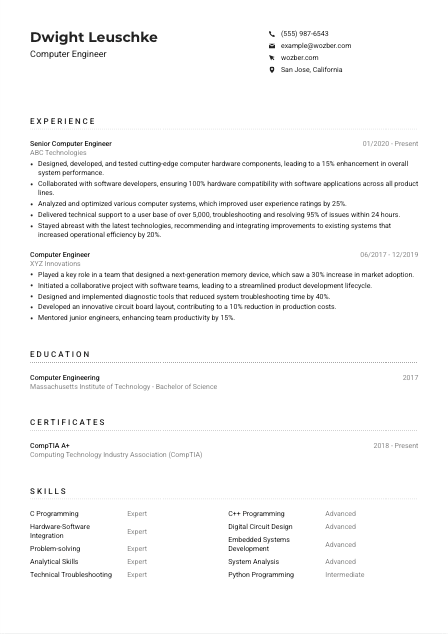
Each bullet should show what you built, tested, improved, or resolved. Strong Computer Engineer bullets usually reference components, systems, diagnostics, integration work, or user-facing reliability gains. The sample CV does this well by pointing to hardware components, memory devices, compatibility work with software teams, and diagnostic tooling instead of vague team participation.
Use numbers where they reflect real engineering outcomes. That might mean system performance gains, reduction in troubleshooting time, cost savings from board redesign, issue resolution rates, support volume, or efficiency improvements after system updates. Metrics like a 15% performance increase or 95% issue resolution within 24 hours help the reader understand both scope and effectiveness.
If a bullet does not support your case for hardware design, embedded work, systems analysis, integration, or technical troubleshooting, trim it or rewrite it. A tailored CV is not a full autobiography. It is a focused record of the engineering work most relevant to the opening you want now.
After reading your experience section, the employer should understand the systems you worked on, the engineering problems you solved, and the measurable effect of your work on performance, compatibility, cost, or support outcomes.
For computer engineering roles, education is often a firm baseline rather than a decorative section. Hiring teams check it to confirm your grounding in computer engineering, electrical engineering, or a related discipline before they weigh the rest of your technical history.
If the posting asks for a Bachelor's degree in Computer Engineering, Electrical Engineering, or a related field, state your degree and field exactly. In the example, "Bachelor of Science in Computer Engineering" aligns directly with the requirement and removes any ambiguity about academic fit.
List degree, field of study, school, and graduation year or date in a straightforward order. Engineering CVs benefit from clean structure because recruiters and ATS tools often scan this section quickly before moving to experience and skills.
When your degree title is closely aligned with the role, do not generalize it. "Computer Engineering" carries more value here than a broad label if that is your actual degree. Specific wording helps when the employer is screening for a defined engineering background.
Early-career candidates can strengthen this section with relevant coursework, capstone projects, lab work, or design projects tied to embedded systems, digital logic, processors, networking, or hardware validation. For a more experienced engineer, those details matter less unless the project directly supports a specialised target role.
Honors, engineering competitions, research assistant work, or technical student organizations can be worth mentioning when they show real system design, prototyping, or problem-solving experience. Keep them only if they sharpen your case for the role rather than padding the section.
This section should quickly confirm that you have the educational base expected for the work. Once that is clear, the rest of the CV can focus on the engineering results you have delivered since graduation.
Certifications carry more weight when they support the kind of systems work the role involves. On a Computer Engineer CV, they are most useful when they confirm relevant troubleshooting, networking, hardware, or platform knowledge that complements your hands-on experience.
If an employer calls out certifications such as CompTIA A+ or Network+, list those prominently when you have them. In the provided example, both appear and directly answer a stated requirement. That kind of alignment helps early screening move in your favor.
Do not list every certificate you have ever earned. Keep the section focused on credentials that support the target role, such as hardware support, networking, embedded systems, security, or platform-specific engineering knowledge. Relevance matters more than length.
Show the issue date and, if applicable, current validity. For technical certifications tied to support practices, infrastructure, or evolving standards, dates help the employer understand whether your credential is current and maintained.
A concise, up-to-date certifications section can signal that you stay current with changing tools, standards, and system practices. That is especially useful in roles that blend hardware, software, networks, and end-user troubleshooting, where stale knowledge becomes visible quickly.
The right credentials can strengthen your profile, especially when they echo the posting's stated requirements. Keep the list current, relevant, and closely tied to the engineering work the employer needs done.
The skills section should read like a technical snapshot of how you operate, not a loose inventory of buzzwords. For Computer Engineer roles, that usually means a mix of programming languages, system design knowledge, hardware-related competencies, and troubleshooting strengths.
Look beyond the title and pull out the tools, methods, and technical themes the employer repeats. Here, that includes C, C++, Python, hardware-software integration, digital circuit design, embedded systems development, analytical thinking, and troubleshooting. Those are the terms that should shape the section if they reflect your background.
Put the most job-relevant skills first. For many Computer Engineer openings, hard skills such as C programming, circuit design, embedded systems, system analysis, and integration work deserve priority, followed by supporting strengths like problem-solving and cross-functional collaboration. The sample CV handles this well by leading with role-specific technical capabilities rather than generic software terms.
A shorter, better-prioritised list is easier to scan than a long mixed catalogue. Group related skills logically and avoid loading the section with tools or traits that do not support the role. If you use proficiency labels, keep them realistic and consistent so the section reads as credible technical information rather than self-promotion.
When this section is tailored well, the employer can quickly see whether your programming, hardware, integration, and troubleshooting strengths line up with the systems and engineering challenges in the role.
Language requirements are usually secondary on a Computer Engineer CV, but they can still matter when the role involves technical documentation, cross-team collaboration, customer support, or global product work. Present them clearly and keep the focus practical.
If the posting requires the ability to read complex texts in English, list English at the top with an accurate proficiency level. That directly addresses the requirement and matters in engineering environments where specifications, standards, test documentation, and issue reports are often written in technical English.
Include additional spoken languages when they are real strengths and relevant to the environment you work in. They can be useful in support-heavy roles, distributed engineering teams, manufacturing coordination, or customer-facing troubleshooting across regions.
Choose clear ratings such as Native, Fluent, Intermediate, or Basic and avoid overstating ability. If a language may be used for technical reading, support communication, or cross-functional work, accuracy matters because the expectation can become visible quickly on the job.
For some engineering roles, extra languages are a minor detail. For others, they help with vendor communication, global product support, or collaboration across hardware and software teams in different regions. Include them when they strengthen the real scope of your profile.
Language skills are most convincing when they are presented as part of how you work. Reading specifications, handling technical support exchanges, or collaborating with international teams gives this section more practical relevance than listing languages for their own sake.
This section does not need to be long. It just needs to show whether you can handle the language demands of the job, especially when technical reading or cross-team coordination is part of the work.
Your summary should quickly establish what kind of Computer Engineer you are and where your strongest results sit. In a few lines, it should connect your technical scope, years of experience, and the outcomes most relevant to the role.
Read the posting closely and identify the core profile it describes. In this case, the focus is on hardware development, system optimisation, software compatibility, troubleshooting, and engineering judgment. Build your summary around two or three of those themes that genuinely reflect your background.
Your first sentence should state your profession and level with clarity. A line like "Computer Engineer with 4+ years of experience designing, testing, and optimising computer hardware components" works because it gives immediate context without wasting space.
Follow with concrete proof of impact. The sample summary points to improved system performance and successful collaboration with software developers, which fits the role well. You can also reference embedded systems work, circuit design outcomes, support scale, or reliability improvements if those are stronger indicators for your own target job.
Aim for three to five lines. Use real engineering language and leave out generic traits unless they are tied to work, such as troubleshooting complex system issues or optimising hardware performance. The summary should sound like a concise engineering profile, not a mission statement.
A well-written summary gives the reader an immediate sense of your engineering scope and the kind of contribution you are likely to make. It should make the rest of the CV feel consistent and easy to trust.
A Computer Engineer CV works best when each section points back to the work itself: system design, hardware-software integration, programming depth, troubleshooting range, and measurable performance outcomes. Once those details are clear, the employer can judge whether your background matches the role without digging for it.
Use Wozber's free CV builder to shape that story into an ATS-friendly CV template, then refine it with the ATS CV scanner so the language, structure, and technical keywords stay aligned with the job description. The final result should make your engineering scope and readiness easy to recognize.




