



Use Wozber and land your dream job
Create CV
No registration required
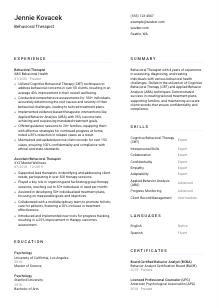
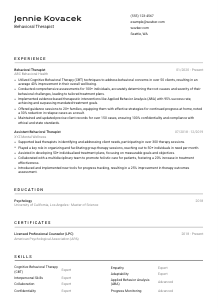
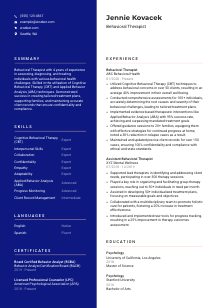
Shaping behaviors, but your CV feels unruly? Check out this Behavioral Therapist CV example, made with Wozber free CV builder. It shows how to gently guide your therapeutic talents to match job expectations, making your career journey as smooth as your clients' progress!
Behavioral therapy work is judged in practice by how well you assess complex client needs, translate findings into a usable treatment plan, and adjust interventions when progress stalls. A CV for this field needs to make that clinical judgment visible. Hiring teams want to see how you work with clients, families, and care teams, not just that you held the title.
When that experience is tailored closely to the opening, the first read becomes much clearer. A clinic or mental health employer can quickly tell whether your background centers on assessment, treatment planning, evidence-based methods like CBT or ABA, and compliant recordkeeping. Wozber's free CV builder helps organise that language into an ATS-compliant CV so those core therapy capabilities are easier to recognize early.
Behavioral health employers expect accuracy from the start. The header should present you as a licensed, reachable clinician whose location and contact details match the practical needs of the position.
Use your full name as the most visible text at the top of the CV. Keep the formatting clean and professional so the document reads like a clinical candidate profile, not a styled portfolio. In a field built on trust, clear presentation matters.
Place "Behavioral Therapist" directly under your name if that is the role you are targeting. This helps frame your background immediately, especially when your previous titles vary across settings such as assistant therapist, counselor, or ABA-focused clinician.
List a current phone number and a professional email address that you check regularly. If you include a website or LinkedIn profile, make sure the information matches your CV exactly, including job titles, dates, and licensure details.
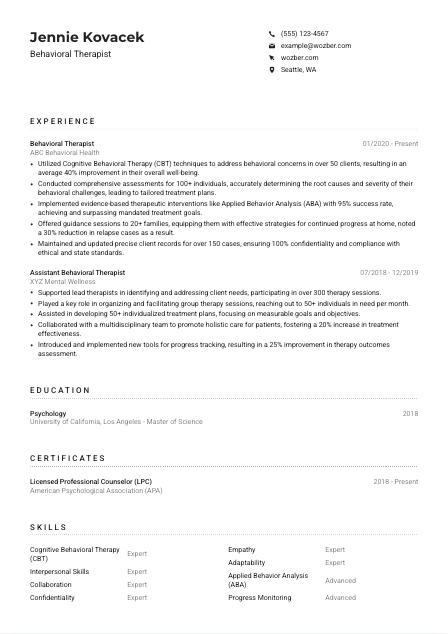
If an employer specifies a city or relocation requirement, reflect that in your header when it is true for you. In the example, listing "Seattle, WA" directly supports a stated requirement and removes a common screening question before it slows your application down.
A LinkedIn profile can support your application when it reinforces your clinical background, certifications, and work history. Skip personal links that do not add value. For Behavioral Therapist roles, relevance matters more than having extra digital presence.
Your personal details should confirm that you are a real, reachable candidate whose profile already fits the operational needs of the opening. That clean start gives the rest of your clinical experience room to speak for itself.




This section carries the most weight for a Behavioral Therapist because it shows how you apply training in real care settings. Employers look for evidence of assessment quality, intervention choice, progress monitoring, family support, and documentation discipline.
Read the posting for the actual work, not just the requirements list. Note the interventions, client needs, documentation standards, and collaboration points it emphasizes. Here, the recurring themes are comprehensive assessments, individualized treatment plans, evidence-based therapy, family guidance, and confidential recordkeeping. Those themes should shape which bullets you lead with.
Use reverse chronological order so hiring teams can quickly follow your progression from support work into independent clinical responsibility. For each position, include job title, employer, and dates. That structure matters when the role asks for at least 2 years of relevant experience and the employer needs to confirm your timeline fast.
Describe what you actually handled in each role. Strong Behavioral Therapist bullets often mention assessments completed, treatment plans developed, therapy modalities used, family sessions led, or progress reviews documented. The sample CV works because it ties daily clinical work to outcomes, such as conducting 100+ assessments and implementing CBT and ABA in active caseloads.
Quantify your impact with measures that make sense for therapy work. That can include number of clients served, improvement in treatment goals, relapse reduction, compliance rates, family participation, or caseload size. In the example, a 40% improvement in client well-being and a 30% reduction in relapse cases give the employer a clearer picture of treatment effectiveness than broad claims ever could.
Keep the section centered on behavioral or mental health work, especially experiences that show direct client care, intervention planning, and multidisciplinary coordination. If an older role does not support your candidacy, reduce it or remove it. Space on the page is better spent on therapy outcomes, treatment methods, and case documentation.
A hiring manager should be able to scan your experience section and understand the populations you served, the methods you used, and the results you helped achieve. That is what turns past employment into a credible case for clinical contribution.
Behavioral Therapist roles often set a clear academic floor because assessment and intervention work depend on formal training. Your education section should confirm that foundation quickly and without unnecessary detail.
If the posting calls for a master's degree in Psychology, Counseling, or a related field, make sure that qualification is impossible to miss. Put your qualifying graduate degree first, even if you hold multiple degrees. In the example, the Master of Science in Psychology directly answers the requirement.
List degree, field of study, institution, and graduation year. That is enough for most Behavioral Therapist CVs. Simple formatting helps both recruiters and ATS software read your academic background without confusion.
When your degree closely matches the role, you do not need to overexplain it. A master's in Psychology or Counseling already carries weight for therapy positions. Place the most relevant credential at the top and let that direct alignment support your candidacy immediately.
Most experienced clinicians do not need to list coursework. Consider it if you are early in your career and want to highlight training in behaviour analysis, psychopathology, counseling methods, or assessment. Otherwise, keep the section concise and let your experience carry the deeper clinical story.
Honors, research, or thesis work can help when they connect to behavioral health practice, intervention research, developmental psychology, or related populations. If they do not add relevant context, leave them out and keep attention on the qualifications most likely to matter in hiring.
This section should confirm that you meet the educational standard for clinical work without making the reader search for it. Clear degree information is often one of the fastest ways to pass an early review.
In behavioral health, credentials are not decorative. They tell employers whether you are authorized to practice, what treatment frameworks you are trained in, and how independently you may work with clients.
Start with the licenses or certifications the employer specifically asked for. If the opening mentions LPC or BCBA, those belong at the top when applicable. This is one of the fastest screening points for therapy roles, so make it obvious.
Show the credentials that support your ability to deliver behavioral therapy now. A short list of active, role-aligned certifications is stronger than a crowded section filled with unrelated training. The example does this well by centering on LPC and BCBA.
Dates help employers understand whether a credential is current, recently earned, or long maintained. For licenses and board certifications, showing an active range such as "2019 - Present" can quickly communicate standing and continuity.
Expired or missing credentials can derail an otherwise qualified application. Review this section regularly, especially if you renew licenses, add continuing education, or gain a new certification tied to behavioral interventions or mental health treatment.
For many Behavioral Therapist openings, this section answers a basic hiring question before anything else. If you hold the right active credentials, show them clearly and early.
A Behavioral Therapist skills section should read like the toolkit you use in treatment, not a generic list of soft traits. The best version combines intervention methods, care-process skills, and a few interpersonal strengths that matter in session and with families.
Start with the posting and pull out the required competencies. For this kind of role, that usually includes evidence-based interventions, assessment work, communication with clients and families, and record management. Those terms give you a more targeted list than writing from memory.
Include the therapy approaches and care skills that define your work, such as CBT, ABA, progress monitoring, treatment planning, client record management, collaboration, empathy, and confidentiality. The example is effective because it pairs clinical methods with the relationship-centered skills that matter in behavioral health settings.
Do not overload this area with every capability you have ever used. Choose the skills that best support the target position and that also appear elsewhere in your experience bullets. That consistency helps both ATS matching and human review.
Every skill here should connect to something tangible in your work history, whether that is a treatment modality, a care workflow, or a client outcome. That makes the section feel credible instead of decorative.
Communication is central to behavioral therapy, so language ability can matter beyond a simple checkbox. This section should reflect the level at which you can conduct sessions, explain treatment strategies, and support families clearly.
If the employer specifies professional English, list English with an accurate proficiency label. In this case, that requirement should be easy to spot because session quality, documentation, and family communication all depend on it.
Order languages by usefulness to the role. English will usually lead when it is required. If you also speak another language that is common in the client population you serve, include it as an added clinical asset.
Additional languages can strengthen your CV, especially in community mental health, school-based care, or diverse outpatient settings. The sample's inclusion of Spanish is a good example of a secondary language that could support rapport and family engagement, even when it is not listed as a formal requirement.
Choose clear terms such as Native, Fluent, Intermediate, or Basic. Avoid vague labels. Employers need to know whether you can manage therapy conversations, explain behavioral strategies, or simply greet clients in that language.
Language skills matter most when they improve communication, trust, and continuity of care. If your additional language ability helps with parent coaching, intake conversations, or culturally responsive care, it deserves a place on the CV.
Accurate language details help employers understand how you will function with clients and families from day one. Keep this section honest, relevant, and tied to real care communication.
The summary sits at the top of the page, so it should quickly establish your level of experience, your therapeutic methods, and the kind of behavioral health work you are equipped to handle. This is where you frame your value before the reader reaches the details.
Before writing, identify the few priorities that appear most often in the posting. For a Behavioral Therapist, that may be years of experience, evidence-based modalities, treatment planning, family support, or compliant documentation. Use those themes to decide what belongs in the summary.
Your first line should establish professional identity quickly, such as "Behavioral Therapist with 4+ years of experience." If your background is earlier-career, be precise rather than inflated. Accuracy carries more weight than grand language in clinical hiring.
Call out core approaches and responsibilities that match the role, especially recognized interventions like CBT or ABA. The sample summary works because it links those methods to treatment planning, family support, and secure recordkeeping instead of dropping technique names without context.
Aim for 3 to 5 lines with concrete information. Focus on your experience level, therapy approach, client-facing strengths, and one or two outcomes or responsibilities that matter most. A concise summary helps the hiring team understand your clinical profile before they review the full case history in your experience section.
A clear summary tells the reader what kind of Behavioral Therapist you are, which methods you use, and where your value shows up in practice. That framing makes the rest of the CV easier to read for the right reasons.
A strong Behavioral Therapist CV shows more than compassion and interest in mental health. It connects graduate training, licensure, evidence-based interventions, client progress, family support, and ethical documentation into one clear hiring story.
Wozber can help you shape that story faster with its free CV builder, ATS-friendly CV template options, and ATS CV scanner for tighter ATS optimisation against the job description. Use those tools to align your language with the role, then make sure the final CV clearly shows the clinical judgment, treatment methods, and client impact the employer needs to see.




