



Use Wozber and land your dream job
Create CV
No registration required
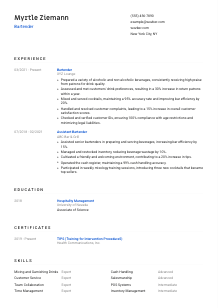
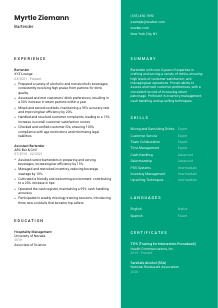
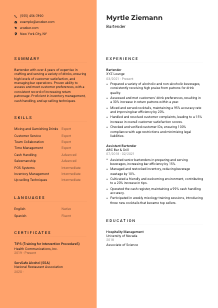
Mixing stellar drinks, but your CV feels watered down? Shake things up with this Bartender CV example, made with Wozber free CV builder. Learn how to pour your mixology skills into a profile that matches job requisites, ensuring your career is always served up just right!
Bartending gets judged fast because the work itself moves fast. A hiring team wants to see whether you can keep drink quality consistent, manage a packed bar without losing accuracy, handle IDs and cash correctly, and keep guests engaged when the room is loud and the orders keep coming.
When your CV is tailored to the opening, those priorities show up immediately in the language of your experience, skills, and certifications. Wozber's free CV builder helps you line up your wording with the posting and keep an ATS-compliant CV easy to scan, so the employer can quickly see your service pace, beverage knowledge, and customer-facing judgment.
Hospitality hiring starts with practical details. For a bartender, this section should confirm who you are, how to reach you, and whether you meet basic requirements such as title alignment and, when relevant, location.
Use your full name in a clean, readable format so it stands out at the top of the page. Bars and restaurants move quickly when sorting applications, and your header should make it easy to identify your CV right away.
Place "Bartender" directly under your name when that matches the role you are targeting. This keeps your positioning clear from the first line and helps align your CV with postings that are screening for bartending experience rather than broader hospitality work.
List a current phone number and a professional email address. If a hiring manager wants to bring you in for a trial shift or interview, they should not have to work around outdated details or casual contact info.
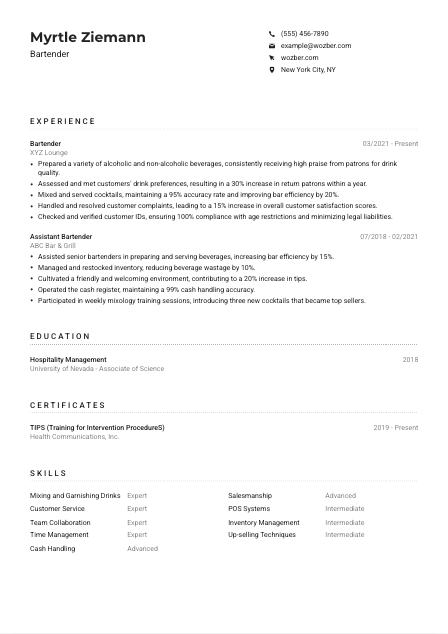
Some employers want someone already based nearby for scheduling, shift flexibility, or immediate start. In this example, listing "New York City, NY" helps address a stated requirement directly and removes questions about relocation or commute.
Include a LinkedIn profile or personal website if it supports your candidacy with relevant hospitality experience, event work, or beverage credentials. If the link is sparse or unrelated to bar service, leave it off and keep the focus on information the employer can use.
Your personal details should settle the basics quickly: your identity, your target role, your contact path, and any location requirement tied to the job. That clears the way for the rest of the CV to focus on service performance and bar experience.




Behind the bar, employers look for proof that you can handle volume, maintain standards, and keep customers satisfied at the same time. Your experience section should show what kind of bar environment you worked in, what you were trusted to do, and what results followed.
Start by marking the duties and performance areas that matter most in the ad. For a bartender, that often includes fast-paced service, drink preparation, guest recommendations, inventory upkeep, complaint handling, ID checks, and cash register use. Those are the points your bullets should reflect first.
List your jobs in reverse chronological order with your title, venue name, and dates. Keep the structure consistent so the reader can follow your progression from support roles to full bartending responsibility, as shown in the example from Assistant Bartender to Bartender.
Move past generic lines like "served drinks" or "helped customers." Show what happened because of your work. The example does this well by tying bar duties to results such as increased return patronage, improved satisfaction scores, stronger efficiency, and full compliance with age checks.
Metrics make bartending impact easier to picture when they match the job. Good examples include tip growth, repeat customer rates, order accuracy, speed gains, wastage reduction, customer satisfaction, cash handling accuracy, or sales of new cocktails. A bullet like "maintained 99% cash handling accuracy" says far more than "responsible for register operations."
Prioritise bar, restaurant, nightlife, catering, or hospitality roles that show customer interaction, pace, and operational discipline. If an older job does not strengthen your case for handling service, drinks, or front-of-house pressure, trim it down or leave it off.
Each role should show that you can run service cleanly under pressure, keep guests happy, and protect the business through accurate cash handling and responsible alcohol service. If those points come through in your bullets, your experience section is doing its job.
Education usually plays a supporting role on a bartender CV, but it can still add useful context. Hospitality study, food and beverage coursework, or customer service training can reinforce the practical experience you bring to a bar team.
Many bartender openings focus far more on service record and bar skills than on formal degrees. Still, if you have hospitality-related education, include it clearly because it can strengthen your understanding of guest service, operations, and venue standards.
List your degree, school, field of study, and graduation year or date. The example's Associate of Science in Hospitality Management works well because it connects naturally to customer service and bar operations without taking attention away from hands-on experience.
If your education includes beverage, hospitality, restaurant operations, or service training, make that connection visible. Do not force unrelated academic detail into the section. For this kind of role, practical relevance matters more than academic depth.
You can include select coursework or programs if you are early in your career or if the training directly supports bartending, such as hospitality management, food and beverage operations, or responsible alcohol service. Keep it brief and tied to the job.
Honors, extracurriculars, or student projects are useful only if they strengthen your hospitality story. Once you have solid bartending experience, your bar performance, customer handling, and certifications usually carry more weight than campus details.
Use education to support your hospitality profile, not to compete with your experience. A concise, relevant entry adds context and keeps attention on the part employers care about most: how you perform in service.
For bartenders, certifications often speak directly to compliance and readiness. If a posting mentions alcohol service credentials, surface them clearly because they can reassure an employer that you understand legal service standards as well as guest-facing work.
If the job prefers TIPS or ServSafe Alcohol, make sure those appear prominently when you have them. In the example, both certifications reinforce that the candidate is prepared for responsible alcohol service and age-verification standards.
Prioritise credentials that relate to alcohol service, food safety, hospitality, or beverage knowledge. A short, relevant list works better than padding the section with unrelated courses that do not help a bar manager judge your readiness.
Certifications that require renewal should include dates so employers can see whether they are active. Current alcohol service credentials are especially useful in venues that want staff ready to start without extra compliance delays.
If you are actively bartending, staying current with alcohol service rules, POS workflows, and beverage training helps over time. Renew what expires and add new certifications when they reflect real responsibility in the kinds of venues you want to work in.
Relevant certifications can move your CV higher because they connect directly to legal compliance, guest safety, and operational trust. Keep the section tight, current, and closely tied to the service environment you are targeting.
A bartender skills section should read like the floor plan of a shift: drink preparation, guest interaction, speed, cash accuracy, and teamwork. The most useful skill lists are specific enough to match the job and short enough to stay credible.
Look for the mix of hard and soft skills in the posting. Here, the essentials include mixing and garnishing drinks, serving alcoholic and non-alcoholic beverages, communication, customer service, cash handling, and operating a register in a fast-moving setting.
Put the most relevant skills first. For this kind of opening, that could mean drink mixing, customer service, ID verification, POS systems, upselling, inventory management, and team coordination during busy service. The sample CV handles this well by combining beverage skills with cash handling and inventory support.
Choose skills you can back up in your experience bullets. A shorter list tied to actual bar work is stronger than a long list of generic traits. If you include "salesmanship" or "up-selling techniques," your experience should show stronger tips, repeat business, or successful drink recommendations.
This section should show that you can deliver drinks accurately, communicate well with guests, support the flow of service, and handle the operational side of the bar. If the skills match your work history, the section feels credible immediately.
Bartending is live customer work. Language ability matters when taking orders, making recommendations, handling complaints, and checking IDs, especially in busy venues with diverse guest traffic.
If the posting says you must be comfortable communicating in English, list English clearly with your proficiency level. That answers a practical service requirement right away and shows you can manage orders, conversations, and compliance-related interactions.
Lead with English when it is named in the posting. In a guest-facing role, that matters more than treating the section as a general profile detail. It helps the employer connect your communication ability to actual bar service.
Additional languages can be a real advantage in hospitality, especially in high-traffic urban venues. The example's Spanish can strengthen customer interaction with a broader range of patrons, but only include languages you can genuinely use in service conversations.
Be accurate about your level. If you claim fluency, expect to use that language while greeting guests, explaining drinks, handling requests, or resolving issues during a shift.
Some bars benefit more from multilingual staff than others. In neighborhoods or venues with diverse clientele, extra language ability can support smoother service and stronger guest rapport, so it is worth listing when relevant.
Keep this section practical. Show the employer that you can communicate clearly where it matters most, at the bar, with guests, under pressure, and in the language the role requires.
Your summary sits at the top of the CV, so it should quickly establish the kind of bartender you are. Focus on service environment, years of experience, beverage expertise, and the operational strengths that match the role you want.
Before writing the summary, note the themes that appear repeatedly in the posting. Here, those include fast-paced bartending experience, drink knowledge, customer communication, cash handling, and responsible service. Use those priorities to decide what belongs in the opening lines.
Start with your experience level and type of work you do well. A line such as "Bartender with 4+ years of experience in high-volume hospitality settings" gives more hiring value than a vague description of being passionate or energetic.
Bring in the skills and outcomes that best support the role. The example summary works because it mentions drink preparation, customer satisfaction, inventory management, cash handling, and repeat patronage, all of which connect to the actual demands of bartending.
Aim for a compact paragraph that can be read in seconds. A bar manager should come away with a clear picture of your service pace, beverage knowledge, and customer-facing strengths without digging through the rest of the page first.
A good bartender summary tells the employer that you can handle the bar, the guests, and the operational details that keep service running smoothly. Keep it concise, specific, and aligned with the kind of shift environment you want to step into.
A bartender CV works when it shows more than drink knowledge. It should make your service pace, guest handling, cash accuracy, responsible alcohol service, and bar-floor judgment easy to see from the first scan.
Use Wozber's free CV builder and ATS CV scanner to tailor each section to the opening, strengthen role-specific wording, and keep everything in an ATS-friendly CV format. When your CV reflects the realities of the bar, hiring managers can quickly see whether you are ready to step behind it.




