



Use Wozber and land your dream job
Create CV
No registration required
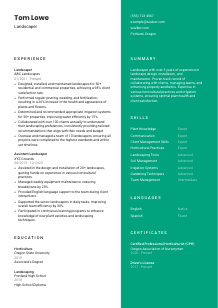
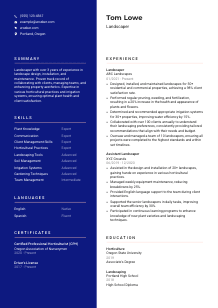
Crafting green realms, but your CV seems unplanted? Check out this Landscaper CV example, created with Wozber free CV builder. Learn how to seamlessly scatter your horticultural talents to match job garden plots, fertilizing your career with growth and opportunity!
Landscaping CVs are reviewed through the lens of real field execution. Hiring teams want to see whether you can handle planting plans, pruning schedules, irrigation decisions, equipment use, and site upkeep without constant supervision. A vague CV that says only "maintenance" or "outdoor work" usually misses the practical range the role actually covers.
When the CV mirrors the language of the job posting, it becomes much easier to distinguish a general labour background from true landscaping experience. Wozber's free CV builder helps organise that tailoring into an ATS-compliant CV, so terms like horticultural practices, irrigation systems, client communication, and crew oversight are easy to read by both the software and the people deciding who can step onto a property and lead quality work.
For a landscaper, the header does more than identify you. It confirms that you are reachable, local or ready to relocate when required, and prepared for field-based work that may involve travel between residential and commercial sites. Keep this section clean, direct, and aligned with the posting.
Place your full name at the top in a larger, readable font. This is standard, but it matters because field hiring often moves quickly, especially when managers are reviewing several candidates for seasonal or full-time crews. Make your name easy to spot without decorative styling.
Add "Landscaper" beneath your name if that is the role you are pursuing. Matching the title from the posting helps position you correctly from the first line and supports ATS alignment. If your recent title was "Assistant Landscaper" but your current experience supports the step up, your CV can still target "Landscaper" while your experience shows the progression.
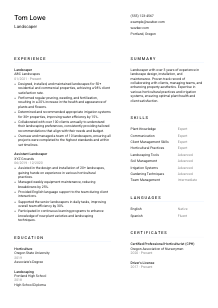
List your phone number, professional email address, and city and state. In this example, Portland, Oregon is worth showing because the employer specifically asks for someone local or willing to relocate. That kind of location match belongs here, where it can be seen immediately, instead of being buried later in the CV.
If you have a portfolio, company page, or LinkedIn profile with project photos, property types, client feedback, or landscaping scope, include it. For this profession, visual proof can help when it shows planting layouts, hardscape elements, irrigation work, or before-and-after results. Skip links that do not add anything to your candidacy.
Do not include age, marital status, or other personal data unrelated to the work. Landscaper hiring decisions should turn on practical qualifications such as equipment proficiency, horticultural knowledge, communication with clients, and mobility for site work. Keep the header focused on information that helps move your application forward.
Your personal details should confirm that you are reachable, professionally presented, and aligned with the job's location and title. For a landscaper, that quick clarity helps the hiring team move straight to your field experience and project scope.




The experience section carries the most weight for many landscaper roles because it shows what kinds of properties you have handled, what standards you maintained, and whether you can work directly with clients or crews. Strong entries describe the work itself, the scale, and the outcome, not just the daily chores.
Start by identifying the repeated work themes in the job description. Here, those include landscape design and installation, ongoing maintenance, plant health, irrigation, client collaboration, and team oversight. Your bullets should reflect the same operating areas using language you can support with real experience. That is much more effective than listing general outdoor labour.
List positions in reverse chronological order with the employer name, your title, and dates. That straightforward format helps both ATS systems and hiring managers follow your progression from support work into independent or supervisory responsibility. In the sample CV, the move from Assistant Landscaper to Landscaper makes that growth easy to understand.
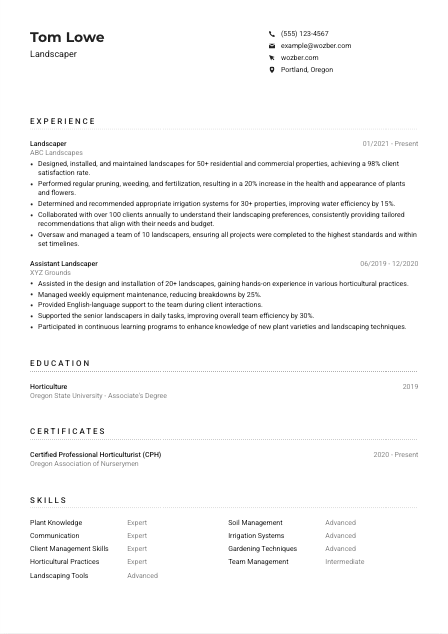
Each bullet should show what you handled and what changed because of your work. Good landscaper bullets mention property count, maintenance standards, water efficiency, client satisfaction, or crew output. The sample does this well with details like managing 50+ properties and improving plant health by 20%, which makes the work feel concrete instead of generic.
Use numbers where they reflect real performance. For this profession, that can mean number of properties serviced, client volume, crew size, irrigation improvements, reduction in equipment breakdowns, or gains in plant condition and schedule adherence. Metrics should support the story of reliable field execution, not read like random statistics added for effect.
If a past role does not strengthen your case for landscaping, grounds maintenance, client service, or crew coordination, keep it brief or leave it out. Space is better spent on work involving pruning, fertilization, planting plans, irrigation setup, equipment handling, and other duties that map directly to the role you want now.
A hiring manager should finish your experience section knowing what environments you have worked in, how well you maintained them, and whether you can handle both the physical work and the client-facing side of landscaping.
Education is rarely the only deciding factor for a landscaper, but it can strengthen your CV when it supports horticultural knowledge, plant care decisions, soil work, or irrigation planning. Use this section to show training that makes your field experience more credible and better informed.
If you have coursework or a degree in horticulture, botany, landscaping, turf management, or a related area, make sure it is visible. Even when a posting focuses more on experience than formal education, relevant study helps explain your knowledge of plant types, soil conditions, and maintenance practices. An Associate's Degree in Horticulture, like the one in the example, is directly relevant.
List the school, degree, field of study, and graduation year. That is enough for most landscaping applications. Clear formatting matters because this section is usually reviewed quickly, especially when the employer is mainly checking whether you have training that supports plant care, design, or grounds maintenance work.
If the posting calls for understanding plant varieties, horticultural practices, or soil conditions, your education section should help back that up. A field such as horticulture carries more value here than a generic diploma alone because it connects directly to the decisions landscapers make on-site about planting, pruning, and maintenance.
You do not need to list classes unless they sharpen your match. If you are earlier in your career, a few well-chosen examples such as plant identification, irrigation basics, soil science, or landscape design can help fill in technical depth. Use them only if they strengthen the professional story already shown in your experience.
If you have educational distinctions tied to horticulture, sustainability, or landscape design, they can stay. If they do not connect to the work, they are optional. This section works best when it supports how you make plant care decisions, understand site conditions, or apply sound landscaping practices in the field.
For landscaping, education adds value when it explains why your work decisions are informed, not improvised. Keep it tied to plant health, site conditions, and the technical side of maintaining outdoor spaces well.
Certifications matter in landscaping when they show legal readiness, horticultural training, or specialised knowledge that clients and employers trust. This section is especially useful when the posting mentions a driver's license or state-specific credentials, as this one does.
Lead with certifications that directly support the role. For a landscaper, that often means horticulture credentials, pesticide or irrigation certifications where relevant, and any recognized local trade qualifications. In the example, the Certified Professional Horticulturist credential is a strong match because it reinforces plant knowledge and professional training.
A valid driver's license belongs here when the job involves moving between job sites, transporting tools, or supervising crews across properties. This posting asks for one explicitly, so including it is not filler. It addresses a practical hiring requirement that can determine whether a candidate is considered at all.
List the issuing organisation when available and include dates or validity periods. Current credentials matter because they show that your qualifications are active and usable now. For regulated tasks or employer insurance requirements, expired information can create unnecessary doubt.
Landscaping changes with water-use practices, plant care methods, regional standards, and equipment. If you have continued adding certifications over time, that pattern supports your professionalism. It tells employers that you keep your technical knowledge current rather than relying only on what you learned years ago.
Relevant certifications and licenses make it easier for an employer to picture you on the job quickly, whether that means driving to sites, advising clients on plant care, or applying trained horticultural knowledge with confidence.
A landscaper's skills section should read like a snapshot of real field capability. Focus on the tools, plant knowledge, systems, and people-facing strengths that appear repeatedly in the kind of roles you want. Avoid turning this into a broad list of generic strengths.
Review the posting for the practical capabilities it names. Here, the employer wants proficiency with manual and power landscaping tools, knowledge of plant types and soil conditions, horticultural practices, client communication, and team oversight. If you genuinely have those strengths, use the same terminology so the match is obvious to both ATS software and the hiring reader.
Choose the abilities that shape actual outcomes on a property. For landscaping, that usually includes plant knowledge, irrigation systems, soil management, pruning and maintenance techniques, equipment use, and client management. The sample CV handles this well by balancing technical skills like irrigation systems with operational ones like communication and team management.
Use concise skill names instead of long explanations. An ATS-friendly CV format works best when skills are easy to scan and closely aligned with the wording in the posting. Terms such as "Horticultural Practices," "Landscaping Tools," and "Soil Management" carry more value here than vague entries like "hard worker" or "team player."
The best skills lists reinforce your project work, maintenance responsibilities, and client-facing ability. A hiring manager should be able to connect these skills directly to the kinds of landscapes you can install, maintain, and improve.
Language skills are not always the main decision point in landscaping, but they can add practical value when the role involves client consultations, crew coordination, or service across diverse neighborhoods. This section should stay brief and honest.
If the job posting calls out English ability, include it clearly. This example asks for excellent English skills, so listing English at the appropriate proficiency level directly answers a stated requirement. That matters for client conversations, explaining maintenance recommendations, and managing work expectations on-site.
A second language can be valuable in landscaping because crews and clients are often diverse. Spanish, for example, may support smoother communication in many residential and commercial environments. Include additional languages when they are real working strengths, not minor familiarity.
Stick to clear terms such as Native, Fluent, Advanced, or Conversational. That gives hiring managers a realistic sense of how well you can communicate with clients, vendors, or crew members. Overstating fluency can quickly become a problem in a role built on direct coordination and service.
Language ability carries more weight when the role includes client meetings, crew supervision, or property walkthroughs. If those are part of your target jobs, this section can strengthen your profile. If not, it should remain a short supporting detail rather than a major selling point.
Landscaping often involves discussing budgets, plant care recommendations, scheduling, and site preferences. If you claim strong language skills, be prepared to use them in those contexts. Accuracy here protects your credibility and helps employers place you in the right level of responsibility.
For landscapers, languages matter most when they help work move smoothly between crews, clients, and job sites. Keep the section factual and connected to real communication demands.
Your summary should give a quick, grounded read on the kind of landscaper you are. In a few lines, it needs to connect your experience level with the work you handle best, whether that is installation, maintenance, irrigation, client service, or crew leadership.
The summary should be tailored, not recycled. Pull out the requirements that define the role most clearly. In this case, that includes hands-on landscaping experience, plant and soil knowledge, irrigation judgment, client communication, and team oversight. Build your short introduction around the areas where your background genuinely overlaps.
Start with your years of experience and the kind of landscape work you do. A line like the sample's mention of 3+ years in design, installation, and maintenance works because it immediately places the candidate within the employer's scope of work. That first sentence should tell the reader whether you are focused on maintenance, full-service landscaping, or supervisory field work.
Use the summary to mention strengths that matter for the target role, such as improving property appearance, managing crews, supporting water efficiency, or working directly with clients on recommendations and budgets. Keep these claims anchored in things your experience section goes on to support.
A summary should usually be a short paragraph, not a life story. Skip generic traits and keep the wording tied to field work, horticultural knowledge, and service outcomes. When written well, this section gives the hiring manager a fast read on whether your background matches the kind of properties, clients, and responsibilities they need covered.
A landscaper summary should quickly establish your field experience, technical strengths, and client-facing capability. Once that is clear, the rest of the CV has a much easier job proving you can handle the work.
A tailored landscaper CV should now show the full picture: practical experience with installation and maintenance, sound horticultural knowledge, confidence with tools and irrigation systems, and the communication skills to work with clients and crews. That combination is what moves a candidate beyond general outdoor labour and into serious consideration for landscaping roles.
Wozber's AI CV builder can help you tighten that alignment, surface missing requirements, and refine wording for ATS optimisation without losing the reality of your field experience. Use it to build an ATS-friendly CV template that makes your project scope, plant care knowledge, and day-to-day reliability easy to judge.
When the CV is tailored well, hiring teams can quickly see whether you are ready to maintain quality landscapes, manage expectations on-site, and contribute from day one.