




Use Wozber and land your dream job
Create CV
No registration required
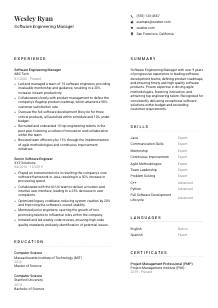
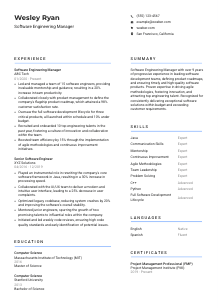
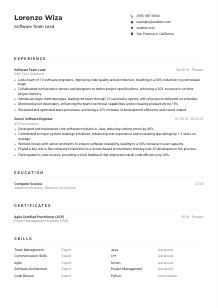
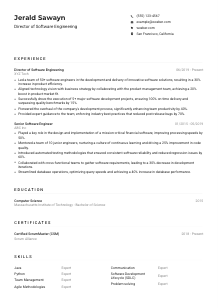
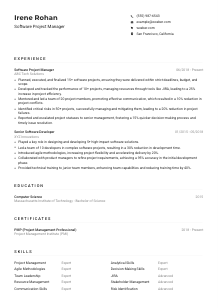
Leading code warriors, but your CV feels like a memory leak? Check out this Software Engineering Manager CV example, created with Wozber free CV builder. It shows how to present your managerial flair alongside technical prowess, ensuring your career journey is as streamlined as optimised algorithms!
Software Engineering Manager hiring usually turns on one question fast: have you led engineers to ship reliable software while keeping delivery, quality, and team health moving in the same direction? A CV for this role needs to make that operating range visible. Technical depth still matters, but leadership is judged through outcomes such as release cadence, engineering standards, roadmap execution, cross-functional decisions, and the way your team performs under pressure.
The first pass often separates hands-on senior engineers from managers who can run delivery across the full software development lifecycle. Wozber's free CV builder helps you align your language with the posting in an ATS-friendly CV format, so terms like agile delivery, mentorship, roadmap collaboration, and engineering hiring are easy to parse and prioritise. That makes it easier for a hiring team to see where you have already managed teams, shipped software on schedule, and partnered with product and senior stakeholders.
For a Software Engineering Manager, the top of the CV should communicate professional credibility immediately. Keep this section clean and practical so the hiring team can identify your target role, contact you quickly, and confirm any location requirement without digging.
Use your full name as the most visible line on the page. Hiring teams reviewing engineering leadership CVs move quickly, and your header should be easy to scan in both a recruiter screen and an ATS export. A simple, readable presentation works better than decorative formatting.
Place the role title directly under your name when it matches the position you are pursuing. If the opening is for "Software Engineering Manager," use that wording instead of a broader label like "Engineering Leader" or "Senior Software Engineer." This removes ambiguity right away and helps the CV index correctly in ATS searches.
Add a phone number and professional email address that you check regularly. For engineering management roles, where interview loops often involve recruiters, directors, and cross-functional stakeholders, missed messages slow the process. If you include a website or portfolio, make sure it supports your leadership story through architecture notes, shipped products, or talks rather than unrelated side content.
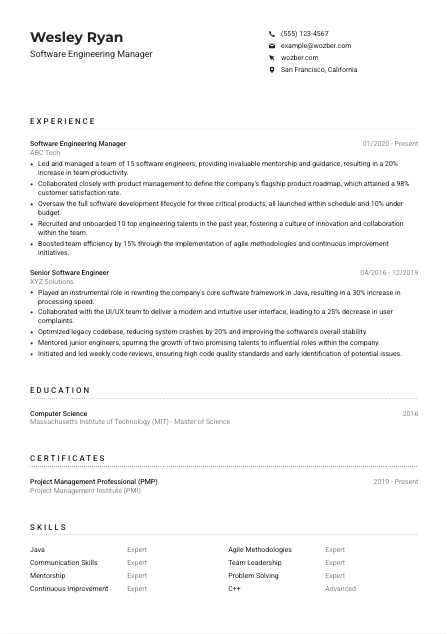
If the employer specifies a city or relocation expectation, reflect that clearly in your header. In the example, "San Francisco, California" directly supports a stated requirement. Use location this way when it answers a practical hiring filter, not as filler.
A LinkedIn profile or personal site can strengthen this section when it is current and consistent with your CV. For a Software Engineering Manager, these links are most useful when they reinforce leadership scope, technical background, hiring activity, publications, or product delivery history. Keep titles, dates, and role descriptions aligned across every profile.
This section should confirm who you are, what role you are targeting, and whether any practical requirement such as location is already covered. When the header is clean and aligned, the reader can move straight to your delivery history and leadership scope.




This is the section that carries the most weight for a Software Engineering Manager. Hiring teams want to see how large your team was, what products or systems you owned, how you worked with product and stakeholders, and what changed because of your leadership.
Read the job description for the responsibilities that define day-to-day management, not just the keywords. Here, the important threads are leading engineers, mentoring, driving agile improvement, owning software delivery from design through deployment, partnering with product management, and hiring strong talent. Those priorities should shape which bullets you keep and which results you emphasize.
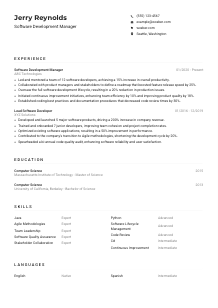
List roles in reverse chronological order and make the move from individual contributor to manager easy to follow. For this profession, titles alone are not enough. The reader should be able to trace increasing scope through team leadership, architecture ownership, release accountability, or mentoring responsibilities. The sample CV does this well by moving from Senior Software Engineer into Software Engineering Manager.
Focus each bullet on a management action tied to a technical or business result. Strong examples include improving engineering velocity, launching products on schedule, reducing defects, setting review standards, or aligning delivery with roadmap priorities. In the example, leading 15 engineers, launching three products within schedule, and recruiting 10 engineers all tell a hiring team something specific about operational scope.
Metrics matter because engineering management is measured through throughput, reliability, cost, hiring success, and customer outcomes. Use numbers that naturally fit the work, such as team size, release timelines, budget performance, productivity gains, crash reduction, uptime improvements, or customer satisfaction. Results like "20% increase in productivity," "10% under budget," or "98% customer satisfaction" are useful because they tie leadership decisions to outcomes.
A Software Engineering Manager CV should not read like a task log for an individual contributor role. Remove bullets that only describe coding without showing technical leadership, project ownership, coaching, or cross-functional execution. Keep hands-on depth where it strengthens credibility, such as a Java rewrite that improved processing speed, but frame it as part of a broader management trajectory.
Your experience section should leave no doubt that you can lead engineers, deliver software on time, and keep standards high across the lifecycle. When the bullets connect people leadership to shipped results, your management capability becomes much easier to judge.
Education is usually a supporting section for experienced Software Engineering Managers, but it still needs to answer the posting cleanly. Employers often use it to confirm technical foundation, especially when the role calls for a computer science degree or equivalent background.
Start by checking whether the posting asks for a specific academic background. Here, a bachelor's degree in Computer Science or a related technical field is explicitly listed, so that credential should be easy to find. If you hold a higher degree in the same field, include it as well, but do not bury the bachelor's requirement if the employer names it directly.
List each entry with degree, field of study, institution, and graduation year. Keep the formatting straightforward so both recruiters and ATS systems can parse it without confusion. The sample CV handles this cleanly with a Master of Science and Bachelor of Science in Computer Science.
For engineering management roles, your education should support your credibility as someone who can guide architecture discussions, evaluate tradeoffs, and manage software teams with technical fluency. A Computer Science degree does that naturally. If your degree is in a related field, make the technical connection obvious through wording that matches the employer's requirement.
Most candidates with 8+ years of experience do not need to list coursework. Include it only if it strengthens a specific angle, such as distributed systems, algorithms, machine learning, or software engineering practice that still matters to the jobs you target. Early-career managers or candidates moving from adjacent technical paths may benefit more from that extra detail.
Academic honors, research, engineering clubs, or capstone projects can stay if they still add something distinctive, such as leadership, technical depth, or product-building experience. If they no longer compete with your professional accomplishments, trim them. At this level, the education section should support the story, not overtake it.
This section should quickly confirm that you meet the technical education baseline for the role. Once that is clear, the hiring focus returns to your engineering leadership and delivery record.
Certifications are rarely the main deciding factor for Software Engineering Manager roles, but they can strengthen the picture when they reflect delivery leadership, engineering operations, or continuing development. Include them when they add role-relevant context, not just to fill space.
Some engineering management openings ask for cloud, security, agile, or project credentials, while others do not mention certifications at all. This posting does not require one, so any certificate you list should clearly support the role rather than look generic. That distinction helps keep the CV focused.
Choose certificates that reinforce how you lead software delivery, manage projects, or run engineering teams. A credential such as PMP can support experience with planning, delivery discipline, stakeholder coordination, and budget control. If you hold certifications in areas like Scrum, cloud platforms, or security and they match the target job, those can also be useful.
List the issue date and, if relevant, renewal or active status. This is especially useful for certifications that expire or require continuing education. In the sample, showing PMP as active helps present it as a current credential rather than an outdated line item.
Engineering managers are expected to keep up with how teams build and ship software, whether through delivery frameworks, cloud platforms, platform engineering, or leadership development. Updating certifications over time can reinforce that you are still investing in how modern software organizations operate. Keep the list selective and recent enough to matter.
A concise certificate section can support your leadership profile when the credentials connect to software delivery, team management, or technical direction. If they do not sharpen that picture, leave them out.
The skills section should reflect how a Software Engineering Manager operates across technical decisions, team leadership, and execution. A mixed list of programming languages, engineering practices, and people-management strengths usually works best when it mirrors the role's actual demands.
Software Engineering Manager roles usually require a blend of hands-on credibility and management ability. In this description, that includes at least one programming language such as Java, C++, or Python, along with agile methods, collaboration, mentoring, and cross-functional communication. Build your list from those signals instead of pasting in every skill you have ever used.
Prioritise the capabilities the employer is likely to search for first. For this role, software development lifecycle ownership, team leadership, agile methodologies, communication with stakeholders, and one or more listed programming languages should all be prominent. The sample CV handles this well by featuring Java, agile methodologies, mentorship, team leadership, and full SDLC experience.
Avoid turning this section into a long inventory of frameworks and soft skills. A tighter list gives a clearer picture of your leadership profile and makes ATS matching cleaner. Grouping skills around languages, delivery practices, and management strengths can help if your format allows it, but even a simple list works when each item is relevant to engineering management hiring.
Your skills section should support the same story told in your experience bullets: you can guide engineers technically, run delivery effectively, and collaborate well across product and leadership teams. Relevance matters more than volume here.
Language skills are usually a smaller section, but they still matter when the posting names a communication requirement. For Software Engineering Managers, strong language skills support stakeholder alignment, team coaching, hiring conversations, and clear written communication across product and engineering work.
When the posting explicitly requires English, list it first and describe your proficiency clearly. This avoids any doubt about your ability to lead meetings, write documentation, and communicate with product, executives, and engineers. Use the wording that best reflects your actual level, such as Native or Fluent.
Do not bury the mandatory language under additional entries. For this opening, English should appear first because it is a stated requirement. That small ordering choice can matter in fast screens, especially for leadership roles where communication is central to the job.
Additional languages can be worth listing if they support collaboration across distributed teams, customer-facing work, or international hiring and engineering operations. In the sample CV, Spanish adds breadth without distracting from the required English proficiency. Include extra languages only when you can rate them honestly.
Stick to straightforward terms such as Native, Fluent, Intermediate, or Basic. Hiring teams do not need a complicated scale here. They need to understand whether you can lead discussions, write clearly, and work effectively across the communication demands of the role.
If you are applying to organizations with global teams, international product groups, or customer-facing engineering leadership, language breadth can be a practical plus. If not, keep this section brief. For most Software Engineering Manager applications, clarity and honesty are more important than variety.
This section should quickly confirm that you meet the role's language requirement and, if relevant, show added range for global collaboration. For an engineering manager, that means making communication capability easy to read at a glance.
The summary should read like a concise leadership snapshot, not a generic statement about being passionate or results-driven. For a Software Engineering Manager, it needs to connect technical depth, people leadership, and delivery outcomes in a few lines.
Review the posting before writing the opening lines. Here, the summary should reflect software engineering experience, management tenure, product and stakeholder collaboration, full lifecycle delivery, and strong communication. Those are the themes that belong in your first paragraph, not broad claims that could fit any leadership role.
Open with your title and years of experience, then add the kind of scope you handle. A line such as "Software Engineering Manager with 9+ years in software development and 3+ years leading engineering teams" immediately places you at the right level. The sample summary does this effectively by combining tenure with management focus and product delivery responsibility.
Choose strengths that map directly to the employer's priorities. Good options here include leading engineers, defining roadmaps with product partners, improving agile execution, shipping high-quality software on time, or hiring and mentoring talent. Specific wording is stronger than broad adjectives because it tells the reader how you operate.
Aim for 3 to 5 lines that can be read quickly at the top of the page. Include one or two concrete outcomes if space allows, such as improving productivity, delivering within budget, or raising customer satisfaction. That gives the summary substance without repeating the entire experience section.
A well-shaped summary should make the hiring team expect the right kind of detail in the sections that follow. When it clearly links engineering leadership to shipped results, the rest of the CV reads with stronger context.
A Software Engineering Manager CV needs to show more than technical competence. It should connect team leadership, software delivery, cross-functional planning, hiring, and measurable outcomes in language that matches the role you are targeting.
Wozber's free CV builder can help you shape that story into an ATS-compliant CV, using ATS-friendly CV templates and an ATS CV scanner to align your wording with the posting. The goal is a CV that makes your management scope, delivery record, and technical credibility easy to recognize from the first screen.
Before you apply, read the document once as if you were a VP of Engineering deciding who can lead a team through roadmap pressure, quality standards, and hiring needs. Your CV should now make that answer clear.