



Use Wozber and land your dream job
Create CV
No registration required
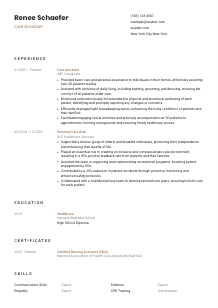
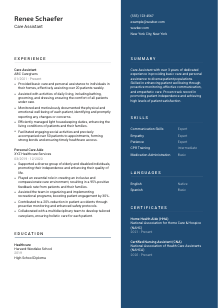
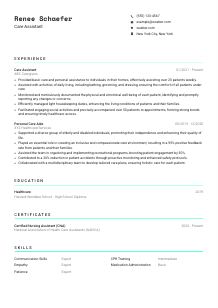
Supporting others, but feeling lost with your CV? Explore this Care Assistant CV example, created with Wozber free CV builder. Learn how to highlight your compassion and caregiving skills so they connect with job calls, ensuring your career journey is as nurturing as the roles you've embraced!
Care Assistant hiring turns quickly on whether your CV shows dependable, hands-on care. Employers need to see that you can support daily living with patience, notice changes in a patient's condition, document concerns clearly, and help people feel safe and respected in their own home or a care setting. If your CV stays too general, it can blur the difference between someone who has simply worked around care and someone trusted with real day-to-day support.
The first screen often happens through an ATS before a hiring manager looks for experience with ADLs, patient monitoring, and family-facing communication. Wozber's free CV builder helps you shape an ATS-friendly CV format that mirrors the language of the job ad without sounding forced, so your background reads clearly as care-ready from the start.
For a Care Assistant, the top of the CV should answer simple practical questions fast: who you are, how to reach you, and whether you meet basic logistics for the role. Keep this section clean and direct so nothing slows down contact or raises avoidable questions.
Use your full name in a slightly larger font than the rest of the header. In care hiring, this section does not need design flourishes. It needs to look orderly and professional, much like the documentation habits expected in patient support work.
Place "Care Assistant" under your name if that is the role you are applying for. Matching the posted title helps position your background correctly, especially when your previous titles vary between Care Assistant, Personal Care Aide, or Home Health Aide.
List one phone number and one professional email address that you check regularly. Care roles often move quickly from application to interview, so make sure employers can reach you without chasing outdated details.
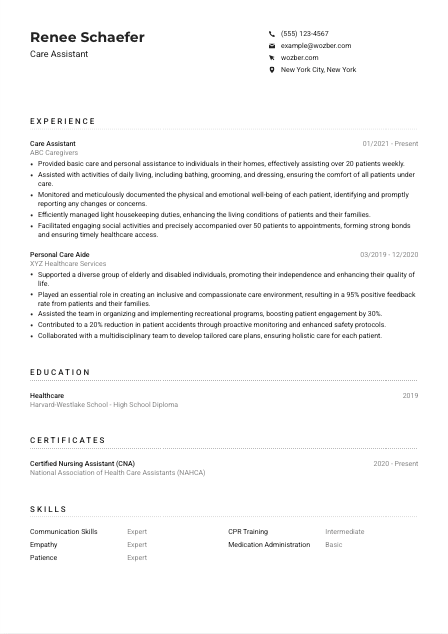
If the employer asks for local candidates, add your city and state. In the example here, New York City, New York matters because the posting names that location directly. When a posting includes a location requirement, showing it in the header removes doubt about availability and commute practicality.
Include LinkedIn or a professional profile only if it supports your application with matching care experience, certifications, or recommendations. If the profile is sparse or outdated, leave it off rather than creating inconsistency between your CV and online presence.
Do not include age, marital status, photo, or other personal details unrelated to care work. Keep attention on your caregiving experience, certifications, and ability to support patients safely and respectfully.
This section should make you look reachable, local when required, and professionally focused on care work. When the basics are handled well, the reader can move straight to the parts that show how you support patients and work with care teams.




Care Assistant experience carries the most weight when it shows what kind of care you provided, who you supported, and how consistently you handled daily responsibilities. Hiring teams look for practical details like ADL support, observation, documentation, safety awareness, and coordination with families or healthcare professionals.
Start by marking the responsibilities that appear in the posting, then match them to work you have actually done. For Care Assistant roles, that usually includes bathing, grooming, dressing, monitoring physical or emotional changes, light housekeeping, meal support, errands, and appointment accompaniment. This gives your experience section the right caregiving focus instead of a generic service tone.
Begin with your most recent caregiving position and work backward. Each entry should make the basics easy to scan: title, employer, and dates. If your past jobs include closely related titles, such as Personal Care Aide, keep the original title but write bullets that show the overlap in patient support and daily care tasks.
Daily care work is expected, so show how you carried it out well. Write bullets that combine the task with the result, such as maintaining patient comfort, supporting independence, reporting changes quickly, or helping families keep home routines stable. The sample CV does this well by pairing ADL support and monitoring with clear patient-centered outcomes instead of listing chores without context.
Metrics help when they match the reality of caregiving. You might note how many patients you supported weekly, appointment volume, feedback scores, reduced incidents, or engagement improvements from social activities. In the example, supporting over 20 patients weekly and accompanying more than 50 patients to appointments gives the employer a concrete sense of workload and trust.
If a past role included unrelated duties, trim them unless they strengthen your caregiving profile. Prioritise bullets that show patient assistance, safety, observation, household support, communication with nurses or supervisors, and compassionate interaction with elderly or disabled individuals. Relevance matters more than trying to document every task you have ever done.
Your experience section should make it easy to picture you in a patient's home or care facility handling daily support, noticing problems early, and communicating reliably. That is the level of detail that moves a Care Assistant CV forward.
Education is usually a supporting section for Care Assistant roles, but it still needs to confirm that you meet the stated requirement. Keep it straightforward, and use it to reinforce any healthcare-related background if you have it.
Check the posting for the exact baseline and make sure it appears clearly on the page. Here, the employer asks for a high school diploma or GED equivalent, so that credential should be easy to find without extra interpretation.
Present your education in a direct format so the reader can confirm it in seconds. For most Care Assistant applications, school name, degree, and field if relevant are enough. If your education is straightforward, there is no need to overbuild this section.
If you took health, biology, caregiving, nutrition, or patient support classes, they can reinforce your background, especially when your work history is still developing. For an experienced candidate, this is optional and should stay brief.
Include honors, volunteer work, or activities only if they connect to caregiving, community service, health support, or responsibility. For example, volunteer work with seniors or disability support says more here than unrelated academic clubs.
The more direct caregiving experience you have, the lighter this section can be. For many Care Assistant candidates, education confirms the requirement while the experience section does the real work of proving patient care capability.
This section only needs to confirm the academic baseline and support your care background where relevant. Once that is in place, your hands-on patient work and certifications can take the lead.
Certifications matter in Care Assistant hiring because they show formal training in patient support and can separate you from applicants with only informal caregiving experience. If you hold a CNA, HHA, CPR, or similar credential, make it easy to spot.
Lead with certifications that directly support bedside or home care work. For this type of role, CNA and HHA are especially valuable because the job description names them as preferred. If you have both, list both near the top, as the sample CV does.
Do not crowd the section with every training you have completed. Prioritise credentials tied to personal care, safety, patient support, or home health. A focused list helps the employer connect your training to real responsibilities like ADL support, monitoring, and safe assistance.
Show when the certification was earned and, if relevant, whether it is active. In care settings, recent or current credentials matter because they suggest up-to-date training, especially for patient handling, safety procedures, and reporting standards.
If you renew certifications or complete continuing education, include that information when it strengthens your application. It shows that you maintain current care practices rather than relying on outdated training from years ago.
A well-chosen certification section tells the employer that your care skills are backed by formal training, not only goodwill. For roles involving personal assistance and patient observation, that added credibility can make a real difference.
The skills section works best when it reflects the actual demands of patient support. For a Care Assistant, that means balancing human qualities like empathy and patience with practical abilities tied to safety, communication, and routine care tasks.
Review the job description and note both the technical and interpersonal skills it emphasizes. Here, communication, empathy, patience, and caregiving experience are central. That should shape how you name and order your skills so the section aligns naturally with the employer's language.
Lead with the abilities you use during daily care, such as communication, empathy, observation, CPR training, medication support if applicable, mobility assistance, and documentation. The example CV balances interpersonal strengths with practical care skills, which works well for this kind of role.
Avoid broad filler terms that do not tell the employer how you work. A shorter list of role-relevant skills is more useful than a long list of vague strengths. Every item should connect back to patient well-being, household support, safety, or collaboration with healthcare staff and families.
When someone scans this section, they should quickly recognize the abilities needed for real caregiving: clear communication, calm support, safe assistance, and dependable observation. Those are the skills that belong on the page.
Language matters in care work because instructions, reassurance, reporting, and family communication all depend on being understood. This section should show whether you can meet the communication needs of the role without overstating your fluency.
If the posting says English is required, list it clearly and give an honest proficiency level. For this job, being conversant in English is a baseline expectation because patient interaction, documentation, and communication with healthcare professionals all depend on it.
Begin with the language required for the role, then include any additional languages that may help in patient care. Use clear labels such as Native, Fluent, Intermediate, or Basic so the employer can quickly understand your working level.
Extra languages can be valuable in home care and community-based roles, especially in diverse cities and multilingual households. For example, basic Spanish may still be worth listing if you can help with simple patient interaction, even when English remains the main working language.
Use realistic levels rather than inflated claims. In caregiving, overstatement can create problems during patient interaction or handoff communication, so accuracy matters more than sounding impressive.
If your background includes working with multilingual patients, families, or community programs, let that context guide what you include. Language skill is especially relevant when it supports trust, comfort, appointment coordination, or clearer daily communication in care settings.
This section is most useful when it shows how well you can communicate with patients, families, and care teams. For a Care Assistant, that practical communication value matters more than listing languages for its own sake.
Your summary should quickly establish the kind of care you provide, how much experience you bring, and what you are trusted to handle. In a few lines, it should connect your patient support background to the priorities in the job ad.
Read the posting closely and identify the themes at the centre of the role. For Care Assistant jobs, these often include direct personal care, communication, empathy, documentation, and support for daily living. Let those priorities shape the first sentence of your summary.
Open with your title and years of relevant experience so the reader immediately knows your level. A line such as "Care Assistant with 3+ years of experience supporting elderly and disabled patients" is stronger than a vague personality statement.
Choose details that connect directly to the work, such as assisting with ADLs, monitoring well-being, improving patient comfort, supporting independence, or earning strong family feedback. The sample summary works because it combines years of experience with care outcomes and core strengths like proactive monitoring and communication.
Aim for a short paragraph that can be read in seconds. Skip generic claims and make every phrase do a job. By the end of the summary, the employer should already understand your caregiving scope, your approach to patient support, and the value you bring to a home or facility team.
A good summary gives the reader a clear first picture of how you work with patients and what level of responsibility you can handle. For a Care Assistant, that means compassion backed by dependable daily care experience.
You now have a CV strategy built around what Care Assistant employers actually need to see: direct patient support, ADL assistance, reliable observation, clear communication, and practical readiness for home or facility care. With Wozber's free CV builder, you can turn that experience into an ATS-compliant CV that speaks the same language as the job posting.
Use Wozber's ATS-friendly CV templates and ATS CV scanner to tighten section wording, surface missing requirements, and improve alignment with the role you want. When your CV clearly shows how you support patients, document changes, and contribute to safe daily care, hiring teams can judge your readiness much faster.




