



Use Wozber and land your dream job
Create CV
No registration required
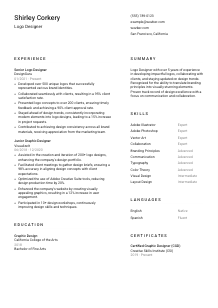
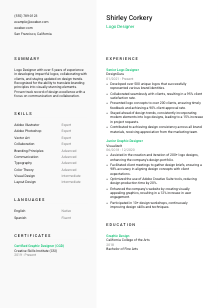
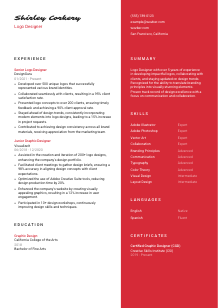
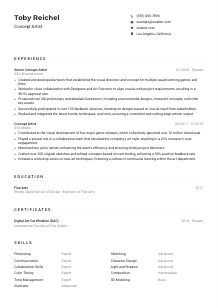
Sketching brand identities, but your CV lacks visual appeal? Check out this Logo Designer CV example, created with Wozber free CV builder. Learn how to bring your design dexterity and aesthetics into a format that catches the eye of hiring managers!
Logo design gets judged quickly because the work itself gets judged quickly. Hiring teams look past decorative language and want to see whether you can turn a brand idea into a mark that is clear, usable, and defensible across real client or marketing conversations. Your CV needs to make that visible through branding context, concept development, revision work, and the results your designs supported.
Once those details are tailored to the posting, your CV reads less like a general graphic design profile and more like a direct match for logo-focused work. Wozber's free CV builder helps you shape that language into an ATS-compliant CV by aligning your wording with the job description, so the screening process surfaces the right strengths first, especially your branding judgment, software fluency, and ability to present logo concepts clearly.
For a Logo Designer, the top of the CV should feel clean, deliberate, and easy to scan. This section is simple, but it still carries useful signals: whether you match the role title, whether your contact details look professional, and whether basic requirements such as location are already addressed.
Put your name at the top in a readable format that feels polished rather than styled for effect. Logo design hiring managers care about visual judgment, so even this small choice reflects your sense of hierarchy and restraint.
If the role is for a "Logo Designer" and that matches your background, place that title directly under your name. It helps both ATS filtering and human review, especially when your broader experience may also include graphic design, branding, or visual identity work.
List a reliable phone number and a professional email address, then check them as carefully as you would a final logo export. Small errors here create avoidable friction. If you work with clients, your contact section should already suggest that you are organised and dependable.
Some logo design roles are fully remote, while others need someone in a specific market for client meetings or in-house collaboration. Here, the employer asks for San Francisco, CA, so listing "San Francisco, California" in your personal details immediately removes a common screening question.
A portfolio link is especially valuable for logo design because the CV alone cannot show concept range, typography choices, and brand application. You can also include LinkedIn, but the portfolio should come first if it displays logo systems, case studies, or before-and-after identity work that supports the claims made on your CV.
This section should confirm that you are reachable, professionally presented, and aligned with the basics of the role. For logo design jobs, even the header should feel considered.




This is where a Logo Designer CV rises above a generic creative profile. Employers want to see logo-specific work, how you handled briefs and feedback, what tools you used, and whether your designs held up in real brand settings rather than existing as isolated concepts.
Read the job description closely and mark the recurring priorities. In this case, the employer emphasizes logo development, brand identity, collaboration, presenting concepts, revisions, and consistency with marketing materials. Those ideas should appear naturally in your experience bullets when they reflect work you have actually done.
List your jobs in reverse chronological order, but shape each entry around the parts of the role that matter most for logo design. If a previous title was broader, such as Graphic Designer, make the bullets logo-centered by highlighting identity projects, client brief intake, concept exploration, or visual system work. Wozber's ATS-friendly CV format helps keep that structure readable for both reviewers and screening systems.
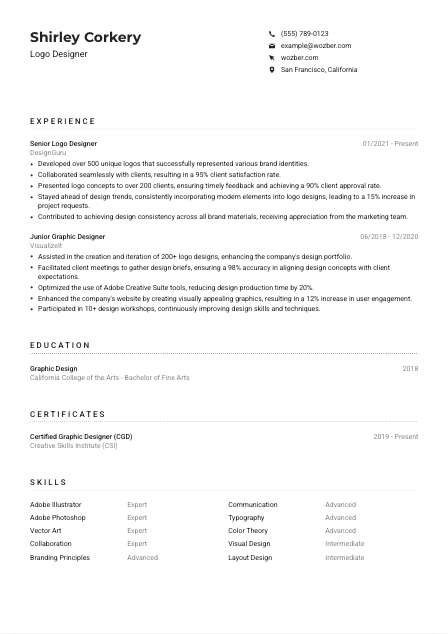
Replace generic task statements with concrete accomplishments. "Developed over 500 unique logos that represented diverse brand identities" says far more than "responsible for logo design." The sample CV handles this well by tying output to branding purpose, client approval, and team impact instead of listing software tasks alone.
Metrics are useful when they reflect how creative work was actually measured. For logo design, that can mean number of concepts delivered, approval rates, client satisfaction, turnaround improvements, repeat business, or increased project demand. Examples such as a 95% client satisfaction rate or a 15% increase in project requests make the work easier to evaluate because they connect design decisions to business response.
Not every design task belongs here. Prioritise work that shows brand identity thinking, Adobe Illustrator and Photoshop use, presentation skills, revision management, and collaboration with clients or marketing teams. Supporting work such as web graphics can stay if it reinforces brand consistency, but logo and identity outcomes should dominate the section.
A hiring manager should be able to see that you can take a brief, build a logo system, explain your choices, and move the work through feedback without losing brand clarity. That is the experience story that gets attention.
Education matters in logo design when it clearly backs up your visual training, branding knowledge, and formal preparation in design practice. Keep this section direct, and emphasize the credentials that align with the posting without turning it into a course catalogue.
When a posting asks for a bachelor's degree in Graphic Design, Visual Communication, or a related field, make that connection easy to spot. A Bachelor of Fine Arts in Graphic Design, like the one in the example CV, answers the requirement cleanly and should be written in full.
List the institution, degree, field of study, and graduation year or date. This keeps the section easy to scan and avoids pushing basic qualification details into dense formatting that slows down both ATS parsing and human review.
For logo design, the subject line matters because it points to training in typography, visual communication, branding, and composition. If your degree is adjacent rather than exact, use the field label accurately and let the rest of the CV prove how that education translated into identity design work.
If you are early in your career, a senior identity project, branding thesis, or typography-intensive coursework can reinforce your preparation. For a designer with several years of logo work, those details are usually less important than professional results.
Awards, exhibitions, student branding competitions, or design association involvement can help if they connect to visual identity or communication design. Keep them concise and include them only when they sharpen your positioning as a logo specialist.
Your education should quickly confirm that you have the formal design background the role asks for. After that, let your portfolio and experience carry the heavier proof of logo design ability.
Certifications are not always required for logo design, but they can add useful support when they reinforce your design discipline, software proficiency, or commitment to staying current with branding and visual communication practices.
Start with certificates that relate to design, branding, or core creative software rather than listing every course you have taken. A credential such as "Certified Graphic Designer" works because it supports your professional standing without distracting from logo-focused experience.
Choose credentials that make sense for a Logo Designer's day-to-day work, such as branding, visual identity, typography, or Adobe tools. Relevance matters more than volume, especially in creative hiring where experience and portfolio quality still carry the most weight.
Dates show whether the certification is current and how it fits within your professional development. In design roles, recent learning can be especially helpful when it reflects updated software workflows, identity systems, or contemporary brand practice.
A current or recently earned certification suggests that you keep refining your craft beyond client deadlines. That is useful in logo design, where trends shift, but fundamentals like brand strategy, type, and visual simplicity still need constant sharpening.
This section should reinforce your credibility, especially around design training or tool fluency. It works best when it complements a CV already grounded in logo projects, brand outcomes, and client-facing experience.
A Logo Designer skills section should look like a hiring shortcut to your actual workflow. That means showing the tools, design fundamentals, and client-facing abilities that support logo development from brief to final files.
Start with the skills the employer names directly, then add closely related abilities you genuinely use. Here that includes Adobe Illustrator, Adobe Photoshop, branding principles, communication, and collaboration. For logo work, you can also support those with typography, vector art, colour theory, and visual identity development when they match your background.
Put the most role-critical skills first. For this position, Adobe Illustrator deserves prominent placement because logo design depends heavily on vector construction, scalability, and precise shape control. Communication and collaboration also belong high on the list because presenting concepts and handling revisions are part of the job, not secondary extras.
Do not overload the list with every design term you know. A tighter set of skills creates a clearer picture of your strengths. The sample CV gets this balance right by combining core tools with branding and presentation-related capabilities rather than filling the section with broad creative buzzwords.
Someone reviewing this section should immediately understand what you can design with, how you think about brand identity, and how you work with people through feedback and refinement. That is what makes the list useful.
Language ability matters in logo design when the work involves briefs, presentations, revision discussions, and collaboration with marketing or clients. This section can stay short, but it should reflect the communication demands of the role.
If the job calls out English proficiency, list English at the top with your actual level. In a logo design role, this matters because you may need to explain visual choices, discuss brand direction, and respond clearly to feedback in meetings or presentations.
Use familiar labels such as Native, Fluent, Advanced, or Intermediate. Clear ratings are easier to scan than vague descriptions and give a practical sense of how comfortably you can work through client discussions and internal reviews.
Extra languages can be useful when you work with multilingual clients, international brands, or diverse stakeholder groups. In the example CV, Spanish adds range, but it remains secondary to the required English proficiency.
Be honest about your fluency. Overstating language ability can become obvious very quickly in collaborative design work, especially when you need to present rationale, interpret feedback, or discuss brand nuances live.
If the role involves frequent client presentations, workshop sessions, or cross-functional marketing work, language skills carry more weight. In those cases, this section helps support your broader story as a designer who can both create and explain.
For logo designers, language is part of the job whenever concepts need to be presented, defended, or refined with others. List it clearly and keep it credible.
Your summary should quickly position you as someone who understands both visual identity and the working reality behind it. In a few lines, connect your years of experience, core strengths, and the kind of logo work you do best.
Before writing, pull out the themes the employer repeats most. Here those are logo design experience, branding principles, Adobe proficiency, collaboration, and presenting concepts. Use those priorities to decide what belongs in the opening lines and what can stay for later sections.
Start with a direct description such as "Logo Designer with 5+ years of experience" if that is accurate. This gives immediate context and helps distinguish you from broader graphic designers whose work may include logos only occasionally.
Mention the abilities most relevant to logo design, such as translating brand strategy into visual marks, developing concepts from briefs, and collaborating through revision cycles. The sample summary works because it ties experience to branding and communication rather than relying on generic creativity language.
Aim for 3 to 5 lines with concrete wording. Avoid soft claims that could describe any designer. A better summary tells the reader that you have handled brand identity work, used Illustrator and Photoshop professionally, and delivered logos that clients approved and teams could apply consistently across materials.
When this section is tailored well, the reader arrives in your experience already expecting logo-focused brand work, strong presentation skills, and solid execution in Adobe tools. That is the right frame to create.
A Logo Designer CV should make three things easy to see: you understand brand identity, you can turn briefs into effective marks, and you can work through feedback with clients or internal teams. When those points are clear across your experience, skills, and summary, the CV starts reading like a design hire rather than a general creative applicant.
Use Wozber's free CV builder to organise that story in an ATS-friendly CV template, then refine the wording with its ATS CV scanner and AI-powered tailoring features so the final document matches the role's language without losing your own professional voice. The finished CV should make your logo design range and client-ready communication easy to judge.




