



Use Wozber and land your dream job
Create CV
No registration required
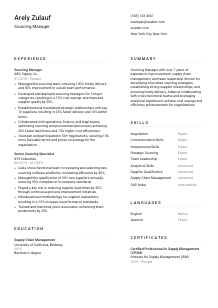
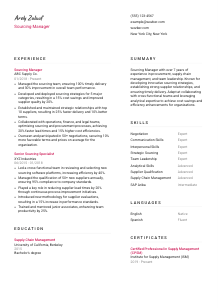
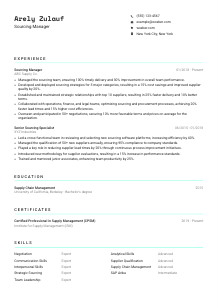
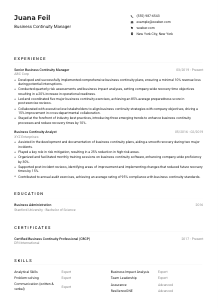
Gathering talent, but your CV feels misplaced? Flip through this Sourcing Manager CV example, created with Wozber free CV builder. It shows how to present your sourcing expertise to match job demands, putting your career right at the centre of greatness!
Sourcing Managers are hired to make hard commercial decisions hold up under pressure. Your CV needs to show how you balance cost, supplier quality, delivery reliability, and internal stakeholder needs without turning the role into a generic procurement summary. Hiring teams want to see where you set category strategy, improved supplier performance, led negotiations, and kept sourcing execution moving across operations, finance, and legal.
CV tailoring changes how quickly that commercial scope becomes visible in an ATS screen and in a first read. Using Wozber's free CV builder helps you mirror the language of the posting, keep an ATS-friendly CV format, and surface the right mix of category ownership, negotiation results, and leadership experience so your application reads like a sourcing manager profile rather than a broad supply chain one.
For sourcing roles, the contact section is simple but consequential. If a posting includes a location requirement or expects direct communication with suppliers and internal partners, your header should confirm those basics immediately and without clutter.
Use your full name as the visual anchor of the CV. Keep it larger than the body text and free of extra labels or credentials unless they are directly relevant. In a role tied to supplier negotiations, category ownership, and team management, the header should look clean and businesslike from the first glance.
Place "Sourcing Manager" directly under your name if that is the role you are pursuing. This helps frame the rest of your experience around strategic sourcing, supplier management, and procurement leadership from the start, and it supports ATS matching when the title appears exactly as it does in the posting.
Include a current phone number and a professional email address you check regularly. Sourcing hiring often moves through recruiter calls, stakeholder interviews, and scheduling with procurement leaders, so accuracy matters. A straightforward address in the format of your name works better than anything casual or overly branded.
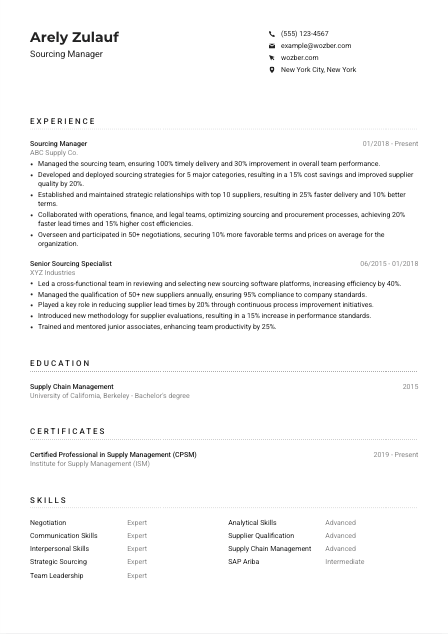
If the employer requires candidates to be based in a specific city, list that clearly in your header. Here, "New York City, New York" helps address a stated requirement early. Use this kind of location detail when it is relevant to the opening, not as a default rule for every sourcing CV.
A LinkedIn profile or professional site can reinforce your background in supplier programs, category management, sourcing systems, or cross-functional leadership. Make sure dates, titles, and scope match your CV so hiring teams do not see conflicting information when they compare your profile with your application.
This section should answer the practical questions fast: who you are, what role you are targeting, how to reach you, and whether you meet any location filter attached to the job.




This is the section where a Sourcing Manager CV earns credibility. Titles matter, but hiring teams look much closer at category results, supplier outcomes, negotiation scope, and whether you have managed people or cross-functional sourcing work in a real operating environment.
Before writing bullets, identify the recurring priorities in the job description. For this role, those include team leadership, category strategy, supplier qualification, supplier relationship management, negotiations, and collaboration with operations, finance, and legal. Those themes should shape what you emphasize in each role rather than leaving your experience as a general procurement timeline.
List positions in reverse chronological order with job title, employer, and dates. That structure helps the reader quickly see whether you moved from hands-on sourcing work into broader ownership of categories, suppliers, and teams. In the sample CV, the path from Senior Sourcing Specialist to Sourcing Manager makes the management progression easy to follow.
Each bullet should show what you owned and what changed because of your work. Good sourcing bullets often include cost savings, lead-time improvement, supplier compliance, contract terms, delivery performance, quality gains, or process efficiency. The sample does this well with statements such as developing strategies across five major categories and delivering 15% cost savings with a 20% improvement in supplier quality.
Numbers are especially persuasive in procurement because the work is measured through savings, service levels, supplier metrics, and cycle-time improvements. Include percentages, annual spend scope, number of suppliers managed, negotiations led, categories owned, or reduction in lead times where you can back them up. Metrics like 25% faster delivery or 10% better terms immediately tell the reader how your decisions affected the supply base.
Prioritise experience that supports the move into a Sourcing Manager seat. That means supplier selection, stakeholder management, category strategy, sourcing technology, negotiation leadership, and team development should get more space than unrelated operational detail. If earlier experience is useful, keep only the parts that show transferable procurement judgment, process improvement, or supplier-facing responsibility.
A hiring manager should be able to scan this section and see category ownership, supplier results, negotiation strength, and leadership progression without having to infer them.
Education is usually a straightforward section for mid-career sourcing professionals, but it still matters because many postings ask for a business, supply chain, or related degree. Present it clearly so the reader can confirm the requirement and move on to your strategic and operational achievements.
If the posting asks for a bachelor's degree in Business, Supply Chain Management, or a related field, list your degree using the formal wording from your institution. When your major aligns directly, as it does with a bachelor's in Supply Chain Management, that connection is worth making clear because it supports your grounding in sourcing, procurement, and supplier operations.
Include degree, field of study, school name, and graduation year or date. Keep the order consistent and easy to scan. Hiring teams reviewing sourcing CVs are usually not looking for elaborate academic detail here. They want a quick confirmation that your educational background supports the level of commercial and operational responsibility in the role.
If your coursework or major sits close to procurement, logistics, operations, or supply chain management, let that alignment show. It becomes especially useful when the rest of your CV emphasizes category strategy, supplier evaluation, and cost control. In the sample, the Supply Chain Management degree neatly reinforces the target role.
Early-career candidates can include coursework, projects, or academic honors tied to sourcing analysis, operations planning, supplier management, or business analytics. For experienced managers, these details are usually secondary unless they clearly support a specialised category or industry focus.
If you have completed additional training in sourcing systems, contract management, spend analysis, supplier risk, or related procurement topics, mention it when it adds context beyond your degree. Keep it concise and relevant to how sourcing work is actually performed today.
This section does not need much space, but it should clearly support the field knowledge behind your sourcing and supplier management experience.
In procurement, the right certification can add weight because it signals structured knowledge of sourcing, supplier management, and commercial practice. It will not replace results, but it can strengthen your profile when an employer prefers formal supply management credentials.
If the job description mentions a credential such as CPSM, move it into clear view. That is especially useful when the employer lists it as preferred rather than required, because it gives you a straightforward point of alignment. The sample CV handles this well by listing the Certified Professional in Supply Management credential prominently.
Choose certifications that connect to supplier qualification, procurement operations, negotiation, category management, contract work, or supply chain leadership. A short, relevant list is stronger than a long list of general professional courses that do not deepen your sourcing profile.
Add the year earned and, if relevant, the active period or renewal status. Procurement certifications often signal ongoing professional engagement, so clear dates help the reader understand whether the credential is current and still relevant to your practice.
Sourcing work changes with market conditions, supplier risk, analytics tools, and procurement platforms. If you continue to build expertise through formal learning, that supports your credibility as someone who can lead modern sourcing processes rather than relying only on older buying experience.
Relevant credentials work best when they reinforce the kind of sourcing leadership, supplier judgment, and commercial discipline already visible in your experience.
A Sourcing Manager skills section should read like an operating toolkit, not a personality list. The most useful mix usually combines strategic sourcing capabilities, supplier-facing strengths, leadership skills, analytical ability, and the platforms that support procurement work.
Start with the terminology the employer already uses. In this posting, that includes supplier qualification, negotiation, sourcing software platforms, analytical skills, communication, interpersonal skills, and supply chain management. Mirroring real job language improves ATS optimisation and keeps your CV aligned with how the team describes the work.
List skills you can support elsewhere in the CV through achievements, tools, or scope. For a Sourcing Manager, that often means strategic sourcing, category strategy, supplier relationship management, negotiation, cost analysis, cross-functional collaboration, and team leadership. In the sample, skills such as Strategic Sourcing, Team Leadership, Supplier Qualification, and SAP Ariba connect directly to the experience section.
Do not crowd this section with every skill you have used across your career. Prioritise the capabilities that matter most for leading sourcing activity and improving supplier outcomes. A compact list with commercial, operational, and systems relevance is far more convincing than a broad inventory of loosely related competencies.
The best skills list reinforces the sourcing methods, supplier responsibilities, and technology exposure already demonstrated in your experience.
Language ability matters in sourcing because the work depends on clear communication across suppliers, internal stakeholders, and often multiple regions. When a posting names a required level of English, treat that as a direct qualification and list it plainly.
If advanced English speaking and comprehension are required, show your level directly in the languages section. Use familiar labels such as Native, Fluent, or Advanced so the reader can interpret it quickly. For supplier discussions, internal reporting, and negotiation settings, vague wording is less useful than a precise proficiency label.
Additional languages can strengthen your profile when the company works with international vendors or multicultural supplier networks. They are especially relevant if you have used them in negotiations, supplier development, or cross-border coordination. In the sample, Spanish adds useful breadth beyond the required English proficiency.
Use one standard scale across all languages and apply it honestly. Mixing labels or overstating fluency can create problems later, especially in interview situations where communication ability may be tested in real time.
Some sourcing roles are largely domestic, while others involve global supplier markets, regional manufacturing partners, or multilingual vendor communication. When additional languages matter to your target industry or geography, list them in a way that supports that commercial context without overstating their importance for every role.
Only claim a level you can comfortably use in meetings, calls, and written communication. In sourcing, credibility matters, and language claims are easy to test once supplier-facing responsibilities enter the conversation.
For this role, language details should clarify whether you can communicate effectively in the supplier and stakeholder environments the job requires.
The summary should quickly establish your level, sourcing focus, and the commercial outcomes you are known for. For a Sourcing Manager, that usually means years of procurement experience, category or supplier scope, negotiation strength, and the ability to lead teams and cross-functional sourcing work.
Read the job description for the few themes that define the role most clearly. Here, those are procurement and sourcing experience, managerial background, supplier qualification, negotiation, sourcing tools, and cross-functional collaboration. Use those priorities to decide what belongs in your opening lines.
Lead with your title and years of relevant experience. A line such as "Sourcing Manager with 7+ years in procurement and supply chain management" immediately establishes level and specialization. That is stronger than opening with broad traits or generic enthusiasm.
Mention two or three role-defining capabilities, such as building sourcing strategies, improving supplier relationships, leading negotiations, delivering cost savings, or managing a sourcing team. The sample summary does this effectively by combining strategy, supplier relationships, delivery performance, and cross-functional collaboration in a compact format.
Aim for three to five lines that sound grounded in real sourcing work. Avoid vague claims and use language that points to measurable business value, whether that is savings, process efficiency, supplier quality, or delivery improvement. The reader should finish the summary with a clear sense of your sourcing scope and leadership level.
A well-written summary should make it easy to see why you belong in a sourcing leadership conversation before the reader reaches the first job entry.
A strong Sourcing Manager CV shows where you drove savings, improved supplier performance, led negotiations, and managed sourcing work across teams. When each section is tailored to the posting, the result is not just ATS optimisation. It is a clearer commercial profile that hiring teams can evaluate quickly.
Use Wozber's free CV builder to shape that profile in an ATS-compliant CV, strengthen wording with its AI CV builder features, and check alignment with an ATS CV scanner before you apply. The final document should make your sourcing judgment, supplier leadership, and management scope easy to recognize.




