



Use Wozber and land your dream job
Create Resume
No registration required
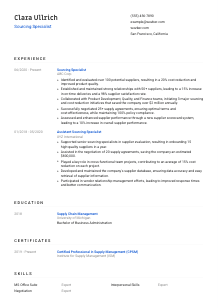
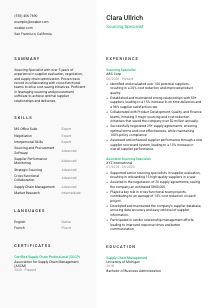
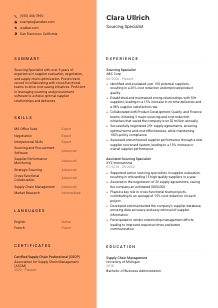
Scouting top talent, but your resume seems hidden? Check out this Sourcing Specialist resume example, created with Wozber free resume builder. It shows how to spotlight your prospecting prowess and align your resume with job specs, so your career pipeline stays packed with prime opportunities!

Sourcing work gets measured in commercial terms. Hiring teams want to see how you evaluate suppliers, negotiate pricing and terms, protect quality, and keep delivery performance on track when operations depend on it. Your resume should make that commercial judgment easy by showing where you reduced cost, improved supplier performance, supported contract compliance, or helped cross-functional teams make better sourcing decisions.
A tailored Sourcing Specialist resume changes how quickly a reviewer can tell whether your background matches the spend, supplier, and stakeholder work in front of them. Using Wozber's free resume builder to align your wording with the posting and maintain an ATS-compliant resume helps surface the right procurement terms, from supplier evaluation to cost-reduction initiatives, so your experience reads clearly as sourcing experience rather than general operations support.
This section is simple, but it still does screening work. For sourcing roles, it should immediately confirm who you are, what role you do, and whether you meet any practical requirement that could affect hiring, such as location for an on-site or local-market position.
Place your name first, then use the target title directly underneath it. If you are applying for a Sourcing Specialist position, say "Sourcing Specialist" rather than a broader label like "Procurement Professional" unless your target posting uses broader wording. That keeps your resume aligned with both ATS parsing and the hiring manager's first scan.
Use a reliable phone number and a professional email based on your name. Procurement hiring often moves through several stakeholders, so contact details need to be easy to pass along without confusion. If you include LinkedIn or a professional website, make sure the information there supports your resume with consistent titles, dates, and supplier-facing experience.
Some sourcing jobs require a candidate to be based near a supplier market, headquarters, or internal stakeholder hub. Here, the posting asks for someone located in "San Francisco, California," so listing city and state directly addresses that filter. Treat location this way when it appears in the job ad, not as a universal rule for every sourcing application.
Include a link only if it adds sourcing-specific value. A polished LinkedIn profile that shows procurement systems, supplier categories, contract work, or measurable savings can strengthen your application. A generic website with no commercial or supply chain relevance does not help this role.
Skip details like age, marital status, gender, or a photo unless a local market specifically requires them. For a Sourcing Specialist, the opening section should stay focused on practical hiring information and professional identity, not personal facts that do nothing to support supplier management or procurement credibility.
When this section is accurate and focused, the reader can move straight to your sourcing background without getting stuck on avoidable questions about role alignment, availability, or contactability.




This is the section that carries the most weight. In sourcing, employers look past task lists quickly. They want to know what categories you handled, how you worked with suppliers, what commercial results you influenced, and how well you partnered with teams like Finance, Quality, or Product Development.
Read the posting for the actual sourcing work it emphasizes, then reflect that language in your bullet points. In this case, the important themes are supplier identification, market research, supplier evaluation, negotiations, cost reduction, cross-functional collaboration, and supplier performance monitoring. Those are the terms to echo naturally if they match your background, because they help both ATS systems and human reviewers place your experience in the right procurement lane.
List your most recent role first, then work backward. For each entry, include title, company, and dates before the accomplishments. Sourcing careers often show progression from analyst or assistant support into direct ownership of supplier relationships and negotiations, so a clean chronology helps the reader track that growth.
Replace general statements like "managed suppliers" with results tied to cost, delivery, quality, compliance, or implementation. The example resume does this well by showing outcomes such as evaluating more than 100 suppliers, reducing costs by 20%, improving on-time delivery by 15%, and negotiating 25+ supply agreements. Metrics like these tell a hiring team how much spend, performance, or operational improvement you actually influenced.
Numbers matter in sourcing because they show business impact in terms procurement leaders already use. Add supplier counts, annual savings, percentage improvements, number of contracts negotiated, scorecard improvements, or cycle-time gains where you can support them honestly. A bullet about launching a supplier scorecard system becomes much stronger when it also shows a 10% performance increase or a measurable improvement in delivery reliability.
Focus your space on procurement, vendor management, contract support, supplier analysis, and supply chain coordination that map to the target role. Older or unrelated experience can be shortened if it does not help prove sourcing judgment. If you have worked in a multinational environment, complex supply base, or cross-functional setting, make that visible because those details often matter more than generic administrative duties.
The best experience sections make your sourcing contribution easy to read in business terms. Savings achieved, suppliers improved, contracts negotiated, and stakeholder initiatives supported are the details that move you forward.
Education matters most here as a qualification check and a context signal. For sourcing roles, your degree helps confirm formal grounding in business, supply chain, operations, or a related area, especially when the posting calls for it directly.
If the job asks for a bachelor's degree in Business Administration, Supply Chain Management, or a related field, make sure your degree and field are easy to spot. A "Bachelor of Business Administration" in "Supply Chain Management" lines up cleanly with this posting and removes any doubt about the educational requirement.
List degree, field of study, school, and graduation year or date in a straightforward structure. Hiring teams reviewing sourcing resumes are usually moving quickly between operational and commercial qualifications, so this section should be easy to process without extra design or wording.
When your education directly supports the role, do not bury the field of study. Supply Chain Management, Procurement, Business Administration, Operations, and similar disciplines deserve clear placement because they connect directly to sourcing workflows such as supplier selection, cost analysis, and contract support.
Relevant coursework can help if you are early in your career or if your work history is still growing. Subjects like procurement, supplier relationship management, logistics, operations strategy, or cost analysis can reinforce your readiness. Once your experience section carries clear sourcing results, coursework becomes optional rather than essential.
Honors, supply chain competitions, capstone projects, or student leadership in business and operations groups can be useful if they show analytical or commercial strengths. Keep them only if they support your sourcing profile and do not crowd out stronger professional experience.
For this role, education should confirm that you meet the baseline requirement and support the procurement story already visible in your experience. Clear formatting is enough when the degree is a direct match.
Certifications can add real weight in procurement because they signal familiarity with established supply management practices, sourcing strategy, and broader supply chain frameworks. They are especially useful when a posting mentions them as preferred rather than required.
When a job description mentions CPSM or CSCP, list those credentials clearly if you have them. In this example, both "Certified Professional in Supply Management (CPSM)" and "Certified Supply Chain Professional (CSCP)" reinforce the candidate's depth in sourcing and supply chain work. Use the exact certification name so both ATS systems and hiring reviewers can identify it quickly.
A short list of relevant certifications is stronger than a long list of loosely connected courses. Prioritize credentials tied to supply management, sourcing, supplier quality, contract administration, inventory, or broader supply chain operations. That keeps the section aligned with how sourcing roles are actually evaluated.
Add earned or active dates when they help show recency or ongoing validity. This is useful for certifications with renewal expectations or continuing education requirements. A current certification can reassure employers that your knowledge of sourcing practices and professional standards is up to date.
Supplier risk, global sourcing conditions, cost pressure, and procurement technology change over time, so continued learning matters. If you are still building your certification profile, prioritize credentials that support negotiation, strategic sourcing, supplier performance, and supply chain planning rather than generic training with limited role relevance.
Relevant credentials will not replace experience, but they can strengthen your credibility fast, especially when the employer has already signaled that supply management certification is a plus.
A sourcing skills section should read like the toolkit behind your results. The best lists combine technical procurement capabilities, supplier-facing strengths, and the collaboration skills needed to work across product, quality, finance, and operations.
Start with the posting and identify the specific capabilities behind the responsibilities. Here that includes sourcing and procurement software, MS Office Suite, negotiation, interpersonal communication, supplier evaluation, market research, cross-functional collaboration, and supplier performance monitoring. Use the employer's wording where accurate, then support it elsewhere in the resume with examples and outcomes.
Lead with the capabilities that matter most for the target role rather than listing broad business strengths. For a Sourcing Specialist, strategic sourcing, negotiation, supplier management, procurement systems, cost reduction, contract support, and supply chain coordination usually deserve higher placement than more general office skills. The example resume handles this well by keeping sourcing, negotiation, and supplier-focused competencies near the top.
Do not fill this section with soft skills alone. Pair tools and functional abilities with relationship-based strengths that matter in supplier work. A useful mix might include procurement software, spend analysis, supplier scorecards, Excel, contract negotiation, stakeholder communication, and issue resolution. That combination better reflects how sourcing work is actually done day to day.
Every skill listed here should connect to supplier decisions, commercial outcomes, or cross-functional execution. If a skill cannot be tied to your sourcing work, it probably does not belong.
Language ability can matter in sourcing because supplier communication, contract review, and internal coordination often depend on clear written and verbal communication. Even when only one language is required, this section can still strengthen your profile when it reflects how the work gets done.
If the posting specifically asks for effective written English, list English prominently and use an accurate proficiency label such as "Native" or "Fluent." That directly addresses a stated requirement and supports a role where supplier emails, sourcing summaries, and negotiation documents need to be clear and professional.
Additional languages can be valuable when supplier bases, manufacturing partners, or internal teams are international. A second language like French can suggest wider communication range for multinational sourcing environments, even if it is not required in the posting. Include it when you can use it professionally or in supplier-facing contexts.
Use honest levels such as Native, Fluent, Intermediate, or Basic. In sourcing, overstating language ability can create real problems if the role includes supplier calls, contract discussions, or written communication with overseas partners. Accuracy matters more than ambition in this section.
Not every Sourcing Specialist job needs multiple languages, but some do benefit from them depending on supplier geography and company footprint. If the employer operates across regions or mentions multinational experience, your language section can quietly support that aspect of your candidacy.
If you are improving a language relevant to your supplier base or target market, keep studying and update the section when your level changes. Language growth is most useful on a sourcing resume when it expands your ability to communicate, negotiate, or coordinate across markets.
Keep this section factual and role-relevant. When language skills help with supplier relationships or multinational collaboration, they add useful context to your sourcing profile.
Your summary sits at the top of the resume, so it should quickly establish the kind of sourcing work you do and the business results you tend to deliver. This is where you connect your experience level, sourcing strengths, and a few concrete outcomes in a compact opening statement.
Review the posting before you write. If the employer is focused on supplier evaluation, cost reduction, negotiations, and cross-functional sourcing work, those themes should shape your summary. This keeps the opening aligned with the actual demands of the role instead of sounding like a generic supply chain profile.
Open with your title or professional identity, years of experience, and two or three sourcing strengths. The example summary does this effectively with "over 5 years of experience" and a focus on supplier evaluation, negotiation, and supply chain optimization. That gives the reader an immediate frame for your level and specialty.
A summary becomes more persuasive when it hints at results, not just responsibilities. Mention cost-saving initiatives, supplier performance improvements, contract negotiation success, or cross-functional sourcing programs if those are real strengths in your background. Keep the claims broad enough for a summary, then let the experience section provide the numbers.
Aim for a concise paragraph of about 3 to 5 lines. Use space for terms that matter in sourcing, such as strategic sourcing, supplier relationships, procurement software, cost reduction, or supply chain optimization, and cut filler that could apply to any business role. The summary should sound like someone who works with suppliers, contracts, and commercial decisions every day.
A well-written summary helps the reader understand your sourcing profile before they reach the first job entry. By the time they move into your experience, they should already know your level, your focus, and the kind of results you bring.
A Sourcing Specialist resume should show commercial judgment, supplier management range, and measurable procurement outcomes in language that matches the target job. When your sections are aligned around savings, supplier evaluation, negotiations, cross-functional work, and performance improvement, the hiring team can see your value much faster.
Use Wozber's free resume builder to organize that story in an ATS-friendly resume format, then refine it with targeted wording and ATS optimization so the right procurement terms appear in the right places. With the structure, metrics, and role language in place, your resume will make it easier to judge your readiness for real sourcing ownership.




