



Use Wozber and land your dream job
Create CV
No registration required
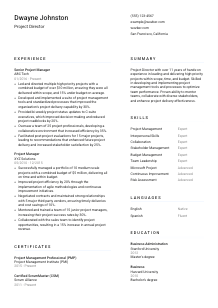
Directing big projects, but your CV feels like a lost scene? Check out this Project Director CV example, created with Wozber free CV builder. Learn how to present your top-tier leadership to match job demands, setting your career on a course for blockbuster achievements!
Project Director hiring usually turns on one question fast: have you led complex work where budget, schedule, stakeholder confidence, and team performance all had to hold together at once? CVs in this field often fall short by listing project tasks instead of showing delivery scale, leadership scope, process improvement, and the business results that followed.
The first pass is often about separating senior project operators from true portfolio-level leaders. A tailored CV built in Wozber's free CV builder and shaped for ATS optimisation makes that distinction clearer by surfacing the right terms, tools, and outcomes early, so hiring teams can quickly see who has directed major initiatives, managed change, and improved project delivery capability.
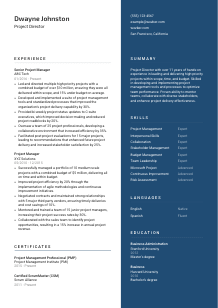
This section is simple, but it still does real work. For a Project Director application, your header should confirm who you are, where you're based when location matters, and how to reach you, without distracting from delivery experience and leadership scope.
Use your full name in the most prominent text on the page so the CV feels clean and executive-level from the start. Project Director CVs usually carry senior responsibility, so the presentation should feel polished and direct rather than overly designed.
Place "Project Director" directly under your name when that title matches the role you are pursuing or the level you already operate at. This immediately frames your background around project leadership, program oversight, and strategic delivery instead of leaving the reader to infer your level from later sections.
List a reliable phone number and a professional email address, then check them carefully. At this level, hiring conversations often move quickly between recruiters, executives, and cross-functional leaders, so your contact details should be easy to find and error-free.
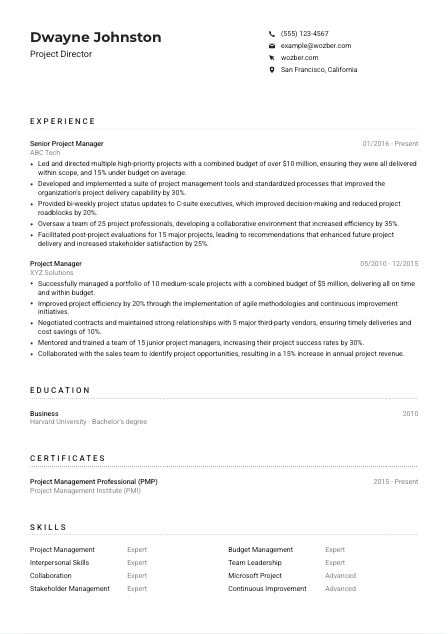
Some Project Director roles have a firm location requirement because of executive visibility, on-site stakeholder management, or team oversight. In the example here, San Francisco, California belongs in the header because the job specifically asks for it. If a posting names a city or region, include it plainly so location does not become an avoidable screening issue.
A LinkedIn profile or professional website can support your CV when it reinforces your project portfolio, leadership history, or industry presence. Keep it current and consistent with the metrics, titles, and certifications shown on the CV so the hiring team sees one coherent leadership profile.
Your personal details should confirm logistics and professional identity in seconds. Then the CV can move straight into what matters most for a Project Director: delivery record, leadership span, and operational results.




For a Project Director, experience carries the most weight. Hiring teams want to see the size of the work you led, the systems you improved, the teams you managed, and how you handled delivery pressure across scope, schedule, cost, and stakeholder expectations.
Start by marking the responsibilities and requirements that define the role. Here, the posting points to high-priority project delivery, budget and schedule control, stakeholder reporting, team oversight, process improvement, and post-project evaluation. Your experience bullets should respond to those themes directly, using the same language where it reflects your real work.
List your roles from most recent to oldest so leadership growth is easy to track. Project Director hiring often looks for a visible progression from managing projects to leading larger portfolios, overseeing teams, and shaping delivery practices across an organisation. Titles like Project Manager, Senior Project Manager, Program Manager, or PMO leadership roles can all support that story when the scope is clear.
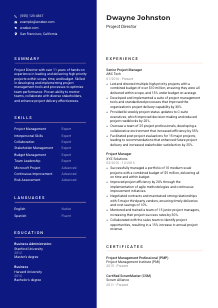
Each bullet should show what you led, what changed, and what the result was. The example CV does this well with lines about directing projects with a combined budget above $10 million, improving project delivery capability by 30%, and reducing roadblocks through bi-weekly executive reporting. That kind of detail tells a hiring team far more than "responsible for project oversight."
Metrics matter here because project leadership is measured through tangible performance. Include project budgets, portfolio size, team size, delivery timelines, cost savings, efficiency gains, stakeholder satisfaction, or reduction in delays and risks. Numbers such as "15% under budget," "team of 25," or "15 major projects reviewed" make your leadership range easier to judge.
Prioritise experience that shows decision-making, cross-functional influence, governance, process design, and leadership of managers or project teams. Earlier work can stay on the CV if it supports that path, but the emphasis should remain on the parts of your background that prove you can direct high-priority initiatives and improve how projects are delivered at scale.
Your experience section should leave no doubt about the level at which you operate. When delivery results, team oversight, and process improvements are spelled out clearly, the jump to Project Director feels credible and well supported.
Education is rarely the deciding factor for a senior project leader, but it still needs to line up cleanly with the posting. For Project Director roles, the degree section should confirm the required academic foundation without taking space away from delivery achievements and leadership experience.
If the job asks for a Bachelor's degree in Business, Engineering, or a related field, make sure that degree is easy to spot. Put the most relevant qualification in a clear format so there is no ambiguity about whether you meet the baseline requirement.
List the degree, field of study, school, and graduation year in a consistent structure. Senior hiring teams and ATS tools both benefit from straightforward formatting, especially when education is one requirement among many stronger decision factors like years of leadership and project results.
An MBA or other advanced degree can reinforce your readiness for broader budget ownership, stakeholder communication, and organizational planning. In the example, the Master's in Business Administration adds weight because it complements a project leadership track, but it should still stay secondary to the delivery record.
If you are early in your leadership career, relevant coursework, capstone projects, or honors tied to operations, engineering, finance, or project delivery can help. For established Project Directors, keep extras only when they add something meaningful to your profile rather than repeating strengths already proven in the experience section.
Honors, leadership roles, or major academic projects can be worth mentioning when they reflect analytical rigor, team leadership, or structured execution. Use them sparingly. At this level, education should confirm foundation and professionalism, not compete with your record of running major initiatives.
This section should quickly confirm that you meet the academic requirement and, if applicable, show added business or technical depth. Then let the CV return to the delivery record that carries the most weight for a Project Director.
Certifications matter in project leadership because they show command of recognized frameworks, governance practices, and continuing professional development. For a Project Director, they are especially useful when the posting names a credential such as PMP and when your work involves formal delivery standards across teams or portfolios.
If the posting asks for PMP or an equivalent certification, list it prominently and use the full credential name. That removes doubt on a stated requirement and helps both ATS screening and human review. In the example, PMP belongs near the top because it directly matches the role.
Choose certifications that support the kind of work the role involves, such as project governance, agile delivery, risk management, or organizational change. A focused list reads better than a long inventory. For this role, PMP carries more weight than unrelated credentials because it maps directly to project leadership expectations.
Add the year earned and, when relevant, current status or renewal period. That helps indicate your credential is active and current with the standards employers expect. This is especially important for certifications that require continuing education or periodic renewal.
Project Directors are often expected to improve delivery practices, mentor teams, and refine governance. Recent certifications or maintained credentials support that story by showing that your methods are current, whether your environment leans more predictive, agile, or hybrid.
The right certifications do not replace experience, but they do strengthen your authority in structured delivery environments. When a required credential is visible and current, it supports the broader case that you can lead complex projects with discipline.
A Project Director skills section should read like a map of how you lead delivery. That means balancing operational tools with leadership capabilities, and listing skills that connect to budgeting, governance, stakeholder communication, risk control, team leadership, and process improvement.
Start with the capabilities the employer actually named. In this case, that includes project management software, interpersonal communication, cross-functional collaboration, and leadership. Then add adjacent skills that naturally support the work, such as budget management, risk assessment, stakeholder management, and continuous improvement.
Order the list so the most decision-relevant capabilities appear first. Project leadership, schedule and cost control, team leadership, executive reporting, change management, and delivery methodology usually matter more here than broad generic traits. The example skills list works because it combines management fundamentals with software and process skills such as Microsoft Project and continuous improvement.
Avoid turning this section into a keyword dump. Use a concise set of skills that you can support elsewhere through achievements, tools, and responsibilities. A tighter list is more believable and gives ATS systems the role-specific terminology they expect without making the CV feel padded.
The skills section should make it obvious that you can direct projects, manage stakeholders, and improve delivery systems. Keep it anchored in real project work, real tools, and real leadership responsibilities.
Language ability matters for Project Directors when the role involves executive communication, cross-functional coordination, client interaction, or international teams. Even when only one language is required, this section can help clarify communication readiness without taking much space.
If the posting specifies English proficiency, list English with an accurate level so the requirement is easy to confirm. In the example, "Native" works well because it answers the job requirement immediately and cleanly.
Additional languages can strengthen your profile when you work across regions, manage multinational teams, or deal with international vendors and stakeholders. They are a bonus, not a substitute for project results, so include them when they add practical value to the kind of delivery environment you target.
Choose labels such as Native, Fluent, Professional, Conversational, or Basic, and use them consistently. Accuracy matters because communication expectations at the Project Director level often include stakeholder presentations, negotiation, and issue escalation.
For some organizations, multilingual communication helps with regional coordination, vendor management, or leading distributed project teams. If that matches your background, languages can reinforce your ability to operate across functions and geographies without needing extra explanation.
Update this section as your proficiency changes. If you have developed a language skill that improves your ability to lead teams, manage clients, or work in broader markets, it is worth reflecting accurately on the CV.
For a Project Director, language skills matter when they improve collaboration, reporting, or stakeholder management. Present them clearly, keep proficiency honest, and let them support the broader leadership story.
The summary sets the frame for everything that follows. For a Project Director, it should quickly establish years of experience, leadership level, type of project work led, and the operational improvements or delivery results you are known for.
Pull together the few themes that matter most for the target role, such as leading high-priority projects, directing teams, managing budgets, improving project delivery processes, and communicating with senior stakeholders. That gives your summary a clear centre instead of a generic leadership statement.
Start with a line that defines your seniority and domain clearly. The example does this well by stating more than 11 years of hands-on experience leading and delivering high-priority projects within scope, time, and budget. A sentence like that immediately positions you in the right part of the candidate pool.
Follow the opening with capabilities that match the posting and your track record, such as implementing project management tools, leading cross-functional teams, improving delivery performance, or mentoring project managers. Keep the language close to the work you have actually done so the summary feels credible and supported by the experience section.
Aim for 3 to 5 lines that a hiring manager can absorb quickly. Avoid soft claims or broad leadership language that could belong to any executive role. A focused summary should tell the reader, in a few seconds, what scale of projects you lead and what kind of delivery outcomes you improve.
A sharp summary helps the rest of the CV land faster. When it establishes leadership level, delivery scope, and process impact early, the hiring team reads your experience as Project Director material from the first section onward.
When each section reflects the actual demands of Project Director work, the CV becomes much easier to trust. Clear delivery metrics, visible leadership progression, relevant credentials, and well-chosen project terminology show that you can lead major initiatives, manage stakeholders, and improve how work gets delivered.
Wozber's free CV builder helps you organise that story into an ATS-friendly CV template, and its ATS CV scanner can help you align language, tools, and requirements with the role you are targeting. The final result should make one thing easy to judge: whether you can take ownership of complex projects and deliver them with control, clarity, and results.