



Use Wozber and land your dream job
Create Resume
No registration required
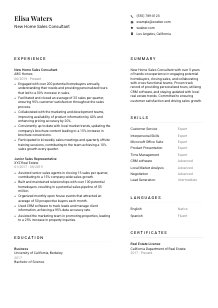
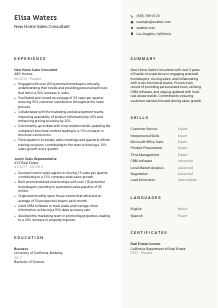
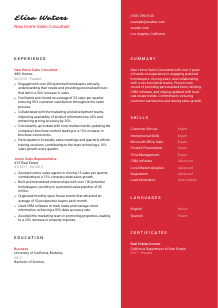
Sealing deals, but your resume's foundation feels shaky? Check out this New Home Sales Consultant resume example, built with Wozber free resume builder. Learn how to weave your sales flair and housing expertise into your resume to match job requirements, building a career as solid and satisfying as the dream homes you sell!
New home sales resumes are strongest when they show how you move buyers from first inquiry to signed contract without losing the personal side of the purchase. Hiring teams want to see that you can guide tours, explain inventory and pricing clearly, handle follow-up, and keep buyer confidence high through a process that is both emotional and highly transactional.
A tailored resume helps separate community sales experience from broader real estate or retail sales backgrounds by making your lead management, customer satisfaction, and closing results easy to track. Wozber's free resume builder supports that process with ATS optimization, so your resume surfaces the right CRM, sales, and homebuyer-facing language early and shows where you can contribute fastest.
For a New Home Sales Consultant, the top of the resume should read like a clean client-facing introduction. Keep it professional, easy to scan, and aligned with any practical requirements in the job ad, especially title, contact details, and location.
Use your full name in a larger, clean font so it anchors the page immediately. In a sales role built on trust and personal interaction, this section should feel polished and straightforward, much like your first introduction to a prospective homebuyer.
Place "New Home Sales Consultant" directly below your name if that is the role you are pursuing. Matching the job title helps frame your experience correctly from the first line, especially when employers are sorting between candidates from general real estate, leasing, retail sales, or builder-specific sales backgrounds.
List a current phone number and a professional email address you check often. Sales hiring moves quickly, and missed calls can mean missed interviews. If you include a website or LinkedIn profile, make sure it reflects the same sales history, location, and role focus shown on the resume.
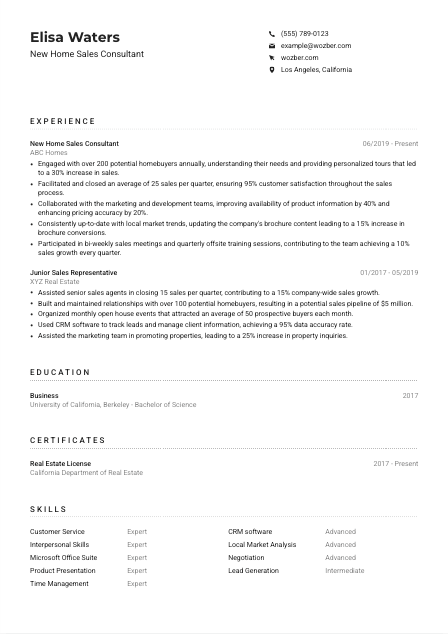
If the employer asks for someone based in Los Angeles or willing to relocate, say so in your location line. That removes a common point of hesitation early. In the example resume, listing Los Angeles, California immediately supports the posting's stated location requirement.
A strong LinkedIn profile can reinforce your record with homebuyers, communities, sales volume, and market knowledge. Include it if it adds substance, such as recommendations, project visibility, or a clearer view of your real estate background. Skip it if it is unfinished or inconsistent with your resume.
This section should answer the basics fast: who you are, what role you do, how to reach you, and whether you meet practical hiring filters such as location. Keep it clean so the reader gets to your sales record without friction.




This is the section that carries the most weight for a New Home Sales Consultant. Employers want to see buyer engagement, tours, pipeline management, closing activity, cross-team coordination, and post-sale follow-through, not a generic list of sales duties.
Start by marking the operating themes in the posting: personalized tours, customer service, CRM use, pricing accuracy, market awareness, and collaboration with marketing or development teams. Those themes should shape which bullets you lead with. If you have broad real estate experience, bring forward the parts tied to buyer consultation, community presentation, inventory knowledge, and deal progression.
List your most recent position first with company, title, and dates. That structure matters in sales hiring because employers want a quick read on your current market exposure, how recently you worked with active buyers, and whether your background is in new construction, residential real estate, or a related sales setting.
Each bullet should show what you handled and what changed because of your work. "Provided model home tours" is weaker than a result tied to conversions, buyer volume, or satisfaction. The example does this well by linking personalized tours for more than 200 buyers a year to a 30% increase in sales.
Quantify your work with metrics that fit the field: number of tours, homes sold per quarter, conversion rate, customer satisfaction, pipeline value, inquiry growth, or pricing accuracy. These figures help employers understand your pace and consistency. Results like closing 25 sales per quarter or maintaining 95% customer satisfaction make your impact far easier to picture than broad claims about being results-driven.
Keep the section focused on experience that strengthens your case for builder sales. Prioritize achievements tied to lead follow-up, community tours, negotiations, CRM tracking, open houses, market updates, and cross-functional coordination. Leave out unrelated tasks unless they show something useful for this work, such as handling objections, managing a high-volume pipeline, or supporting a five-million-dollar opportunity book, as shown in the example.
A hiring manager should be able to see your volume, your customer approach, and your ability to move buyers through the sales cycle. If your bullets make that process visible with numbers, this section is doing its job.
Education is rarely the deciding factor in home sales, but it still matters when the posting calls for a bachelor's degree. Present it clearly and use it to reinforce your commercial understanding, communication skills, or customer-facing training.
If the employer asks for a bachelor's degree in Business, Marketing, or a related field, make that alignment easy to spot. The example resume does this directly with a Bachelor of Science in Business, which fits the requirement without extra explanation.
Include school, degree, field of study, and graduation year or date. Hiring teams do not need a long academic narrative here. They need a clear credential that confirms you meet the baseline requirement and lets them move quickly back to your sales experience.
Spell out your major if it supports the role. Business, marketing, communications, or real estate-related study can all help frame your background for customer acquisition, pricing discussions, and sales process work. If your degree is in another field, list it honestly and let your experience carry more of the argument.
If you have limited direct experience, relevant coursework can add useful context. Classes in consumer behavior, sales, marketing, finance, or real estate principles can support your profile, especially when your professional background is still growing.
Student organizations, sales competitions, real estate clubs, or project work are worth adding when they show client-facing communication, market analysis, or commercial initiative. If you already have several years of strong home sales experience, keep this section lean.
Show that you meet the degree requirement, then let your experience do the heavier lifting. For this profession, education supports credibility, but the sales record closes the case.
In new home sales, licenses and industry credentials can matter quickly because they affect compliance, buyer trust, and readiness to work within state requirements. This section should focus on what is active, relevant, and current.
If the posting mentions an active state real estate license or willingness to obtain one, treat that as a priority item. A current license can remove doubt about your readiness to engage buyers and support transactions. In the example, the California real estate license is one of the most relevant credentials on the page.
List certifications that strengthen your profile for home sales, real estate operations, customer finance discussions, or professional selling. Skip unrelated certificates that do not help explain how you work with buyers, inventory, contracts, or the market.
Add the issue date and, when relevant, show that the credential is active. This matters for licenses in particular. "2017 - Present" tells the employer the license is not simply historical and can support current work.
Training in fair housing, mortgage basics, negotiation, CRM usage, or builder sales can help if it reflects current practice and supports the role. New home sales teams often want consultants who stay current on product knowledge and market conditions, so recent learning can add weight.
A relevant license or current industry training can answer practical hiring questions immediately. Keep the list tight and useful, with credentials that support active buyer-facing work.
For this role, the skills section should look like a realistic operating toolkit, not a long wishlist. Blend sales, customer-facing, and administrative skills that match how new home consultants work day to day.
Read the job description for the actual working requirements, not just keywords. Here that includes customer service, interpersonal communication, CRM software, Microsoft Office, market awareness, and sales process coordination. These are practical skills tied to tours, lead tracking, buyer follow-up, pricing conversations, and reporting.
Use the same terms the employer uses when they accurately describe your experience. That helps both ATS parsing and human review. The example skills list reflects this well with items such as CRM software, Microsoft Office Suite, customer service, interpersonal skills, and local market analysis.
Aim for a mix of hard and soft skills that support the role. New home sales is part relationship-building and part process management, so pair people skills like negotiation or product presentation with tools and business skills like CRM use, pipeline tracking, and market analysis. Avoid padding the section with vague claims that do not connect to daily work.
Your skills should confirm that you can handle both the buyer conversation and the sales process behind it. If the list supports your experience instead of repeating clichés, it adds real value.
Language ability can be especially useful in residential sales markets with diverse buyer communities. For a New Home Sales Consultant, list languages in a way that supports communication, trust, and customer experience without overstating proficiency.
If the job requires strong oral and written English, show that clearly. Whether you are native or fluent, list English prominently because it connects directly to tours, follow-up emails, CRM notes, pricing communication, and contract-related conversations.
Additional languages can strengthen your value when they help you connect with more buyers, explain product options clearly, or build rapport across communities. In markets like Los Angeles, Spanish can be especially useful, and the example resume presents it as a meaningful added capability.
Use honest proficiency labels such as native, fluent, advanced, or conversational. In client-facing sales, language claims are easy to test in an interview or on the job, so accuracy matters as much as the skill itself.
If you are applying to communities with multilingual traffic, language ability can support sales performance and customer satisfaction. Include languages when they genuinely affect how you can serve prospects and move conversations forward.
List language skills because they expand communication reach, not as decoration. They are most useful when they help with tours, relationship-building, and post-purchase support, all of which matter in a role where trust drives conversion.
When listed accurately, language skills show that you can meet buyers where they are and communicate clearly through a high-stakes purchase. That is a real advantage in many new home markets.
The summary should quickly frame your level, your sales environment, and the outcomes you deliver. For a New Home Sales Consultant, that usually means a short snapshot of buyer engagement, closings, tools, and market knowledge.
Focus on the parts of the job that matter most: guiding prospective buyers, presenting homes and amenities, managing leads, supporting the sales cycle, and maintaining customer satisfaction. Let those priorities shape what you mention first, rather than opening with broad claims about being passionate or hardworking.
Open with your title and years of relevant experience so the reader can place you immediately. The example summary does this well by leading with more than five years of hands-on experience in buyer engagement, closing sales, and cross-functional collaboration.
Include a few details that make your background tangible, such as personalized tours, CRM-driven lead management, closing volume, customer satisfaction, or local market knowledge. This gives the summary enough substance to distinguish you from candidates with generic real estate sales backgrounds.
Stay within three to five lines and avoid repeating the exact same points already covered in your skills section. A concise summary should create a strong first impression and prepare the reader for the metrics and achievements that follow in your experience section.
It gives the employer a fast, credible picture of the kind of sales consultant you are and the results you tend to produce. By the time they reach your experience section, they should already expect to see buyer volume, conversion results, and strong customer handling.
A New Home Sales Consultant resume should make one thing clear quickly: you know how to build buyer trust, manage the sales process, and close. When each section supports that story with the right titles, metrics, tools, and market-facing details, the application reads like someone ready to contribute from day one.
Use Wozber's free resume builder, ATS-friendly resume templates, and ATS resume scanner to tailor your wording, strengthen ATS alignment, and organize your experience around the requirements that matter most. The finished resume should make it easy to judge your ability to guide homebuyers, manage leads, and deliver sales results.




