



Use Wozber and land your dream job
Create Resume
No registration required
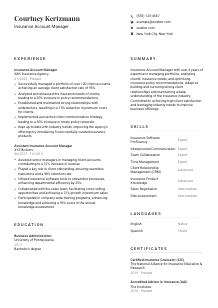
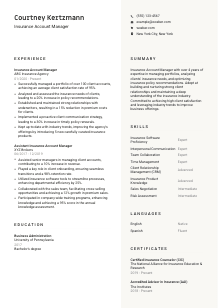
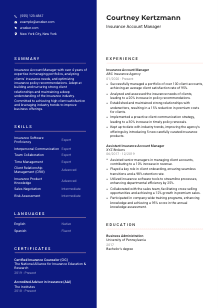
Balancing policies, but your resume doesn't feel covered? Check out this Insurance Account Manager resume example, created with Wozber free resume builder. Learn how to highlight your account management acumen to match job specifics, ensuring your career trajectory is as secure as the policies you oversee!
Insurance account management sits at the intersection of client trust, coverage accuracy, and retention. Hiring teams want to see that you can handle an active book of business, translate insurance needs into sound policy recommendations, and keep renewals, service issues, and carrier conversations moving without losing detail. Your resume should make that operating range visible from the first few lines.
A tailored resume helps separate account managers who mainly handled service tasks from those who truly advised clients, influenced renewals, and negotiated with underwriters. Wozber's free resume builder helps you shape that distinction into an ATS-compliant resume by aligning your language with the posting, so the hiring team can quickly see portfolio scope, product knowledge, and client-facing judgment.
For an Insurance Account Manager, the top of the resume should confirm something practical right away: who you are, what role you do, and whether you meet the basic logistics for the job. Keep this section clean and businesslike so nothing blocks a recruiter or agency leader from moving to your portfolio and client work.
Use your full name as the main heading in a larger font than the rest of the page. In client-facing insurance roles, clarity matters, and that starts here. Avoid nicknames or formatting that makes your identity harder to scan quickly.
Place the job title directly under your name when it matches your background. "Insurance Account Manager" works well here because it immediately aligns you with the role being filled and avoids leaving the reader to interpret adjacent titles like client manager, account executive, or service specialist.
Your phone number and email should be current, professional, and easy to read. This role depends on dependable communication with clients, underwriters, and internal teams, so even small details like a clean email address reinforce professionalism.
If the employer specifies a location requirement, include your city and state. In this example, New York City, New York should appear because the posting explicitly requires it. That helps remove an avoidable screening question early in the process.
Add LinkedIn or a professional website if it supports your insurance background with consistent titles, certifications, and experience. If your online profile includes licensing, industry credentials, or a stronger view of your client portfolio history, it can reinforce the story told on the resume.
This section does not need personality or flair. It needs to confirm that you are reachable, professionally presented, and positioned for the account management work described in the posting.




Insurance hiring managers spend more time here than anywhere else. They want to understand the size of the book you handled, the kinds of client needs you assessed, how you supported renewals or policy changes, and whether your work improved retention, premium value, or service quality.
Before rewriting your bullets, identify the work the employer cares about most. Here, that includes managing assigned accounts, analyzing coverage needs, recommending policies, staying in contact with clients, and negotiating terms with underwriters or carriers. Those themes should show up in your experience section using language that matches your actual work.
List jobs in reverse chronological order with title, company, and dates in a consistent format. For insurance roles, a clear timeline matters because hiring teams often look for progression from support work into direct account ownership. It also keeps the section easy to parse in an ATS-friendly resume format.
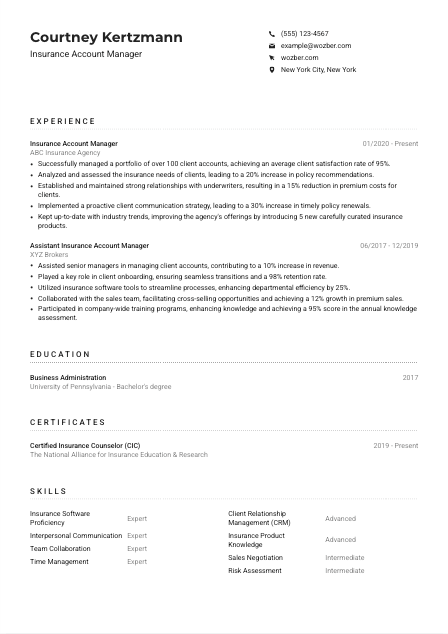
Do not stop at duties like "managed client accounts" or "communicated with carriers." Show what changed because of your work. The sample resume does this well by tying account management to a portfolio of 100+ clients, stronger satisfaction scores, and more timely renewals. That gives hiring teams a better read on service quality and book management than a task list would.
Good numbers for this role include retention rate, renewal rate, client satisfaction, premium savings, policy growth, account volume, cross-sell results, or efficiency gains from insurance software. A bullet about reducing premium costs by 15% through underwriter relationships says far more than a generic claim about negotiation skills.
Prioritize bullets that show client advisory work, policy analysis, carrier coordination, and portfolio performance. If an older role is less relevant, keep the entry brief and save space for stronger material. Wozber's ATS resume scanner can help you spot where the posting emphasizes account ownership, insurance products, and client retention so your most relevant experience appears first.
After this section, a hiring manager should understand the scale of accounts you handled, the business results you influenced, and how you worked with clients and carriers to keep coverage aligned and renewals on track.
Education usually is not the deciding factor for an experienced Insurance Account Manager, but it still matters when the posting calls for a specific degree. Present it clearly so the reader can confirm you meet the baseline requirement and move on to the more decisive parts of your resume.
If the employer asks for a bachelor's degree in Business, Finance, or a related field, make sure that information is easy to find. In the example, a Bachelor's degree in Business Administration lines up well with the stated preference and should stay prominent.
List the degree, school, field of study, and graduation year or date range. Insurance hiring teams are not looking for elaborate formatting here. They want quick confirmation that your academic background supports the business and client-facing side of the role.
If your degree is in a related area rather than insurance itself, that is fine. Use the field name exactly and let the connection be clear through the rest of your resume, especially your experience with policy analysis, client advising, and coverage recommendations.
Relevant coursework in finance, risk management, business law, or insurance can help early-career candidates or applicants whose work history is lighter. For established account managers, this is optional unless it adds a clear link to the target opening.
Honors, leadership roles, or relevant student organizations are worth adding if they support your professional story and do not crowd out stronger career content. Once you have several years in account management, these details should stay secondary to client portfolio results.
Your education section should quickly answer the degree requirement and support the business foundation behind your insurance work without taking attention away from your account results.
Industry credentials carry real weight in insurance because they show product knowledge, commitment to ongoing education, and familiarity with the standards of advisory work. When a posting lists certifications as preferred, this section can give you an edge, especially if your competitors have similar account experience.
When a job mentions designations such as CIC or AAI, list those prominently if you hold them. The example includes both, which directly supports the posting. For other openings, prioritize whichever certifications are most relevant to the product lines, client segment, or advisory depth required.
Choose certifications that strengthen your case as an account manager, not every credential you have ever earned. Risk, coverage, client advisory, and insurance operations credentials carry more value here than unrelated training that does not support account retention or policy guidance.
Insurance credentials often involve continuing education or active standing, so dates matter. Showing when a certification was earned, or that it remains current, helps establish that your knowledge is up to date with policy changes and market shifts.
If you are currently pursuing a relevant designation or regularly completing carrier, compliance, or product training, include that when it adds credibility. Wozber can help you keep this section aligned with the posting so preferred credentials and current insurance training stand out clearly in ATS review.
Certifications work best when they reinforce the kind of account management the employer needs: informed coverage advice, stronger client trust, and current industry knowledge.
The best skills sections for Insurance Account Managers do not read like a generic soft-skills list. They quickly show whether you understand insurance products, can work inside agency systems, and can manage client and carrier relationships without losing precision.
Pull skill terms directly from the posting when they reflect your background. Here, that includes insurance software proficiency, interpersonal communication, insurance product knowledge, and collaboration with internal teams. This kind of phrasing helps both ATS matching and human review.
This role needs both. Technical skills may include policy analysis, risk assessment, CRM use, account servicing systems, or renewal management. Relationship skills should support the actual work, such as client communication, negotiation with carriers, and cross-functional coordination with underwriters or producers.
Do not pad this section with every skill you have used once. A shorter list that speaks directly to coverage advising, account retention, insurance systems, and service execution will read as more credible. In the sample resume, skills like insurance software, CRM, product knowledge, and risk assessment are much stronger than vague filler would be.
When this section is done well, it supports the rest of the resume by confirming that you have both the technical grounding and client-facing judgment required to manage insurance accounts effectively.
Language ability matters in insurance when it affects client communication, service quality, and relationship management. Present it clearly, especially when the posting names English fluency as a requirement.
If the job requires fluency in English, list English first with an accurate proficiency level. That removes uncertainty immediately and aligns with the communication demands of policy explanation, renewal discussions, and client service.
Choose clear levels such as native, fluent, intermediate, or basic. Insurance account managers often communicate nuanced coverage information, so overstating language ability can create problems quickly in interviews or on the job.
Additional languages can be useful when serving diverse policyholders or regional markets, even if they are not listed in the posting. Spanish, for example, may strengthen client communication in some books of business, but it should remain a bonus rather than the main qualification unless the role specifically calls for it.
Use the same scale for every language on the resume so the section is easy to interpret. That consistency helps both recruiters and hiring managers understand where you can confidently handle conversations, documentation, or client support.
Only include languages you would actually use in a professional setting. In insurance account management, the value is practical: clearer conversations, smoother issue resolution, and stronger rapport with clients who prefer discussing coverage in another language.
This section should clarify communication capability, not simply add variety. For this role, that means making English fluency clear and showing any additional language skills that could strengthen client service.
The summary is where you establish your professional level before the reader gets into the details. For an Insurance Account Manager, that means naming your experience in portfolio management, client advising, coverage analysis, and retention-focused service in a few precise lines.
Start with the parts of the role that define success. In this case, that includes managing client accounts, assessing insurance needs, recommending coverage, communicating consistently, and working with underwriters or carriers. Your summary should reflect the parts of that work you have actually done well.
A direct opener works best here. State your title, years of experience, and area of focus. The sample summary uses "over 4 years" in insurance account management, which quickly establishes career level and relevance.
Choose strengths that matter in this profession, such as portfolio growth, client satisfaction, renewal performance, coverage recommendations, or carrier negotiation. Avoid empty descriptors when you can point to the work itself. For example, mentioning client relationships and policy recommendations is stronger when those themes are supported by results elsewhere in the resume.
Aim for a short paragraph that can be read in seconds. Three to five lines is enough if every phrase earns its place. Leave detailed metrics for the experience section and use the summary to set up the kind of account manager you are.
A sharp summary gives hiring teams an immediate read on your book-management experience, client advisory strengths, and insurance knowledge before they review the individual roles that prove it.
Once each section reflects the work that matters in insurance account management, your resume becomes much easier to evaluate. The hiring team should be able to see your portfolio scope, your ability to recommend the right coverage, and the results you delivered through client retention, renewals, and carrier coordination.
Use Wozber's free resume builder to organize that experience in an ATS-friendly resume template, then refine it with the ATS resume scanner so the language of the posting is reflected where it belongs. The final version should make one thing clear fast: you can manage accounts responsibly, advise clients well, and contribute to a stable, growing book of business.




