



Use Wozber and land your dream job
Create Resume
No registration required
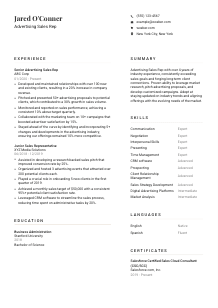
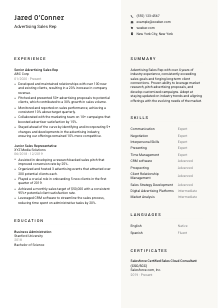
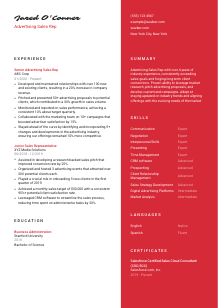
Pitching ad space, but your resume isn't converting leads? Browse this Advertising Sales Rep resume example, created with Wozber free resume builder. Learn how to present your sales savvy in line with job requirements, and soon, your career graph will be as lucrative as the ad placements you secure!
Advertising sales work lives or dies on revenue, retention, and the quality of your client conversations. Hiring teams want to see whether you can build accounts, pitch inventory or campaign ideas with confidence, and adjust your approach when performance data shifts. Your resume should make those commercial instincts visible, not hide them behind vague claims about being persuasive or people-oriented.
For this role, tailoring changes how quickly a hiring team can connect your background to client development, proposal pitching, and sales targets. Wozber's free resume builder helps you shape that story into an ATS-compliant resume by aligning your wording with the posting's sales language and structure, so your track record in CRM use, digital advertising, and quota performance is easy to recognize.
In advertising sales, the header should do one practical job well: confirm who you are, how to reach you, and whether basic role requirements are already covered. Keep it clean and businesslike so the reader can move straight to your client-facing experience.
Use your name as the most prominent line on the page, formatted simply and professionally. Sales roles depend on credibility and polish, so avoid decorative styling and make sure the spelling matches your LinkedIn profile, email, and any client-facing portfolio links.
Place "Advertising Sales Rep" under your name if that is the role you are applying for. Matching the title from the posting helps frame the rest of your resume around ad sales, account growth, and proposal work instead of leaving the recruiter to guess whether your background leans more toward general sales, media buying, or marketing.
Include a reliable phone number and a professional email address. If you have a strong LinkedIn profile or personal website that shows sales achievements, campaign work, or industry presence, add it here. In a client-driven profession, every contact detail should reinforce that you are polished and responsive.
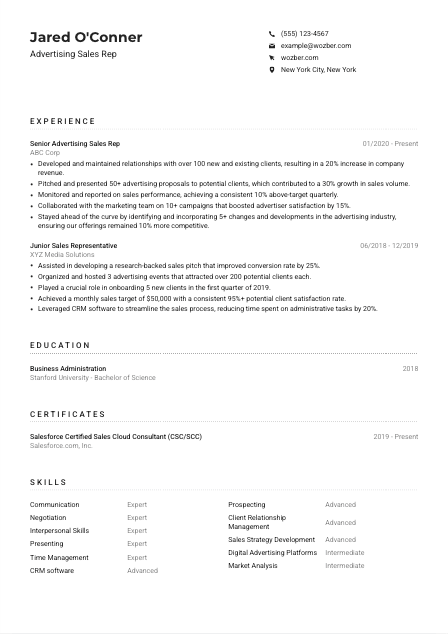
Some advertising sales jobs are tied to a market, client base, or office location. In the example here, New York City, New York is a stated requirement, so listing it directly removes uncertainty about availability. Use this approach when geography affects territory coverage, in-person meetings, or local market knowledge.
Skip personal data that has no bearing on sales performance or hiring eligibility, such as age, marital status, or a full street address. Keep the section focused on recruiter contact and role alignment.
Your personal details should establish professionalism and remove friction. When the header is accurate and aligned with the posting, the reader can focus on your client wins, revenue history, and market knowledge.




This is the section most hiring managers will study first. Advertising sales resumes stand out when they show account growth, proposal volume, revenue contribution, client retention, and collaboration with marketing or campaign teams in concrete terms.
Read the description closely and mark the commercial actions it emphasizes. Here, the employer wants client relationship management, advertising proposals, sales reporting, collaboration with marketing, and awareness of market trends. Those priorities should shape which achievements you select and how you phrase them.
List your positions in reverse chronological order and make the title, company, and dates easy to scan. Then use bullet points to show the kind of book of business, sales motion, or campaign work you handled. If you managed existing accounts, opened new business, or sold digital inventory, say so directly.
Advertising sales is performance-driven, so metrics matter. Show revenue growth, proposal volume, conversion rates, quota attainment, renewal figures, client counts, or campaign impact where you can. The sample resume does this well with details like a 20% increase in revenue, 50+ advertising proposals presented, and quarterly performance at 10% above target.
Prioritize accomplishments that show prospecting, pitching, negotiating, upselling, account management, CRM use, and campaign collaboration. General sales bullets can work if they reflect transferable strengths, but the closer they are to advertising solutions and client strategy, the stronger your positioning will be.
Strong candidates do more than close deals. They also track performance, spot market shifts, and refine sales strategy. If you used reporting to adjust outreach, partnered with marketing on custom campaigns, or used industry insights to sharpen proposals, include that. In the example, collaboration on campaigns and responding to advertising trends adds depth beyond quota numbers alone.
Your experience section should leave little doubt that you can win business, manage relationships, and sell advertising solutions with commercial discipline. When your bullets connect activity to revenue, targets, and client outcomes, the fit becomes much easier to see.
Education rarely carries an advertising sales resume on its own, but it still matters when a degree is listed in the posting. Present it clearly so the recruiter can confirm the requirement and move on to the results-focused parts of your background.
If the role asks for a bachelor's degree in Business, Marketing, or a related field, place that information plainly in your education section. The example candidate's Bachelor of Science in Business Administration lines up well with the requirement and supports the sales and market-facing nature of the role.
List degree, field of study, school, and graduation year in a consistent order. This section does not need creative formatting. Clarity matters more, especially when recruiters are reviewing many resumes quickly.
A degree can strengthen your positioning when it connects to buyer behavior, marketing fundamentals, business strategy, or communication. If your coursework or academic focus helped build commercial thinking, mention it briefly only when it supports your ad sales story.
Relevant honors, sales competitions, student media work, or marketing projects can help early-career candidates who need more proof of commercial ability. If you already have solid sales experience, keep this section tighter and let your performance metrics carry more weight.
Keep degrees in this section and move platform or CRM certifications to the certificates section. That distinction makes the resume easier to scan and helps tools or recruiters identify both academic qualifications and applied training correctly.
Use this section to confirm the academic requirement without overbuilding it. For an Advertising Sales Rep, education supports your candidacy, while sales results and client impact do the heavier lifting.
Certifications can add useful proof of tool knowledge, sales process discipline, or platform fluency, especially when the role mentions CRM systems or digital advertising platforms. They are most effective when they reinforce the actual work you do.
Choose certifications that connect to how advertising sales teams operate, such as CRM systems, digital ad platforms, account management tools, or consultative selling methods. The sample resume's Salesforce certification is a strong example because the job specifically asks for CRM familiarity.
Resume space is limited, so skip certificates that do not support client development, reporting, campaign sales, or platform knowledge. One relevant credential is more persuasive than a scattered list with no connection to the role.
Advertising products, sales tools, and platform workflows change quickly. Adding the year earned or active date range helps show that your knowledge is recent enough to be useful in a live sales environment.
A current credential can reinforce that you stay sharp on systems and selling practices, especially if your recent experience already shows quota attainment or campaign collaboration. It rounds out the picture without replacing the need for measurable results.
Certificates work best when they strengthen your case for handling the tools and workflows behind ad sales. Keep them relevant, current, and clearly tied to the job's commercial demands.
A skills section for advertising sales should look like it belongs to someone who can prospect, pitch, negotiate, manage accounts, and work with campaign teams. Keep it focused on the tools and behaviors that drive revenue and client retention.
Pull the most important hard and soft skills from the job description and use the same wording when it matches your actual experience. For this opening, that includes communication, negotiation, interpersonal skills, CRM software, and digital advertising platforms.
Only list skills you can back up elsewhere on the resume. If you claim presenting, prospecting, market analysis, or client relationship management, your experience bullets should show proposal volume, account growth, campaign planning, or sales reporting that proves it.
Advertising sales is both relational and operational. A good mix might include negotiation, presentation, client relationship management, CRM software, sales strategy, and digital advertising platform knowledge. The sample resume handles this balance well by combining communication strengths with CRM and market analysis.
Every skill here should point back to how you win and grow business. When the list reflects the actual sales cycle, it supports both ATS optimization and a more credible read of your experience.
Language skills matter in sales when they affect client conversations, territory coverage, or audience reach. This section should be brief, accurate, and grounded in the communication needs of the job.
If the posting specifies fluency in English, list English prominently with an honest proficiency level. That immediately addresses a stated requirement and confirms you can handle presentations, negotiations, and client communication in the role's working language.
Additional languages can strengthen your profile when they support outreach to diverse client groups or multilingual markets. In some advertising environments, Spanish or another second language can be a practical advantage for relationship building and market access.
Use clear labels such as Native, Fluent, Professional, or Conversational. Sales roles rely on nuance, so avoid overstating your ability. If you may need to present proposals or negotiate terms in another language, your level should reflect that honestly.
A second language matters more when the role covers a diverse urban market, regional accounts, or international advertisers. Include it when it adds business value, not simply because you have studied it.
When relevant, languages signal more than vocabulary. They can support trust, smoother client onboarding, and better communication across teams and accounts. The sample resume's English and Spanish combination is a good example of added range without overselling it.
For advertising sales, language skills matter when they improve client communication and market reach. Keep the section truthful and connected to how you would actually use those abilities on the job.
Your summary should read like an experienced sales professional introducing a business case, not like a generic objective statement. In a few lines, show tenure, core strengths, and the kind of commercial results you deliver.
Start with your years of experience and your focus within sales. "Advertising Sales Rep with 4+ years in client acquisition and account growth" is stronger than a broad statement about being motivated or hardworking because it places you directly in the right commercial lane.
Choose two or three themes that match the posting, such as exceeding sales targets, building long-term client relationships, presenting advertising proposals, or using market research to shape pitches. The sample summary works because it stays close to those requirements instead of trying to cover everything.
Aim for a short paragraph with specific terms hiring teams expect in ad sales. Words like revenue growth, proposals, client relationships, campaign collaboration, digital advertising, and market trends carry more weight than broad claims about passion or dedication.
Close by pointing toward what you can help achieve, such as growing advertiser accounts, improving campaign alignment, or supporting consistent quota attainment. Keep it practical and tied to the employer's sales needs rather than turning it into a mission statement.
A well-written summary gives the reader a quick, credible picture of your sales background and what kind of advertiser relationships and revenue outcomes you know how to produce. It should set up the rest of the resume with clarity and momentum.
Once each section is aligned with the posting, your resume should show a clear pattern of client development, proposal delivery, CRM fluency, and target achievement. That is what makes an Advertising Sales Rep application feel credible in a fast-moving hiring process.
Wozber's free resume builder can help you assemble that story in an ATS-friendly resume format, and its ATS resume scanner can highlight missing requirements, strengthen role-specific phrasing, and improve ATS optimization without losing the substance of your real sales record.
When the final version is tailored well, a hiring manager should be able to see your revenue impact, client-facing range, and readiness to sell advertising solutions from the first scan.