




Use Wozber and land your dream job
Create Resume
No registration required
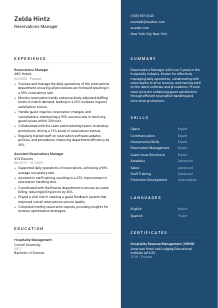
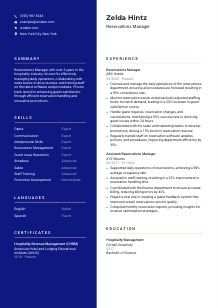
Juggling bookings, but your resume feels unreserved? Check out this Reservations Manager resume example, created with Wozber free resume builder. It shows how to position your reservation-wrangling skills to match job criteria, making sure your career takes flight without any waiting lists!
Reservations management sits at the intersection of guest experience and hotel revenue. Hiring teams look for people who can keep booking operations accurate, respond to guest changes without friction, and adjust staffing and procedures when demand shifts. Your resume needs to show that you have handled that operational pressure, not just that you have worked at a front desk or in hospitality.
A tailored resume also helps separate reservation coordinators from managers who have owned the department's results. When your resume mirrors the posting's language around reservation systems, staffing, guest issue handling, and revenue support, Wozber's free resume builder helps you shape that experience into an ATS-compliant resume that makes your management scope easier to read from the first scan.
For a Reservations Manager, the contact section should confirm basic eligibility quickly and cleanly. This is where you make it easy to see your professional identity, your ability to work locally when required, and the title you are targeting, without clutter that distracts from your operational background.
Use your full name in a larger, readable font so it is easy to find at a glance. Hospitality hiring often moves quickly, especially when employers are reviewing multiple candidates with similar room reservations experience, so simple presentation helps.
Place the role title directly under your name and keep it aligned with the job you are pursuing. Using "Reservations Manager" immediately frames your background around department oversight, guest service, and booking performance instead of a broader hotel operations profile.
Your phone number and email should be current, professional, and easy to trust. This role involves frequent guest communication and cross-team coordination, so even basic details should reflect reliability.
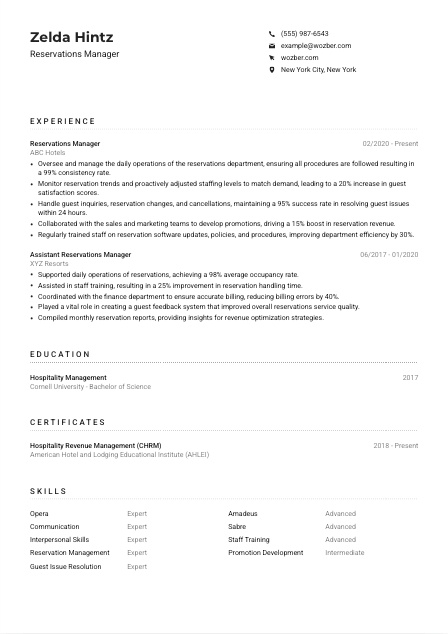
If the employer asks for a local candidate, show your city and state clearly. In the example, listing New York City, New York addresses the posting's location requirement right away and removes doubt about availability for an on-site hotel leadership role.
If you include LinkedIn or a professional website, make sure it supports the same story as your resume. For a Reservations Manager, that means consistent job titles, hospitality experience, software exposure, and any visible revenue or service improvements you mention elsewhere.
This section does not need personality flourishes. It needs accuracy, professionalism, and any detail that clears an early requirement, especially title alignment and location when the posting calls for it.




This is the section where a Reservations Manager resume either becomes credible or stays too generic. Employers want to see department oversight, reservation system fluency, guest issue handling, staffing judgment, and collaboration that supports occupancy or revenue, not a loose list of hospitality duties.
Start by identifying the work the employer needs managed day to day. In this case, that includes running the reservations department, tracking booking patterns, handling changes and cancellations, coordinating with sales and marketing, and training staff on system updates and procedures. Those priorities should shape which bullets you keep and which you cut.
List your most recent position first and make each entry easy to scan with employer, title, and dates. For management-track hospitality roles, this order helps show progression from support or assistant reservations work into department leadership and stronger ownership of service and revenue outcomes.
Your bullet points should show what changed because of your work. The example does this well with achievements such as improving department efficiency by 30% after staff training and raising guest satisfaction by 20% through staffing adjustments tied to reservation trends. Those details show management judgment, not just activity.
Use numbers tied to performance indicators that matter in reservations work, such as occupancy, guest satisfaction, resolution time, billing accuracy, booking revenue, or handling speed. A line like "maintained a 95% guest issue resolution rate within 24 hours" gives a hiring manager a much stronger read than "resolved guest concerns promptly."
Prioritize roles that show reservation operations, team coordination, guest communication, and revenue support. If you have older or less relevant experience, trim it back so the resume stays centered on the work that matters for a Reservations Manager opening.
The best experience sections make it clear that you have influenced booking flow, service quality, and team performance. If a hiring manager can picture you running the reservations desk from your bullets alone, this section is doing its job.
Education matters most here as a qualification check and a credibility marker. A degree in hospitality, business, or a related field supports your understanding of hotel operations, guest service standards, and commercial decision-making, even though your recent results will carry more weight than coursework.
If the job description names a bachelor's degree in Hospitality Management, Business Administration, or a related area, make sure your education section states that clearly. When your background matches directly, as it does with a Bachelor of Science in Hospitality Management in the example, keep that wording easy to spot.
List the school, degree, field of study, and graduation year or date in a clean structure. Hospitality recruiters and general managers often scan resumes quickly, so this section should confirm your academic background in seconds.
Do not bury the subject area if it supports the role. "Hospitality Management" carries more relevance for a reservations leadership role than a generic degree label because it connects directly to hotel operations and service environments.
Most experienced candidates can leave coursework out. If you are earlier in your career, selected classes in revenue management, hotel operations, customer service, or business communications can help connect your education to reservations work.
Include academic honors, hospitality associations, or relevant campus leadership only if they add something useful, especially for recent graduates. Once you have several years of hotel reservations experience, those details should stay secondary to operational results.
This section should quickly confirm that you meet the academic expectation and, where applicable, that your studies connect naturally to hotel reservations and revenue operations.
Certifications carry real value in reservations leadership when they connect to pricing, occupancy strategy, or hotel operations. They are especially helpful when a posting mentions revenue management credentials or when you want to show formal training beyond day-to-day reservations work.
Some employers list certifications as preferred rather than required. Here, a Certification in Hospitality Revenue Management, or CHRM, is specifically mentioned, so candidates who hold it should make sure it is easy to find.
Put the most relevant credentials first, especially those connected to hospitality pricing, forecasting, distribution, or reservations systems. In the example, CHRM directly supports the role's focus on reservation revenue and trend-based decision-making.
Show the year earned and, if relevant, whether the certification is current. Dates help employers understand whether your training reflects current hotel practices, software, and revenue management standards.
Reservations work changes with pricing strategies, booking channels, and software updates. Recent credentials, renewals, or ongoing professional development can reinforce that you stay current with the commercial side of hotel operations.
When your certifications connect clearly to reservations, forecasting, or revenue performance, they do more than decorate the page. They strengthen your case as someone who understands both guest service and the business side of the department.
A Reservations Manager skills section should read like the toolkit of someone who can run booking operations smoothly and support revenue goals. That usually means a mix of reservation platform knowledge, guest communication, issue resolution, reporting, staff support, and cross-functional coordination.
Read the posting closely and note both the systems and the human-facing demands. Here, reservation management software, communication, interpersonal skill, and guest issue resolution are all central, so they deserve a place ahead of broader hospitality terms.
Include reservation platforms you genuinely use, such as Opera, Amadeus, or Sabre, along with skills tied to reservations workflows like cancellation handling, booking adjustments, staff training, and promotion support. The example works because it balances system knowledge with practical department skills.
Do not turn this into a long inventory. A shorter list focused on reservation software, guest service judgment, reporting, and team support gives a clearer picture than unrelated hospitality buzzwords or generic office skills.
Every skill listed here should connect to real reservations work. If the section helps a reader picture you handling systems, guests, and team processes during a busy booking period, it is well targeted.
Language ability matters in reservations because the job depends on clear written and spoken communication. You are handling inquiries, changes, cancellations, and occasional complaints, often across phone, email, and front-office coordination, so language claims should be honest and useful.
If the posting says English is essential, list English prominently and state your proficiency level clearly. For a Reservations Manager, that signals readiness for guest communication, internal coordination, and policy explanations from day one.
Additional languages can strengthen your profile, especially in hotels serving international travelers or diverse city markets. In the example, Spanish adds practical value because it can support smoother guest interactions and reduce friction during service recovery.
Choose levels such as Native, Fluent, Advanced, Intermediate, or Basic, and be accurate. Reservations work relies on clarity, so overstating language ability can quickly become a problem in live guest communication.
Not every Reservations Manager role needs multiple languages, but some properties benefit from them more than others. If the hotel serves international leisure travelers, group bookings, or multilingual local markets, the right language skills become more relevant.
Languages can strengthen a hospitality resume, but they should not overshadow your operational results. Use this section to add practical guest-service value, not to compensate for missing reservations management depth.
For this role, language skills matter when they help you communicate clearly with guests and colleagues. Keep the section honest, relevant, and aligned with the property's service environment.
Your summary should position you quickly as someone who understands both the service and commercial side of reservations. In a few lines, it should establish your level, your hospitality background, and the outcomes you are known for, whether that is smoother booking operations, higher guest satisfaction, stronger revenue contribution, or better team training.
Build the summary around the parts of reservations leadership that matter most in the posting. For this role, that means department management, guest communication, reservation software fluency, collaboration with sales and marketing, and staff training tied to efficiency.
A direct first line works best. The example starts with "Reservations Manager with over 5 years in the hospitality industry," which gives immediate context and puts the candidate at the right level for a leadership opening.
Choose capabilities that connect to hotel performance, then support them with concrete results or areas of ownership. Revenue growth, faster issue resolution, stronger guest satisfaction, and improved department efficiency are all stronger than general claims about being organized or customer-focused.
Aim for three to five lines with no filler. A hiring manager should come away knowing your level, your reservations scope, and the business impact you have had, without reading a paragraph of broad hospitality language.
A good summary tells the reader, early and clearly, that you can manage reservation operations, support revenue goals, and keep guest communication steady under pressure. Wozber's free resume builder can help you tighten that message with ATS-friendly resume templates and ATS optimization so the final version stays focused on what hotels need to see first.
A Reservations Manager resume should show more than hospitality experience. It should show that you can run booking operations, guide staff, work confidently in reservation systems, and contribute to guest satisfaction and revenue performance.
Use Wozber's free resume builder to shape that experience into an ATS-friendly resume format, and use its ATS resume scanner to align your wording with the posting's actual requirements. The final result should make one thing easy to judge: you can step into the reservations department and manage it well.




