



Use Wozber and land your dream job
Create Resume
No registration required
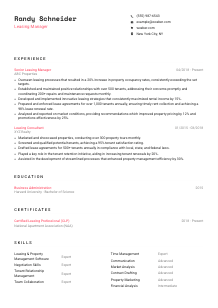
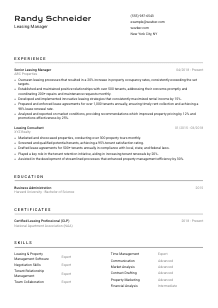
Closing rental contracts, but your resume seems like an open house with no offers? Stake your claim in this Leasing Manager resume example, created with Wozber free resume builder. Learn how to show off your rental expertise and customer service charm to match job criteria, making your career in leasing a hot property at every turn!

Leasing managers work where revenue targets, tenant experience, and compliance meet every day. Hiring teams want to see whether you can keep units filled, protect lease quality, respond to resident issues, and make pricing or renewal decisions that hold up in a competitive market. Your resume should make that operating range visible fast.
A tailored resume changes how quickly your leasing background is understood, especially when an ATS first scans for terms tied to occupancy, lease administration, fair housing, renewals, and property management systems. Wozber's free resume builder helps you line up that language cleanly in an ATS-compliant resume, so the hiring team can quickly recognize a candidate who can manage leasing performance, tenant communication, and day-to-day property demands.
In leasing, basic details carry practical weight. If a role has location or communication requirements, this section should answer them immediately without clutter or extra wording.
Place your full name at the top in a clear, readable format. Leasing is a relationship-driven field, and your resume should feel organized from the first line. Skip decorative styling and keep it consistent with the professional tone you would use with owners, tenants, and vendors.
Add "Leasing Manager" under your name when that matches the role you are pursuing. It helps position you correctly, especially if your recent title was something adjacent like Senior Leasing Manager or Leasing Consultant. In the example, using the target title keeps the candidate aligned with management-level leasing work rather than looking purely sales or administrative.
List a reliable phone number and a professional email address, then verify both. Leasing teams often move quickly when scheduling interviews, property tours, or follow-up calls, so a small typo can cost you momentum. A simple format such as firstname.lastname@email.com keeps things clean and credible.
If the employer specifies a location requirement, show it in your contact details. For this opening, listing "New York City, NY" immediately confirms a requirement from the posting and removes questions about availability or relocation. Keep location factual rather than explanatory.
Include LinkedIn or a professional website only if it supports your leasing background. A useful profile might reinforce portfolio size, property types, licenses, or promotion history. Make sure the dates, titles, and achievements match your resume, especially if you mention occupancy gains, lease renewals, or tenant volume.
This section should answer straightforward operational questions quickly: who you are, what role you do, how to reach you, and whether you meet any stated location requirement.




For leasing manager roles, experience matters most when it shows control over occupancy, renewals, tenant relationships, compliance, and pricing decisions. Hiring teams are looking for past scope and results, not a generic list of duties.
Mark the responsibilities and performance indicators that appear in the job description, then match them against your own history. For leasing roles, that usually includes marketing vacancies, conducting tours, screening tenants, lease administration, rent collection, renewals, market analysis, and tenant issue resolution. This posting also stresses fair housing knowledge and property management software, so your bullets should show both operational work and compliance awareness.
Start with your most recent job and include title, company, and dates in a format that is easy to scan. In leasing, progression matters. A move from Leasing Consultant to Senior Leasing Manager, like in the example, tells a hiring team you have taken on broader responsibility for occupancy targets, tenant volume, and revenue performance.
Use accomplishment bullets that show what you managed and what changed because of your work. Strong leasing bullets mention outcomes such as occupancy growth, rental income improvement, renewal rates, tenant satisfaction, or speed and accuracy in lease processing. The example does this well by tying leasing strategy to a 15% rental income increase and lease enforcement to a 98% renewal rate.
Numbers are native to this field, so use them wherever they are real and relevant. Occupancy percentage, number of tours, tenant count, monthly maintenance coordination volume, renewal rate, delinquency improvement, and pricing lift all help hiring managers gauge your scale. Metrics such as 20% occupancy growth, 300 tours a month, or 1,000 lease agreements annually make your experience easier to trust and compare.
Prioritize bullets that support leasing management work over general customer service or office administration. If you handled screening, market comps, promotions, vendor coordination, rent collection, renewals, or fair-housing-compliant lease drafting, make those points visible first. Save space by removing tasks that do not help explain your ability to run leasing activity and protect revenue.
Your experience section should leave no doubt that you can move units, manage tenant-facing issues, handle lease paperwork accurately, and make decisions that improve occupancy and rental income.
Education rarely carries a leasing manager resume on its own, but it still matters when the employer names a degree preference or requirement. Present it clearly so the reader can confirm it in seconds and move on to your results.
If the posting asks for a bachelor's degree in Business Administration, Real Estate, or a related field, make sure that information is easy to spot. In the example, "Bachelor of Science" in Business Administration lines up directly with the requirement and supports the business side of leasing, pricing, and tenant operations.
List degree, field of study, school, and graduation year. That is usually enough for an experienced leasing professional. Clean formatting matters because this section is often checked quickly after experience and before credentials such as licenses or certifications.
If your degree aligns closely with the posting, use the formal wording from your institution and keep the field specific. "Business Administration" will read more clearly than a vague business-related label when the employer has already named that discipline in the job description.
Relevant coursework can help if you are transitioning into leasing management or have limited direct experience. Courses in real estate, finance, contract law, marketing, or property operations can support that story. If you already have several years of leasing results, your degree line is enough.
Honors, scholarships, or student leadership can be useful if they reinforce business judgment, sales ability, or real estate interest. For established candidates, keep the emphasis on field of study and move the reader back toward experience, software use, and leasing outcomes.
For most leasing manager applications, education is a confirmation section. Make the degree easy to verify, then let your occupancy, renewal, and tenant-management results do the heavier work.
Certifications and licenses can sharpen your profile in leasing, especially when they show current industry knowledge, legal awareness, or commitment to the property side of the role. Keep this section focused on credentials that support leasing operations directly.
List certifications or licenses that connect directly to leasing, property management, fair housing, or real estate practice. A Certified Leasing Professional credential or an active real estate license tells employers you understand the standards behind tenant screening, lease execution, and property representation. The example uses both effectively.
A short list of targeted credentials is stronger than a long list of loosely related training. Choose items that support the work in the posting, such as leasing compliance, resident relations, real estate regulations, or property operations. If a credential does not add to that picture, leave it out.
Show the year earned or the active date range, especially for licenses and certifications that need to stay current. In leasing, recent credentials can reassure employers that your knowledge of regulations, documentation standards, and industry practices is up to date.
If you continue to renew licenses or complete industry training, that supports your credibility in a field shaped by legal requirements and market shifts. This is particularly useful when the role emphasizes fair housing knowledge, lease compliance, or property management systems.
Well-chosen credentials tell employers that your leasing experience is backed by current industry standards, not just time on the job.
A leasing manager skills section should read like the toolkit behind your day-to-day results. Focus on capabilities tied to occupancy, tenant communication, lease execution, software use, market awareness, and the business side of keeping a property leased well.
Start with the capabilities the employer actually named, then add closely related skills you can support with experience. For this job, that includes leasing and property management software, communication, negotiation, and knowledge of leasing laws. You can also add practical adjacent skills such as tenant screening, lease renewals, market analysis, rent collection, and property marketing if they reflect your background.
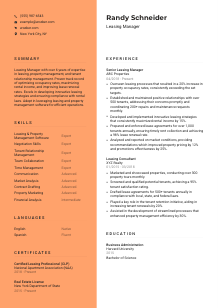
Put the most job-critical skills first. In a leasing manager resume, software fluency, tenant relationship management, negotiation, fair housing compliance, lease administration, and market analysis usually matter more than broad traits. The example correctly pushes leasing software, negotiation, and tenant management near the top because they connect directly to the posting and to measurable work.
Organize the section so a hiring team can quickly spot core strengths. If you use proficiency labels such as Expert or Advanced, apply them consistently and only where they feel credible. The section should complement your experience bullets, not replace them, so every listed skill should appear somewhere in your work history or summary.
The right skills section should immediately suggest that you can handle leasing volume, tenant communication, compliance expectations, and the systems that keep the operation moving.
Leasing managers spend a large part of the job communicating. Language ability matters most when it affects tenant interaction, property tours, negotiations, and day-to-day issue handling across a diverse resident base.
If the posting specifies English communication, list your English proficiency clearly. This role asks for the ability to articulate effectively in English, so that should appear at the top of the language section when applicable. Keep the rating accurate and simple, such as Native or Fluent.
Additional languages can be valuable in markets with diverse tenant populations, especially in resident communication, tours, and follow-up conversations. In the example, fluent Spanish strengthens the candidate's ability to serve a broader tenant base. Treat this as an advantage, not a requirement unless the job says so.
Language skills are most useful when they support actual job tasks. If another language helps you explain lease terms, resolve resident concerns, conduct tours, or build rapport during renewals, it belongs here. That is more meaningful than listing a language with no practical connection to your work.
Do not overstate your level. A leasing manager may need to discuss pricing, lease clauses, maintenance issues, or compliance topics, so accuracy matters. Use ratings you can comfortably defend in an interview or on the job.
In large urban markets, multilingual ability can support resident service and leasing conversion. That does not replace core leasing skills, but it can strengthen your profile when the property serves a mixed-language community or high-volume walk-in traffic.
When presented honestly, language skills can show added reach in tenant communication and resident service without distracting from your core leasing qualifications.
Your summary should quickly frame your level, your leasing scope, and the business results you are known for. This is where you connect years of experience with the outcomes that matter most in leasing management.
Open with your title or level of experience, then anchor it in leasing and property management work. Mention the area where you have real depth, such as occupancy growth, tenant retention, lease administration, or revenue optimization. This gives the reader a fast read on the kind of portfolio or operation you are prepared to manage.
Use the first one or two lines to show what kind of leasing manager you are in practice. If you have exceeded occupancy targets, improved renewals, handled large tenant populations, or managed leasing strategy across multiple properties, say so directly. The example summary works because it links six years of experience to occupancy, rental income, and renewal outcomes.
Choose two or three strengths that mirror the role, such as tenant relationship management, leasing strategy, fair housing compliance, market analysis, or property management software. These details help distinguish a leasing manager from a general sales or customer service candidate and reinforce the responsibilities in the posting.
Aim for a short paragraph that can be read in a few seconds. Avoid generic adjectives and focus on facts: years of experience, type of leasing work, standout outcomes, and key strengths. A concise summary with real leasing terminology will carry more weight than broad claims about being hardworking or results-driven.
A strong summary should make it easy to picture you managing leasing activity, tenant relationships, and occupancy goals from day one.
When each section points back to leasing performance, your resume becomes much easier to evaluate. Hiring teams should be able to see your track record with occupancy, renewals, tenant communication, compliance, market analysis, and revenue-focused leasing strategy without digging through generic detail.
Use Wozber's free resume builder, ATS-friendly resume templates, and ATS resume scanner to strengthen ATS optimization and align your wording with the posting's actual requirements. The finished resume should make one thing clear fast: you can run leasing operations in a way that keeps properties occupied, tenants supported, and rental income moving in the right direction.




