



Use Wozber and land your dream job
Create Resume
No registration required
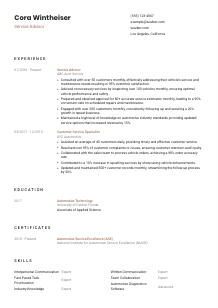
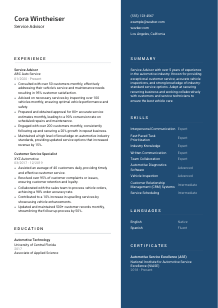
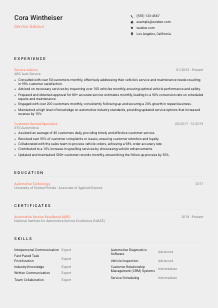
Navigating car troubles but need a resume tune-up? Check this Service Advisor resume example, made with Wozber free resume builder. It shows how to blend your maintenance mastery with job requirements, steering your career satisfaction right to the service bay!
A Service Advisor sits at the point where customer trust, shop workflow, and repair decisions meet. Hiring teams want to see that you can explain maintenance clearly, translate technician findings into customer-ready recommendations, keep estimates accurate, and move vehicles through the service lane without losing follow-up or satisfaction along the way.
When that experience is tailored well, your resume quickly shows whether you have the mix of customer service results, automotive knowledge, and scheduling discipline the role depends on. Wozber's free resume builder helps shape that into an ATS-compliant resume with language that matches the posting, so the first read makes your service volume, approval rates, and customer retention easier to judge.
For a Service Advisor, the top of the resume should be as clear and dependable as a well-written repair order. This section does not need extra decoration. It needs clean contact details, a role-aligned title, and any practical information that removes friction for the employer right away.
Use your full name in a larger, easy-to-read font so it stands out immediately. Keep the presentation professional and simple. Service Advisor hiring often moves quickly, and a clear header helps your resume feel organized from the first line.
Place "Service Advisor" directly under your name when that is the role you are applying for. This keeps your positioning clear and helps both recruiters and ATS software connect your background to the opening without guessing whether you come from sales, front desk, or general customer service.
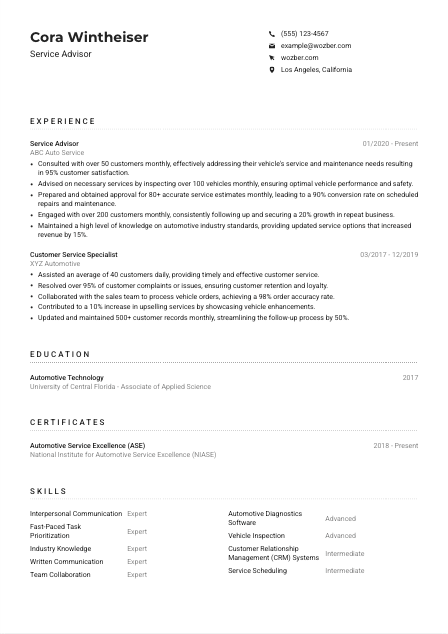
Add a reliable phone number and a professional email address. If the posting includes a location requirement, include your city and state as well. In the example, listing Los Angeles, California directly supports a stated requirement and removes an avoidable question before anyone reviews your experience.
Include LinkedIn or a professional website only if it supports your candidacy. For Service Advisors, that usually means a profile with matching job titles, dates, and automotive customer service achievements. If the content is outdated or thin, leave it off until it reflects your current resume.
Do not include birth date, marital status, Social Security number, or other private details. Service departments need to know how to reach you and whether you match practical requirements, not information unrelated to handling customers, estimates, or service coordination.
This section should read cleanly and answer the basics fast. When your title, contact details, and location are easy to confirm, the employer can move straight to the parts that show how you handle customers and service flow.




For Service Advisor roles, experience carries most of the weight. This is where employers look for proof that you can manage customer conversations, inspection-based recommendations, estimate approvals, scheduling pressure, and follow-up that brings drivers back to the shop.
Read the posting closely and pull out the experience themes that matter most, such as automotive customer service, service scheduling, estimate preparation, follow-up, and collaboration with technicians. Then bring those threads to the top of your recent roles, especially if you have both automotive and general customer service experience.
List jobs in reverse chronological order with your title, employer name, and dates. Keep the formatting consistent. For this profession, clear job progression matters because employers want to see whether you have handled front-counter service, customer intake, repair coordination, or adjacent dealership and shop responsibilities.
Write bullet points around what you handled and what improved because of your work. Good Service Advisor bullets mention customer volume, inspections, estimates, approvals, scheduling, satisfaction, repeat business, or revenue from recommended services. The example does this well with points like preparing 80+ service estimates monthly and reaching a 90% conversion rate on scheduled repairs.
Numbers matter here because the job is measured through throughput, customer satisfaction, estimate accuracy, approval rates, follow-up volume, and retained business. Metrics such as "consulted with over 50 customers monthly" or "secured 20% growth in repeat business" show how you performed in a live service environment, not just that you were present in one.
If a past role included unrelated tasks, prioritize the parts that connect to service advising. Customer issue resolution, CRM updates, order accuracy, and upselling maintenance options all translate better than generic admin work. Even a non-automotive customer service job can support your case if you frame it around high-volume communication, problem solving, and retention.
A hiring manager should be able to look at this section and picture you handling the service counter. Focus on customer volume, estimate work, technician coordination, and results that show drivers trusted your recommendations and came back.
Education usually supports a Service Advisor resume rather than leading it, but it still adds useful context. Training in automotive technology, business, communication, or customer service can strengthen your credibility, especially when the role mixes technical discussion with front-of-house responsibility.
Include your degree, school, field of study, and graduation year or completion date. Put the most relevant or highest credential first. Even when a posting does not require a degree, this section helps show the foundation behind your automotive knowledge or customer-facing work.
Hiring teams usually scan education fast, so avoid long descriptions unless they add direct value. A clean entry gives enough context without pulling attention away from your experience, which is usually the stronger decision factor for Service Advisor hiring.
If your coursework or degree connects to vehicle systems, maintenance, repair processes, or customer relations, make that easy to spot. The example's Associate of Applied Science in Automotive Technology supports the candidate's ability to discuss inspections and factory recommendations with credibility.
If you are earlier in your career, relevant coursework can help fill the gap between school and the service drive. Classes in automotive systems, diagnostics, service operations, customer communication, or software-based shop processes can all reinforce your readiness.
Academic awards, technical competitions, or involvement in automotive clubs can be worth adding if they connect to the job. Keep these details selective. For this role, direct relevance beats a long list of campus activities that say little about customer service or automotive operations.
This section works best when it backs up the practical side of your resume. A concise, relevant education entry helps confirm that you understand the automotive environment behind the conversations you will be having with customers.
Certifications are especially useful in automotive hiring because they show current technical grounding and commitment to the trade. For a Service Advisor, the right credential can strengthen trust with both customers and technicians, especially when you are recommending work based on inspections and manufacturer guidance.
If the employer mentions a preferred or required credential, put it near the top of this section. Here, ASE certification is specifically called out, so anyone who holds it should make it easy to find. Matching named credentials can improve both ATS alignment and recruiter response.
Include certifications that support automotive service, repair knowledge, or customer-facing dealership and shop operations. Avoid padding the section with unrelated courses. A shorter list of relevant credentials says more than a broad list that does not connect to advising, inspections, or maintenance planning.
Add issue dates or active date ranges when the credential is current or renewed over time. That is especially useful in automotive work, where standards, systems, and service procedures evolve. The example's active ASE certification immediately shows ongoing relevance.
If you do not yet have a preferred certification, consider whether it is worth pursuing based on the jobs you want. Service Advisors benefit from credentials that strengthen technical fluency, customer trust, and credibility with technicians. Mention completed certifications now, and work toward the next one intentionally.
The right certificate tells an employer you are serious about the work and current with the field. For Service Advisor roles, that extra layer of technical trust can make your recommendations and customer communication more convincing on paper.
A Service Advisor's skills section should reflect the real mix of the job: customer communication, shop coordination, service system use, and decision-making under pressure. Skip broad filler and list the abilities that help you move from vehicle intake to approved work and satisfied customers.
Look for both stated and implied requirements. In this job, that includes interpersonal communication, written English, computerized service systems, task prioritization, and automotive knowledge. Build your skills list around those terms when they reflect your actual experience.
Service Advisors need more than customer service alone. Include a mix of skills such as estimate preparation, service scheduling, CRM use, automotive diagnostics software, vehicle inspection familiarity, technician communication, and follow-up. The sample skills section works because it combines people-facing strengths with shop-relevant systems and process knowledge.
Place the most relevant skills first so the employer sees your strongest match early. If the role centers on handling customers in a busy automotive setting, lead with communication, prioritization, and automotive service tools before more general teamwork or office skills.
This section should show that you can handle both the conversation and the coordination behind the repair order. When the right tools, systems, and service habits appear together, your resume reads like someone who can step into the lane and contribute quickly.
Language skills can carry real weight in customer-facing automotive roles. Service Advisors spend much of the day explaining maintenance needs, setting expectations, handling concerns, and building repeat business, so communication range matters when it helps customers understand and approve work with confidence.
If the posting requires fluent English speaking and writing, list English clearly with an accurate proficiency level. For this role, that is a practical requirement because estimates, follow-up communication, and customer explanations all depend on it.
Include other languages that can help you serve a broader customer base. In some markets, this can be a meaningful advantage at the service counter. The example's Spanish fluency strengthens the candidate's ability to communicate with more drivers and improve customer comfort.
Use honest labels such as Native, Fluent, Intermediate, or Basic. Overstating language ability can create problems quickly in a role where small misunderstandings can affect repairs, approvals, and customer satisfaction.
Additional language skills are most valuable when they help with real service interactions, such as explaining recommended maintenance, clarifying timing, or resolving concerns after a visit. Present them as practical communication assets, not as decorative extras.
If you work in a market where another language is common among customers, improving proficiency can strengthen your long-term value. For Service Advisors, better communication can support smoother handoffs, fewer misunderstandings, and stronger loyalty over time.
For this role, language ability matters when it improves service conversations and trust. List what you can genuinely use on the job, and let that support the customer-facing side of your automotive experience.
The summary should quickly establish what kind of Service Advisor you are and what results usually follow from your work. Keep it focused on the parts of your background that matter most in a shop or dealership setting: customer handling, automotive knowledge, estimate accuracy, service recommendations, and repeat business.
Before writing, identify the few points the employer will care about first. For a Service Advisor, that is usually years of relevant experience, automotive service exposure, customer communication, and the ability to keep work moving in a busy environment.
Lead with a direct line that names your title and level of experience. The sample summary opens effectively with "Service Advisor with over 5 years of experience in the automotive industry," which immediately establishes role match and industry context.
Choose strengths that connect directly to the employer's needs, such as vehicle service consultations, accurate inspections, estimate preparation, customer satisfaction, or technician collaboration. Keep these points concrete enough to suggest how you work, not just the traits you claim.
Aim for a short paragraph that can be read in seconds. Three to five lines is usually enough. A concise summary works best when every phrase supports the target role, using the same kind of language the employer uses for service advising, maintenance planning, and customer care.
A clear summary helps the reader understand your background before they reach the detail below. For Service Advisor hiring, it should quickly establish that you can manage customer conversations, guide service decisions, and keep the shop experience running smoothly.
A strong Service Advisor resume makes it easy to see how you handle customer intake, explain maintenance needs, prepare accurate estimates, and keep follow-up strong enough to drive repeat business. When each section points back to those outcomes, the application feels focused and credible.
Use Wozber's free resume builder to shape that experience into an ATS-friendly resume format, then refine it with targeted ATS optimization so the language matches the job without sounding forced. The finished resume should make one thing clear fast: you can manage the customer relationship and the service workflow with equal confidence.




