



Use Wozber and land your dream job
Create Resume
No registration required
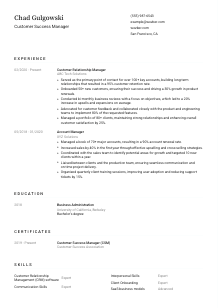
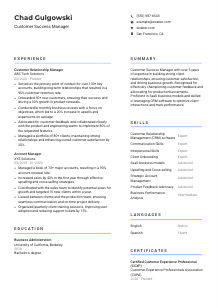
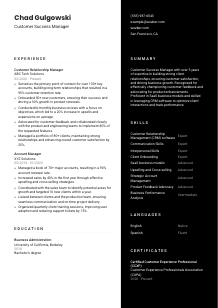
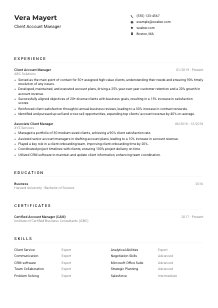
Driving success for clients, but your resume feels adrift? Anchor it with this Customer Success Manager example, created with Wozber free resume builder. Learn how to align your wins in client delight with job goals, paving the way for a career graph as impressive as your post-engagement surveys!
Customer success work sits in the middle of adoption, renewal, expansion, and customer trust. Hiring teams want to see how you manage accounts after the sale, how you guide onboarding, and how you turn product usage and business reviews into retention and revenue. Your resume should make that operating range visible, especially if your background includes account management, support, or relationship ownership.
For this role, the first screening question is often whether your experience maps cleanly to post-sales customer ownership in a SaaS environment. Wozber's free resume builder helps you shape that story into an ATS-compliant resume by aligning your wording with the job description and keeping the structure easy to scan. That makes it easier to show where you have driven renewals, led onboarding, and translated customer feedback into cross-functional action.
Customer Success Managers spend their day being reachable, credible, and easy to work with. Your contact section should reflect that same standard, with clear details and a professional title that immediately places you in the post-sales customer lifecycle.
Use your full name in a slightly larger font than the rest of the header so it anchors the page quickly. For a customer-facing role, that simple formatting choice matters because it keeps your resume clean and professional from the first line.
Place "Customer Success Manager" under your name if that is the role you are pursuing. This helps connect your background in account management, onboarding, retention, or client relationships to the exact position being filled, especially when your previous titles were adjacent rather than identical.
List a phone number you answer regularly and an email address that looks business-ready. Double-check every character. In customer success, communication reliability is part of the job, and small errors in your own contact information undercut that impression immediately.
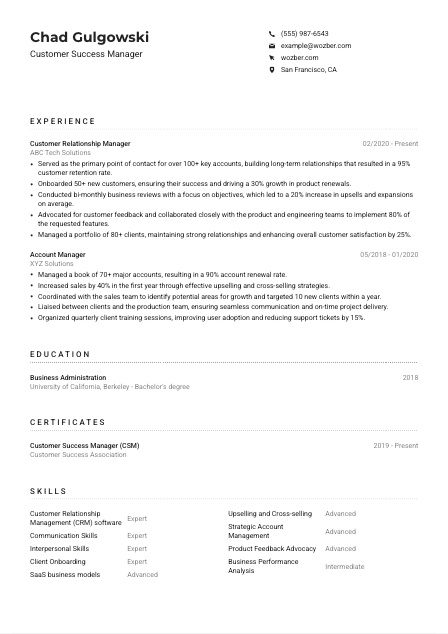
If the employer requires local presence, include your city and state clearly. In the example, "San Francisco, CA" matters because the posting asks for it. Treat location this way when it is a stated requirement, not as a universal rule for every Customer Success Manager resume.
A LinkedIn profile or personal website can strengthen your application if it supports the same story as the resume. Keep titles, dates, and account portfolio details consistent. For customer success candidates, this is also a good place to show SaaS experience, customer-facing progression, or certifications without crowding the top of the page.
This section should answer the basics fast and reinforce that you are an accessible, polished customer-facing professional. Clean details let the hiring team move straight to your account ownership and retention record.




This is the section that carries the most weight for a Customer Success Manager. Hiring managers are looking for signs that you have owned a portfolio, improved retention, led onboarding, run business reviews, and worked across sales, product, and support to keep customers successful.
Read the posting for the actions that define success in the role, then mirror that language where it matches your real work. Here, the priorities are clear: act as the main customer contact, onboard new accounts, conduct business reviews, advocate feedback internally, and drive retention and expansion. Those should shape which bullets stay, which get cut, and which get rewritten.
List your jobs in reverse chronological order and include title, company, and dates in a consistent format. Customer success hiring often involves comparing adjacent backgrounds like account management, client services, and support leadership, so clean structure helps the reader spot progression into post-sales ownership.
Prioritize measurable results tied to adoption, renewals, retention, upsells, account growth, customer satisfaction, or support reduction. The example does this well with results such as a 95% retention rate, 30% growth in renewals, and a 20% increase in upsells after business reviews. Those are the kinds of metrics that make customer success experience concrete.
Numbers are most useful when they explain scope. Include portfolio size, onboarding volume, review cadence, or the size of the customer base you managed. Details like "100+ key accounts," "50+ new customers onboarded," or "bi-monthly business reviews" tell the reader how much responsibility you handled and how you operated day to day with product, engineering, or sales partners.
If a bullet does not show relationship management, product adoption, customer advocacy, renewal health, or expansion potential, rewrite it or remove it. General client communication matters, but this role needs evidence of outcomes after the sale. Even if your prior title was Account Manager, frame the work around customer lifecycle impact when that is what you actually owned.
A Customer Success Manager resume earns attention when the experience section shows account ownership in business terms. Retention, adoption, review cadence, portfolio scope, and expansion results give the hiring team a clear picture of how you manage customers once the contract is signed.
Education usually plays a supporting role here, but it still matters when the posting asks for a bachelor's degree in business, marketing, or a related field. Present it clearly so the reader can confirm the requirement without digging.
If the role asks for a bachelor's degree, list that credential plainly with the field of study. In the example, a Bachelor's degree in Business Administration aligns well with a business-facing customer success role because it supports commercial understanding, communication, and account management context.
Include the degree, field, school, and graduation year. Keep the structure simple and easy to scan. Most hiring teams reviewing Customer Success Manager resumes want to confirm the requirement quickly and return to your portfolio results and SaaS experience.
A related field can still work well if your resume makes the connection clear. Business, marketing, communications, or similar studies can all support customer-facing work, especially when paired with onboarding, account growth, and CRM-driven relationship management in your experience section.
Most experienced candidates do not need to expand this section much. Still, if you are earlier in your career or shifting into customer success, coursework tied to customer behavior, business analysis, marketing, or technology adoption can help bridge the gap.
Honors, leadership roles, or meaningful university projects belong here only when they add something relevant, such as client-facing communication, business problem solving, or cross-functional collaboration. Keep the focus on information that supports your path into customer success rather than listing every campus activity.
For this role, education is usually a quick qualification check. Present it clearly, meet the stated degree requirement when you can, and let your customer portfolio results remain the center of the resume.
Certifications can help in customer success because they show commitment to the discipline beyond day-to-day account work. They are especially useful when a posting mentions them directly or when you want to reinforce expertise in customer experience, lifecycle management, or post-sales strategy.
If you hold credentials such as Customer Success Manager (CSM) or Certified Customer Experience Professional (CCXP), place them prominently. The example uses both, which is a strong match for a role that values structured customer success practice and customer advocacy.
List the certifications that connect most directly to retention, onboarding, customer experience, and account growth first. That ordering helps the reader understand your professional development in the same terms the role itself is framed.
Add the year earned and, if relevant, the active period. Dates help the hiring team understand whether the credential is current and whether you have continued building expertise in the field as SaaS customer expectations and tooling evolve.
Customer success keeps shifting with changes in SaaS pricing, health scoring, lifecycle automation, and product-led growth models. Ongoing learning in customer experience, account strategy, or platform-specific tools can make your resume more compelling, especially when paired with measurable retention and expansion outcomes.
Relevant credentials support your experience rather than replacing it. When they align with the posting and your customer-facing track record, they add another layer of credibility to your resume.
A Customer Success Manager skills section should read like the toolkit behind your results. It needs to show that you can manage customer relationships, navigate SaaS environments, and turn product usage into retention and growth.
Start with the skills named or implied in the job description. For this role, that includes CRM software, customer support tools, relationship building, onboarding, business reviews, customer advocacy, SaaS knowledge, and expansion-oriented account management. Those are much more useful than generic entries like "team player."
Choose skills you can support with examples in your work history. If you list client onboarding, CRM proficiency, or upselling and cross-selling, there should be bullets elsewhere showing onboarding volume, account management scope, or revenue growth tied to those abilities. The example resume does this effectively by pairing skills with results in renewals, expansions, and customer satisfaction.
Do not overload this section with every platform or soft skill you have touched. Prioritize the mix that best supports the target role, especially customer communication, SaaS fluency, account growth, product feedback handling, and portfolio management. A shorter, targeted list gives a clearer picture of how you operate with customers and internal teams.
The best skills section for customer success reinforces what your experience already proves. It should point directly to the way you onboard customers, manage accounts, use CRM systems, and grow revenue after the initial sale.
Language skills matter most in customer success when they expand the range of customers you can support or reinforce a posting's communication requirements. Present them clearly, without overstating proficiency, so the hiring team understands how you can communicate with clients and internal stakeholders.
If the role requires strong English speaking and writing, list English at the top with an accurate proficiency level. That is especially important in customer success roles where onboarding calls, business reviews, email follow-up, and cross-functional coordination all depend on clear communication.
Other languages can be valuable when a company serves regional or global accounts. For example, Spanish can strengthen your profile if part of the customer base prefers it or if the team supports multilingual markets. Include them after the required language, with honest proficiency labels.
Use clear terms such as Native, Fluent, Intermediate, or Basic. Avoid vague descriptions. In a role that involves customer meetings, training, and renewal conversations, overstating language ability can create problems quickly.
Not every Customer Success Manager role needs multiple languages, but some portfolios span regions, industries, or support models where language range is a real advantage. When that applies, this section can quietly strengthen your case by showing broader communication reach.
Strong language skills can improve onboarding quality, reduce friction in support escalation, and build trust during high-stakes conversations like renewals or issue resolution. Include them when they genuinely support the way you manage customers.
For customer success, languages are most persuasive when they clearly connect to customer communication and account coverage. Keep the section accurate, relevant, and easy to read.
Your summary should give a fast, credible view of the kind of accounts you manage and the outcomes you deliver. In a few lines, it should connect your experience to the customer lifecycle work the employer needs covered.
Open with your years of experience and the kind of customer-facing work you have led. If your background spans customer success, account management, or client relationship ownership, say so directly and position yourself in terms of retention, onboarding, and growth.
A strong opening line might mention 4+ or 5+ years in SaaS, portfolio ownership, or a track record of improving renewals and customer satisfaction. The example summary works because it immediately signals depth in relationship management and business growth rather than relying on broad statements.
Use two or three specifics that match the target posting, such as customer advocacy, business reviews, CRM-driven account management, SaaS fluency, or expansion support. This is a good place to echo the employer's language naturally if it reflects your actual background.
Stay within a short paragraph. Focus on what you consistently deliver, not every responsibility you have ever held. A concise summary with retention, product adoption, or cross-functional collaboration at the center will do more work than a long introduction filled with generic claims.
A well-written summary gives the hiring team an immediate read on your customer portfolio experience and post-sales impact. By the time they reach your experience section, they should already expect to see retention results, onboarding work, and growth across existing accounts.
A Customer Success Manager resume works when it shows how you keep customers engaged after the sale, how you run onboarding and reviews, and how you turn relationships into retention and expansion. Every section should support that story with clear scope, relevant tools, and business results.
Use Wozber's free resume builder to organize your content into an ATS-friendly resume format, strengthen role-specific wording with AI support, and check alignment with an ATS resume scanner. The final version should make it easy to judge your ability to manage customer portfolios, protect renewals, and grow accounts.




