



Use Wozber and land your dream job
Create Resume
No registration required
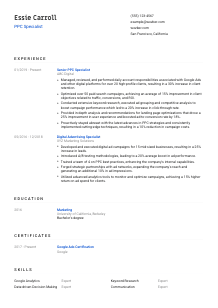
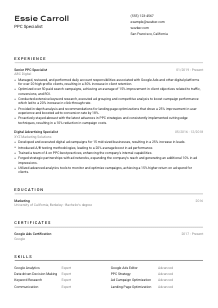
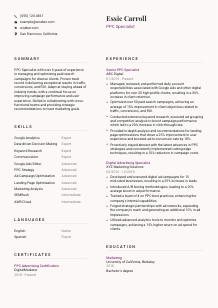
Clicking ad campaigns, but your resume isn't getting the right CTR? Check out this PPC Specialist resume example, created with Wozber free resume builder. Learn how to match your digital bidding brilliance to job requirements, driving your career to the top of the SERP!
Paid search hiring moves quickly because the work itself moves quickly. A PPC Specialist is expected to manage budgets, spot performance shifts early, tighten targeting, and explain what changed in traffic, conversions, and return on ad spend without hiding behind vague marketing language. Your resume needs to show that you can run and improve campaigns, not just support them.
When PPC resumes are tailored well, the first read becomes much clearer: hiring teams can see platform depth, optimization judgment, and whether your results came from keyword strategy, account structure, ad testing, or landing page changes. Wozber's free resume builder helps shape that experience into an ATS-compliant resume with language that matches the role, so your campaign work reads as practical performance, not generic digital marketing.
For PPC roles, the header should confirm basic alignment in seconds. Contact details, title, and location are simple items, but they often answer early screening questions before anyone reaches your campaign metrics.
Use your full name in a clean, readable style at the top of the page. For a PPC Specialist, the branding comes from the credibility of the resume beneath it, so clarity matters more than design flourishes.
Place the role title under your name and keep it close to the posting when it matches your background. Using "PPC Specialist" here helps frame the rest of the resume around paid search management, account optimization, and performance reporting instead of broader digital marketing work.
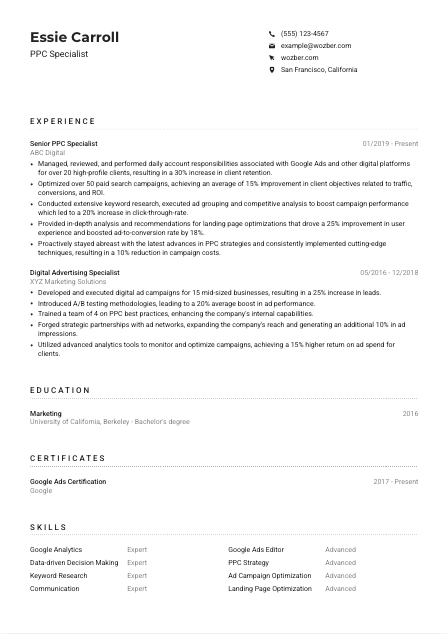
If the job asks for candidates based in a certain city or open to relocation, state that plainly in this section. In the example, listing San Francisco, California immediately addresses the posting's location requirement instead of leaving recruiters to guess.
Include LinkedIn, a portfolio, or a professional site if it reinforces your PPC background. Useful additions might include campaign case studies, reporting snapshots, certifications, or examples of paid search strategy work, as long as the information matches the resume.
Your header should remove friction. By the time a recruiter moves into your experience, they should already know your role focus, how to contact you, and whether you meet practical requirements such as location.




This section does the real selling for a PPC Specialist. Hiring managers look for proof that you have managed spend, improved efficiency, and made smart optimization decisions across platforms, not just touched ad accounts.
Start by marking the responsibilities the employer repeats or stresses most. For PPC roles, that usually includes platform management, keyword research, ad grouping, campaign optimization, reporting, and landing page recommendations. Those priorities should shape which bullets you keep, cut, or rewrite.
List positions in reverse chronological order and make each one easy to scan. Include job title, company, and dates, then use bullets to show the scale of your work, such as number of accounts, client mix, campaign volume, or platforms like Google Ads and Microsoft Advertising when they are part of your actual experience.
Your strongest bullets connect actions to business results. The example does this well by showing outcomes such as a 30% increase in client retention, a 15% improvement in traffic, conversions, and ROI goals, and a 20% lift in click-through rate after keyword research and ad grouping work. That kind of detail tells a hiring team how you influence account performance.
Numbers matter here because PPC is measured constantly. Favor metrics such as CTR, conversion rate, cost per acquisition, return on ad spend, lead volume, retention, impression share, or cost reduction over broad claims about success. Quantified statements make your work more credible to both recruiters and anyone reviewing resumes through ATS filters.
Prioritize experience that shows optimization judgment. If you improved landing pages, refined keyword targeting, ran A/B tests, reduced wasted spend, or presented recommendations to clients, say so directly. Broader digital advertising experience can still help, but the resume should keep pulling the reader back to paid search execution and measurable account growth.
A well-written experience section shows that you can own performance, not just participate in campaigns. Make it easy to see your platforms, your optimization work, and the business results your decisions produced.
Education rarely carries a PPC resume on its own, but it still matters when the posting asks for a degree in marketing, business, or a related field. Present it clearly so the requirement is checked without effort.
If the employer asks for a bachelor's degree, make sure that credential is easy to find. A degree in Marketing, Business, Analytics, Communications, or a related field supports the strategic and commercial side of paid search work, especially when you are working with client goals, budget decisions, and conversion reporting.
List school, degree, field of study, and graduation year in a straightforward order. Clean structure helps ATS parsing and keeps the focus on qualification, not formatting.
When your degree directly supports the role, say so through the field of study. In the example, a Bachelor's degree in Marketing aligns naturally with campaign strategy, audience targeting, ad messaging, and measurement.
Early-career PPC candidates can use this section to include relevant coursework or projects in analytics, digital advertising, consumer behavior, or conversion optimization. If you have several years of paid search experience already, keep this brief unless the project is genuinely valuable.
Academic distinctions, marketing society participation, or analytics competitions can add context if they reinforce your commercial or analytical background. Keep them only when they help explain your development into search marketing work.
Education should confirm that you meet the stated requirement and support your marketing foundation. Once that is clear, let your campaign results carry more weight elsewhere on the resume.
Certifications matter in paid search because platforms, features, and best practices change constantly. The right credentials show current platform familiarity and a habit of staying sharp in a field where yesterday's setup can age quickly.
Focus on credentials tied to the platforms and workflows named in the posting. For a PPC role, certifications related to Google Ads, analytics, search advertising, or conversion measurement usually add more value than broad marketing certificates.
Keep this section curated. A current Google Ads Certification is directly relevant to account management and optimization work, and the example's PPC Advertising Certification adds extra depth because it supports paid acquisition expertise rather than general marketing interest.
Dates matter here because platform knowledge changes. If a certification has been renewed or remains active, present that clearly, as in "2017 - Present," so employers can see that your knowledge has been maintained rather than left untouched.
PPC specialists are expected to keep up with bidding models, match type changes, reporting shifts, and new ad formats. Updating certifications and adding relevant new ones is a practical way to show that you stay current with the systems you manage.
Certifications should reinforce your hands-on search marketing profile. Choose the ones that support the tools, platforms, and optimization work the role actually requires.
A PPC skills section should read like the operating toolkit behind your results. Hiring teams want to see the platforms, analytical habits, and optimization capabilities that support campaign decisions day to day.
Start with the exact competencies the employer names. In this posting, that includes Google Analytics, Google Ads Editor, SEMRush, data-driven decision-making, communication, and multi-platform PPC management. Those terms belong in your skills section when they match your real background.
Lead with hard skills and role-specific capabilities. For PPC Specialists, that often means Google Ads, Microsoft Advertising, keyword research, bid strategy, campaign optimization, landing page analysis, reporting, and audience segmentation before softer traits.
A long mixed list is harder to read. Organize skills into useful clusters such as platforms, analytics tools, optimization methods, and communication or client-facing strengths. The example works because it combines tool knowledge like Google Analytics and Google Ads Editor with execution skills such as keyword research and landing page optimization.
Your skills should reinforce the experience section, not repeat it blindly. Keep the list focused on the tools and capabilities that explain how you produced PPC results.
Language ability matters in PPC when the role involves client communication, reporting, ad copy review, or campaigns aimed at different markets. Even when only English is required, this section can still help clarify communication range.
If the posting calls for strong English communication, list English clearly and place it first when it is your primary working language. For PPC roles, this affects stakeholder presentations, campaign reporting, ad copy collaboration, and written recommendations.
Start with the language required for the role, then add others that may support broader client work or multilingual campaigns. In the example, Spanish adds useful range, especially for accounts targeting bilingual or regional audiences.
Use clear levels such as Native, Fluent, Intermediate, or Basic. Accuracy matters because language skill can affect client calls, reporting quality, and the ability to review ad messaging without assistance.
Additional languages are especially useful if you work with international accounts, localized search campaigns, or region-specific keyword research. If the language has no real connection to your work, it can stay off the page.
For paid search, another language can improve market insight, audience nuance, and collaboration with clients or teams across regions. That is more valuable than listing a language simply to make the resume look broader.
List languages that strengthen your ability to report, collaborate, or support campaign performance across audiences. For this field, practical use matters more than a long list.
The summary should quickly tell the reader what kind of PPC professional you are. In a few lines, it should connect years of experience, platform strength, and the kind of outcomes you usually improve.
Review the posting before writing this section. If the employer emphasizes multi-platform management, optimization, analytics, and communication, your summary should reflect those points through real experience rather than generic enthusiasm.
Start with a direct description of your background, such as years in PPC, campaign scope, or client environment. The example's "over 6 years of experience in managing and optimizing paid search campaigns" works because it immediately establishes role relevance and seniority.
Choose strengths that match your track record, such as improving ROI, increasing conversions, refining landing pages, or guiding strategy across several accounts. Keep the claims tied to work you can support elsewhere in the resume.
A summary does not need every platform, tool, and metric. It needs enough specificity to frame the rest of the resume well. Four to five lines are usually enough to position you as someone who can manage search campaigns, analyze performance, and communicate recommendations with confidence.
A good PPC summary gives the hiring team a fast, accurate picture of your campaign background and your value in paid search. It should lead naturally into the metrics and platform work that follow.
Your PPC Specialist resume should now show the essentials clearly: platform experience, optimization judgment, reporting strength, and measurable results in traffic, conversions, or ROI. That is what helps a hiring team picture you managing active accounts, not just supporting them.
Use Wozber's free resume builder to tighten structure, create an ATS-friendly resume format, and refine your language with the ATS resume scanner so the right tools, metrics, and paid search terminology are easy to find. The finished resume should make one thing obvious: you know how to improve campaign performance.




