



Use Wozber and land your dream job
Create Resume
No registration required
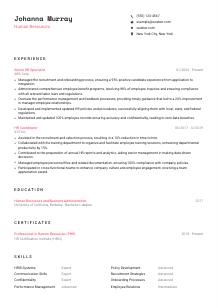
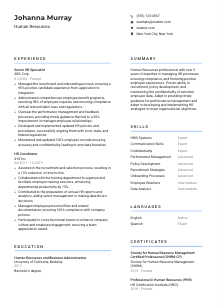
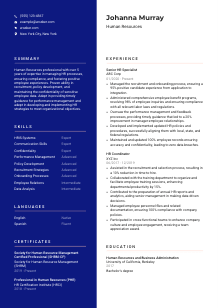
Linking people to opportunities, but your resume feels like a cross-functional puzzle? Check out this Human Resources resume example, created with Wozber free resume builder. It shows how to present your HR prowess clearly to match the hiring blueprint, and move your career forward in harmony with people's potential!
Human Resources work sits where policy, people issues, and day-to-day operations meet. A hiring team reviewing an HR resume wants early proof that you can handle sensitive employee information, keep processes compliant, and support managers and staff without letting details slip. Your resume should make that operational trust visible from the first few lines.
When the content is tailored well, your recruiting, onboarding, benefits, and policy experience is easier to recognize in both human review and ATS screening. Wozber's free resume builder helps shape an ATS-compliant resume around the language employers actually use, so core HR strengths such as HRIS work, employee record accuracy, and performance process support stand out quickly.
HR professionals are often the people others rely on for accurate records, timely communication, and discretion. That expectation starts with your own header. Keep this section clean, professional, and aligned with any practical requirement named in the posting.
Place your full name at the top in the most readable format on the page, then follow it with the job title you are targeting, such as "Human Resources" or a more specific title if the posting calls for one. This immediately anchors your resume in the function the employer is hiring for and keeps your positioning consistent with the rest of the document.
Use a professional email address based on your name and a phone number you actually answer. In HR, responsiveness and professionalism matter, so avoid casual usernames or outdated contact details. If a recruiter needs to reach you about interviews, references, or document follow-up, there should be no friction.
If the employer asks for local presence, reflect that directly in your personal details. Here, the role specifies New York City, New York, so listing New York City, New York in the header helps remove an immediate screening question. Keep this practical. It is about meeting a stated requirement, not padding the section.
A current LinkedIn profile can support your application, especially in HR where recruiters may look for consistency in titles, dates, certifications, and career progression. Make sure the profile mirrors your resume rather than expanding into unrelated content. If you include it, it should strengthen your credibility, not create discrepancies.
Leave out personal data that does not help you get hired, such as age, marital status, or a photo unless one is explicitly requested in your market. HR professionals know the importance of handling sensitive information appropriately, and your resume should reflect that same judgment and restraint.
Your header should read like it was prepared by someone who understands record accuracy, confidentiality, and professional communication. If the basics are polished and aligned to the posting, the rest of your HR experience is easier to trust.




In Human Resources, experience is strongest when it shows both process ownership and employee impact. Hiring teams look for more than a list of duties. They want to see how you handled recruiting flow, benefits questions, policy updates, compliance, records, and manager support in real operating environments.
Start by identifying the work the employer needs handled now. For this role, that includes recruitment and onboarding, benefits administration, performance management support, policy development, compliance, and employee record maintenance. Those themes should shape the bullets you choose and the language you use, especially if they reflect work you have already done.
List your most recent HR role first and keep each entry structured the same way: company, title, dates, and accomplishment bullets. In HR, career progression matters because it shows increasing responsibility with employee relations, systems, policy interpretation, or manager guidance. Clear chronology also helps recruiters quickly connect your background to the level of the opening.
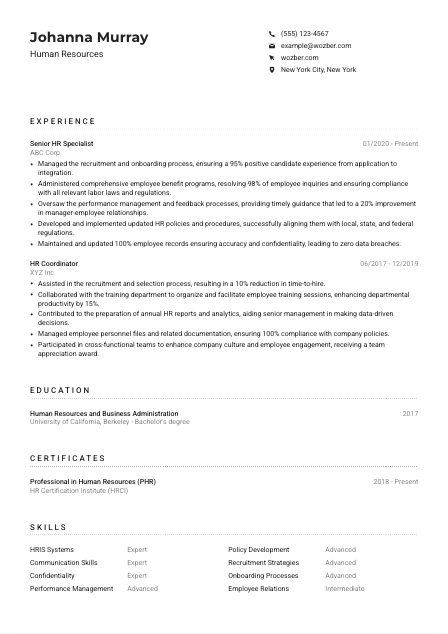
Do not stop at stating that you handled recruitment or maintained records. Show what happened because of your work. The sample resume does this well with bullets such as managing recruitment and onboarding while achieving a 95% positive candidate experience, or maintaining employee records with zero data breaches. That framing tells a hiring team you can run the process and protect the organization while doing it.
Use metrics that make sense for HR work: time-to-hire, onboarding satisfaction, inquiry resolution rates, compliance rates, training participation, retention support, audit readiness, or improvements in manager-employee feedback cycles. Numbers make the scope of your work easier to understand. Even a simple measure such as "resolved 98% of benefits inquiries" gives more hiring value than a generic statement about employee support.
Prioritize experience that matches the opening's operational needs. For an HR generalist or HR specialist opening, bullets about policy updates, labor law compliance, HRIS record accuracy, and onboarding workflows will usually carry more weight than broad administrative tasks. If an older role includes less relevant work, trim it down and keep the space for the experience that best reflects current HR responsibilities.
The best experience section makes it easy to picture you handling the actual workload of the role. Focus on process ownership, employee support, compliance judgment, and measurable outcomes, and your background will read like usable HR experience rather than general office support.
Education often serves as an early qualification check in HR hiring, especially when the posting names a specific degree field. Present it clearly so the reviewer can confirm your academic background without having to hunt for it.
If the posting asks for a Bachelor's degree in Human Resources, Business Administration, or a related field, make sure your education section reflects that wording as closely and accurately as possible. In the example, "Bachelor's degree" paired with "Human Resources and Business Administration" aligns well because it clearly covers both relevant fields named by the employer.
List your school, degree, field of study, and graduation year or date in a consistent format. That is usually all a recruiter or HR leader needs for this section. If you have several years of experience, clarity matters more than extra academic detail.
Small wording choices can improve ATS matching and human review. If your program was in Human Resources Management, Business Administration, Organizational Psychology, or a related discipline, state it precisely. Accurate wording helps connect your education to the requirement without stretching what you studied.
If you are early in your career or moving into HR from a related field, coursework in employment law, organizational behavior, compensation, training, or HR information systems can help show functional preparation. Once your work experience is well established, these details usually matter less than your practical HR results.
Honors, scholarships, leadership roles, or HR-related student organization work can support your profile if they reinforce your direction into the field. Keep them brief and relevant. They should complement your professional experience, not compete with it.
Your education section should quickly answer whether you meet the role's academic requirement. When the degree, field, and school are presented clearly, the hiring team can move on to the part that matters most in HR hiring, your practical judgment and execution.
Certifications carry real weight in Human Resources because they point to current knowledge of employment practices, compliance frameworks, and professional standards. When a posting names PHR or SHRM-CP, your resume should address that directly rather than leaving it implied.
Lead with certifications that are directly connected to HR practice and named in the posting. Here, PHR and SHRM-CP are especially important because the employer explicitly mentions them. If you already hold one, list it clearly. If the job allows willingness to attain it, you can reflect active progress in your broader application materials where appropriate.
Choose credentials that reinforce your ability to handle the actual job, whether that is employee relations, compliance, benefits, recruiting, or HR operations. In most HR resumes, a focused list of recognized HR certifications is stronger than a longer list of loosely related training completions.
Add the year earned or active date range so employers can see that your credential is current and maintained. The example resume lists both PHR and SHRM-CP with ongoing dates, which helps communicate continued professional engagement and not just a one-time exam pass.
HR rules, documentation standards, and workplace expectations change. If you pursue recertification, compliance training, or continuing education, your certifications section can quietly reinforce that you stay current. That matters in a role tied to labor law, policy updates, and employee guidance.
A well-chosen certification section tells the employer that your HR knowledge is current, recognized, and relevant to the responsibilities at hand. That extra layer of credibility is especially useful in roles with compliance and policy ownership.
A Human Resources skills section should read like the toolkit behind your day-to-day work. That means combining system knowledge, policy and process capability, and the communication skills needed to work with employees, managers, candidates, and leadership.
Start with the skills the employer is asking for, then match them only where you genuinely have experience. In this case, HRIS proficiency, strong written and verbal communication, performance management support, policy work, and recruitment process knowledge all belong near the top because they connect directly to the role's responsibilities.
HR hiring rarely hinges on soft skills alone. Include the operational abilities that make HR work function, such as HRIS systems, employee records management, benefits administration, policy development, labor law compliance, onboarding, and reporting. Then support them with communication, confidentiality, employee relations, and manager coaching where those reflect your actual background.
Keep the section easy to read and prioritize the skills most relevant to the role first. The sample list works because it starts with HRIS systems, communication, confidentiality, performance management, and policy development before moving into supporting capabilities like recruitment strategies and data analysis. That order helps both recruiters and ATS tools understand your core HR profile faster.
A useful HR skills section points to the systems you use, the processes you support, and the judgment you bring to employee-facing situations. When those skills mirror the posting naturally, the section earns its place quickly.
Language skills can matter in HR because the work depends on clear communication, policy explanation, interview conversations, and employee support. Present them plainly, with the required language first and any additional languages listed where they add context to your communication range.
If the employer states that English proficiency is required, list English clearly with an honest proficiency level. For this role, that is a direct requirement, so it should not be buried. In HR, written accuracy and verbal clarity affect everything from onboarding documents to benefits explanations and performance conversations.
Additional languages can strengthen your profile when the organization serves a multilingual employee base or diverse candidate pool. The sample resume lists Spanish as fluent, which can be useful in many HR settings, but only include languages you can use credibly in professional interactions.
Terms such as Native, Fluent, Advanced, Intermediate, or Conversational are usually enough. Avoid overstating your level. In HR, inaccurate language claims can create practical problems if the role later requires employee support, policy communication, or conflict handling in that language.
Not every HR job needs multiple languages, so list them in a way that reflects likely business value. If the organization operates across regions, serves multilingual teams, or has frequent employee-facing communication needs, additional language ability becomes more relevant.
Language skills are most useful when you connect them to real HR situations, such as supporting onboarding, assisting employees with benefit questions, or improving communication across teams. Present them as a working capability, not a decorative add-on.
Clear, honest language information helps the employer judge whether you can support the communication demands of the role. For HR positions, that practical clarity matters more than a long list of languages.
Your summary should quickly establish the kind of HR work you know how to handle. It is most effective when it names your level, your core strengths, and the operational areas where you have delivered results, without slipping into broad claims that could apply to any office role.
Pull the main themes from the posting and build your summary around them. For this position, that means areas like recruitment and onboarding, employee support, benefits administration, performance management guidance, policy updates, compliance, and record accuracy. You do not need to list all of them, but the summary should reflect the center of the job.
Lead with a clear statement of who you are professionally, such as years of HR experience and your area of concentration. The sample summary opens with "Human Resources professional with over 5 years of expertise," which works because it gives immediate context before moving into the candidate's functional strengths.
Choose the capabilities that best match the role and that your experience section can support. Recruitment, policy development, compliance, confidentiality, manager guidance, HRIS work, or employee relations are all strong options depending on your background. Keep the claims specific enough that a hiring team can immediately connect them to likely responsibilities.
Aim for a short paragraph with enough detail to be useful but not so much that it repeats your bullet points. In HR, a concise summary with concrete functional language usually lands better than a highly branded personal statement. Save the finer detail for the experience section where you can back it up with outcomes.
When written well, the summary tells a hiring team what kind of HR support, process ownership, and compliance awareness they are about to see in the document. That context helps every later section read with more relevance.
Once each section is aligned to the role, your resume should show a clear picture of how you handle HR operations, employee communication, policy execution, and confidential data. That is what turns a generic HR application into one that speaks directly to recruiting, onboarding, compliance, and performance support work.
Use Wozber's free resume builder to organize that experience in an ATS-friendly resume format, strengthen role-specific wording, and improve ATS optimization with the ATS resume scanner. The finished resume should make it easy to judge your ability to support employees, guide managers, and keep HR processes accurate and compliant from day one.




