



Use Wozber and land your dream job
Create Resume
No registration required
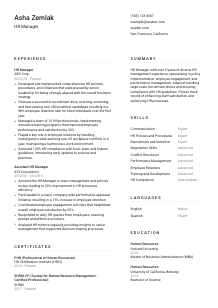
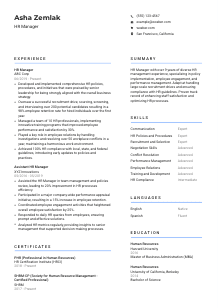
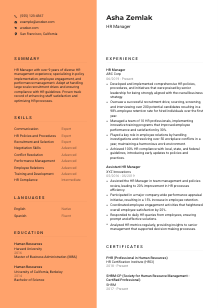
Managing talent, but your resume feels underqualified? Check out this HR Manager resume example, created with Wozber free resume builder. Learn how to strategically recruit job requirements into your career narrative, ensuring your HR leadership stands out as a top applicant!
HR Managers are trusted with decisions that affect hiring quality, employee relations, manager capability, retention, and legal risk. A resume for this role needs to show more than general people skills. It should make your scope clear across core HR work such as policy development, performance management, recruitment, investigations, training, and compliance.
Screening usually starts by checking whether your background lines up with the operating priorities in the posting. Wozber's free resume builder helps you shape an ATS-compliant resume around the employer's language, so terms tied to employee relations, compensation, performance cycles, and HR compliance appear where recruiters and hiring teams expect them. That makes it easier to see whether you can run HR programs with both business judgment and process discipline.
HR leaders are expected to be organized, professional, and easy to contact. Your Personal Details section should reflect that standard immediately, while also covering any practical requirement the employer states up front.
Use your full name as the most visible line on the page. Keep the formatting clean and professional. For an HR Manager resume, understated presentation works best because it reflects the kind of judgment expected in policy, employee relations, and leadership-facing communication.
Place "HR Manager" under your name when that matches the role you are pursuing. This gives instant context and helps both ATS systems and recruiters connect your background to leadership-level HR work rather than generalist or coordinator duties.
Include a working phone number and a professional email address. HR roles involve constant communication with candidates, employees, managers, and leadership, so small errors here can undercut credibility fast. A simple format such as firstname.lastname@email.com is the safest choice.
Some HR roles are tied closely to on-site support, local labor compliance, or a specific employee population. Here, San Francisco, California is stated as a requirement, so listing that location directly helps remove doubt about eligibility and availability.
A LinkedIn profile can strengthen this section when it supports your resume with consistent titles, certifications, recommendations, or HR-focused content. If you include a link, make sure it reinforces your experience with areas such as talent acquisition, investigations, training programs, or compliance oversight rather than adding unrelated material.
Keep this part straightforward and accurate. For an HR Manager, it should confirm professional polish, reliable contact information, and any practical requirement, such as location, without distracting from the rest of the resume.




This section carries the most weight because HR hiring teams want to see how you have handled people issues, processes, and business priorities in real settings. Focus on work that shows ownership, judgment, and measurable outcomes across the main HR functions.
Read the job description like an HR leader reviewing a requisition. Identify the functions that define the role, such as recruitment oversight, performance management, employee relations, policy development, and compliance. If the posting mentions increasing responsibility or leadership experience, make sure your bullets show progression, decision-making authority, and team or program ownership.
List your most recent position first and give each role clear context through title, employer, and dates. Then focus the bullets on work that matches the role you want now. For an HR Manager opening, that means highlighting items such as implementing HR policies, leading recruiting activity, managing feedback and training programs, or updating practices to stay aligned with labor guidelines.
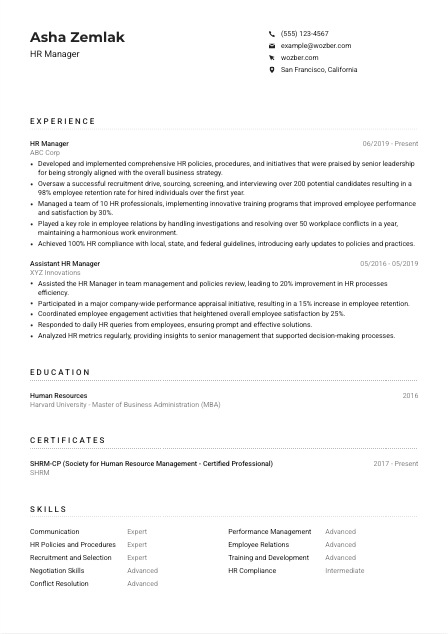
Routine HR duties sound stronger when tied to a result. The sample resume does this well by showing a recruitment drive of more than 200 candidates that led to 98% first-year retention for hires. That kind of bullet shows sourcing and interviewing work, but it also proves hiring quality and retention impact, which matters far more than a generic statement about recruiting support.
Numbers are especially useful in HR when they connect programs to outcomes. Retention rate, employee satisfaction, training impact, process efficiency, conflict volume handled, time-to-fill, or compliance rates all help hiring teams understand your scale and effectiveness. In the example, improving satisfaction by 30% and maintaining 100% compliance gives a much clearer picture of performance than broad claims about being people-focused.
Keep older or less relevant roles brief if they do not contribute to your case for HR management. Space on the page should go to the work that proves leadership across employee relations, investigations, performance systems, recruitment operations, and policy execution. Relevance matters more than a complete career autobiography.
Your experience section should show that you can run HR work, not just assist with it. When the bullets demonstrate scope, measurable results, and sound judgment across core HR functions, your management level becomes much easier to recognize.
Education is usually a qualification check in HR hiring, especially when a posting names a bachelor's degree and notes a master's as preferred. Present it clearly so the employer can confirm your academic background without digging for details.
If the role asks for a bachelor's degree in Human Resources or a related field, list that information clearly and completely. When you also hold an advanced degree, place it prominently because it can strengthen your candidacy for broader policy, strategy, and leadership responsibilities.
A clean structure works best: degree, field, school, and graduation year. This is especially important for ATS readability and for recruiters moving quickly through multiple resumes. Avoid over-formatting that makes straightforward qualifications harder to parse.
For HR Manager roles, a master's degree can support your case when it connects to organizational strategy, workforce planning, or leadership. In the sample, an MBA in Human Resources adds weight because the job combines operational HR management with alignment to business strategy.
If you are earlier in your HR career, selected coursework in employment law, compensation, organizational behavior, or talent management can help. For candidates with several years of experience, hands-on results in recruiting, employee relations, and compliance usually matter more than class lists.
Academic honors, leadership roles, or HR-related student activities can stay if they add something meaningful, especially for less experienced candidates. For a management-level resume, they should support your HR trajectory without crowding out the professional achievements that now carry more weight.
Present your education as clear proof that you meet the role's academic baseline. Then let your experience carry the deeper story about how you apply HR knowledge in live business settings.
Certifications are not required in every HR Manager search, but they often help separate candidates who have invested in formal professional standards. Include them in a way that shows relevance and current standing.
When a posting mentions credentials such as SHRM-CP or PHR, list them prominently. Even when framed as a plus rather than a requirement, these certifications reinforce your grounding in HR practice, policy, compliance, and employee management.
Choose certifications that support the responsibilities of the role. For HR Managers, that usually means credentials tied to employment law, talent management, employee relations, compensation, or broader HR operations. A focused list reads as stronger than a mixed set of unrelated courses.
If a certification is current, include the date or ongoing status. In the example, showing SHRM-CP and PHR as active helps communicate continued professional engagement. That matters in HR, where regulations, performance practices, and employee expectations keep evolving.
Professional development is particularly valuable in a field shaped by policy changes, workforce trends, and changing management practices. If you are pursuing additional training, prioritize topics that support real HR management work, such as investigations, compensation frameworks, DEI programs, or multi-state compliance.
Relevant HR certifications add another layer of confidence to your resume. They show that your experience is supported by recognized professional standards and current knowledge of the field.
The skills section should quickly map your capabilities to the work named in the posting. For HR management roles, the right mix usually combines functional expertise, leadership judgment, and communication strengths.
Start with the exact capabilities the employer names, then match them to your real experience. In this posting, strong examples include compensation, performance management, employee relations, communication, negotiation, and knowledge of HR functions. Mirroring that language helps ATS matching and keeps your resume aligned with the role's actual scope.
Put the most job-relevant skills first. For an HR Manager, skills such as HR policies and procedures, recruitment and selection, employee relations, performance management, and conflict resolution should usually outrank broad soft skills because they point to the operational work you will actually lead.
Do not overload this section with every HR-adjacent skill you have ever used. A shorter list with clear relevance reads better and supports stronger ATS optimization. The sample resume works because it stays anchored in core HR management capabilities rather than drifting into generic business terms.
This section should show the functions you can own from day one. When the language matches the posting and the skills reflect real HR responsibilities, the resume reads as focused and credible.
Language ability matters in HR when the job involves employee communication, recruiting, investigations, training, or policy explanation. Present languages clearly so the employer can understand both required fluency and any added value you bring.
If the posting asks for strong English communication skills, list English prominently and describe your level accurately. For HR Managers, this matters because the role often includes interviews, policy communication, documentation, feedback conversations, and conflict resolution where precision matters.
List languages in order of proficiency, starting with the one most important to the role. This helps recruiters quickly understand what you can handle in meetings, employee discussions, written communication, or training settings.
Extra languages can be valuable in HR, especially in diverse workplaces or candidate markets. In the example, fluent Spanish adds practical reach for employee communication and recruiting, even though English is the stated requirement.
Use labels such as Native, Fluent, Advanced, or Conversational only if they reflect what you can actually do on the job. In HR, overstating language ability can quickly become a problem when the role involves sensitive conversations, policy interpretation, or workplace investigations.
Language skills matter most when they improve communication across teams, locations, or employee groups. If your target role supports a multilingual workforce or frequent candidate interaction, this section can reinforce your ability to build trust and reduce communication gaps in everyday HR operations.
Keep this section honest and role-relevant. For HR work, useful language skills can strengthen employee communication, recruiting reach, and day-to-day support across a varied workforce.
Your summary should give a quick read on your level, core strengths, and the kind of HR work you are equipped to lead. Keep it concise, but make sure it covers the functions and outcomes most relevant to the target job.
Open with your title, years of experience, and main areas of strength. For this kind of role, that often means HR management, policy implementation, employee engagement, performance management, recruitment, or compliance. The sample summary works because it quickly establishes both tenure and operational focus.
Use the first sentence to make your level unmistakable. Phrases such as "over 9 years of HR management experience" or references to leading policies, teams, or employee programs immediately position you above junior HR profiles.
Pull in the themes that matter most for the job you want. Here, that includes strong knowledge of HR functions, recruitment oversight, employee satisfaction and retention, employee relations, and compliance. If those are genuine strengths in your background, mention them directly instead of relying on vague people-focused wording.
Aim for a short paragraph that reads quickly and avoids generic claims. Two to four sentences are usually enough to establish your HR scope, leadership level, and a few results or specialty areas that the rest of the resume will back up.
A good HR Manager summary gives the reader an immediate sense of your scope and priorities. By the time they reach your experience section, they should already expect to see leadership in policy, people management, and compliant HR operations.
A well-tailored HR Manager resume should make your strengths easy to trace across the full document: policy leadership, recruiting oversight, performance management, employee relations, compliance, and measurable workforce outcomes. When each section supports those themes, your experience reads as coherent management experience rather than a collection of HR tasks.
Use Wozber's free resume builder to organize that story in an ATS-friendly resume format, then refine the wording with role-specific terminology from the posting. An ATS resume scanner can help you spot missing requirements and tighten alignment before you apply. The finished resume should make one thing clear fast: you can lead HR operations with sound judgment, strong communication, and business-aligned execution.




