



Use Wozber and land your dream job
Create Resume
No registration required
Catering elegance, but your resume feels underdressed? Plate up this Banquet Server resume example, created with Wozber free resume builder. Learn how to serve your hospitality skills to match job requirements, making your professional journey as impressive as those grand event spreads!
Banquet service is judged in motion. Hiring teams picture busy ballrooms, tight event timelines, synchronized service, and guests who expect smooth, polished attention from setup through breakdown. Your resume needs to make that operating rhythm visible by showing how you handle service volume, room preparation, guest requests, and coordination with kitchen and banquet leadership.
When banquet resumes are tailored well, the first read answers a practical question quickly: can this person step into live event service without slowing the floor down? Wozber's free resume builder helps you shape an ATS-compliant resume around the language of the posting, so food and beverage knowledge, guest service, setup work, and team coordination are easy to spot in both ATS screening and hiring review.
Hospitality employers expect accuracy from the first line. If your contact details are messy, incomplete, or inconsistent, it raises doubts about how carefully you handle guest-facing work, event setup, and service standards.
Use your full name in a clean, readable format at the top of the page. In banquet service, presentation matters, and your header should feel as orderly as a well-prepped event room. Keep it simple and easy to scan.
Place "Banquet Server" directly below your name when that is the role you are pursuing. This immediately aligns your resume with the opening and helps separate you from general waitstaff or restaurant service applicants whose experience may be less event-focused.
List a working phone number and a professional email address you check often. Banquet hiring can move quickly, especially for active event calendars, so make it easy for managers or coordinators to reach you for interviews, shifts, or follow-up questions.
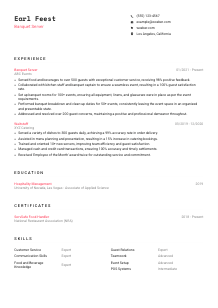
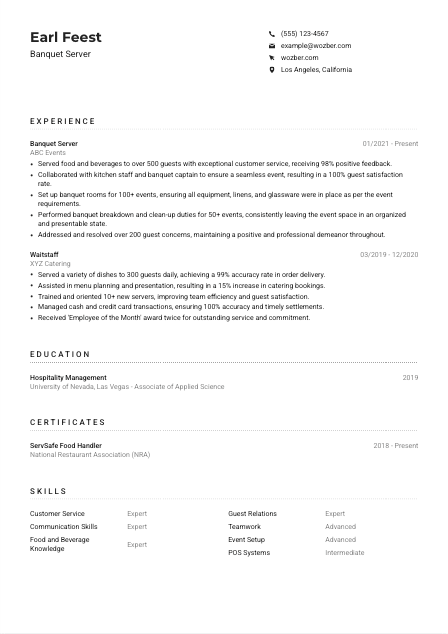
If the posting specifies a city, reflect that clearly in your personal details. Here, Los Angeles, California is part of the requirement, so listing Los Angeles helps remove a logistical question right away. If you are relocating, say so plainly rather than leaving the employer to guess.
A LinkedIn profile can help if it supports your hospitality background with matching job titles, dates, and recommendations. A personal website is optional for banquet servers unless it adds something relevant, such as event hospitality work or broader catering experience. Skip any link that does not strengthen your service profile.
Your personal details should quickly confirm who you are, what role you want, and whether you are reachable and available for the event location. Clean basics matter in a service job built on timing and coordination.




This is the section most likely to decide whether you move forward. Banquet employers look for proof that you can prepare rooms correctly, serve guests efficiently, coordinate with the kitchen and captain, and keep standards high during busy service windows.
Start with positions that connect directly to events, catering, banquet service, or high-volume guest service. If your background includes restaurant or waitstaff roles, keep the bullets focused on transferable work such as tray service, menu knowledge, team handoffs, guest issue resolution, and shift pace.
For each job, include your title, the company or venue, and dates of employment. That context helps hiring managers understand whether your experience came from hotels, catering companies, event spaces, or restaurants, each of which carries a different service rhythm and guest expectation.
Write bullets that show what you handled and how well you handled it. Numbers work especially well in banquet resumes because they quickly show event scale. The example resume does this effectively with details like serving more than 500 guests, setting up 100+ events, and resolving 200+ guest concerns while maintaining strong satisfaction scores.
Quantify the parts of the job that naturally carry weight in hospitality: guest counts, number of events supported, service accuracy, customer feedback, setup volume, or satisfaction rates. Metrics like 98% positive feedback or 100% guest satisfaction are useful because they connect your work directly to the guest experience and event execution.
Keep the section centered on food and beverage service, room setup, breakdown, guest interaction, and teamwork with back-of-house staff. General accomplishments can stay if they reinforce hospitality performance, but the priority is showing that you can walk into an event, follow the service plan, and contribute immediately.
After reading your experience section, an employer should have a clear picture of the events you have supported, the pace you can handle, and the standard of service you bring to the floor.
Education usually plays a supporting role in banquet hiring, but it still matters. It confirms baseline qualifications and can strengthen your profile when paired with service experience, especially if your studies touched hospitality operations, guest service, or event management.
This posting asks for a high school diploma or equivalent, so make sure your education section clearly covers that standard. If you also hold college-level hospitality training, list that as well because it can add depth beyond the minimum requirement.
Include the school name, degree or diploma, field of study if relevant, and graduation year or date. Hiring managers should be able to read this section in seconds without sorting through extra wording.
If you completed a hospitality, culinary, tourism, or event-related program, make that easy to spot. In the example, an Associate of Applied Science in Hospitality Management strengthens the candidate's service background because it connects formal training to the demands of banquet operations.
If you are early in your career, a short mention of coursework in food service operations, event planning, guest relations, or beverage service can support your application. If you already have solid banquet experience, detailed coursework is usually less important than your event results.
Academic honors, hospitality clubs, or event volunteer work can be worth listing if they support your service profile. Keep them brief and relevant. This section should reinforce your preparation for guest-facing work, not distract from your event experience.
Keep education concise, accurate, and relevant to hospitality work. For banquet hiring, it should confirm your foundation and, when applicable, add context that supports stronger service credentials.
Certifications matter in banquet work because they speak to food handling, safety, and service professionalism. When a posting names a certification preference, this section becomes a straightforward way to show you already meet it.
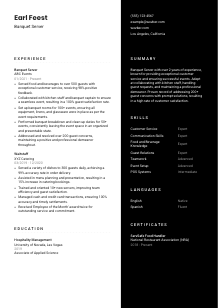
If the employer mentions ServSafe Food Handler or an equivalent credential, list it prominently. That is one of the clearest tailoring moves you can make for this posting, and it immediately strengthens your hospitality profile.
Prioritize certifications tied to food safety, alcohol service, customer service, or hospitality operations. A shorter list of directly relevant credentials is stronger than a long list of unrelated courses.
Add the issuing organization and the date earned, and note renewal status when applicable. In food service, current credentials matter because they show you are up to date on handling standards and workplace requirements.
Banquet work depends on consistency, safety, and guest trust. Keeping certifications current shows that you take those standards seriously and stay engaged with the practical side of hospitality service.
Relevant certifications give employers one more reason to feel comfortable putting you on the event floor, especially when food handling, beverage service, and guest safety are part of the job.
Banquet skills need to reflect live service, not generic people skills. The best skills section shows that you understand the mechanics of event work, from guest interaction and menu knowledge to setup discipline and coordination with the kitchen.
Start with the abilities named in the job description. Here, that includes customer service, food and beverage knowledge, wine and specialty cocktail familiarity, teamwork, communication, and timely handling of guest requests. Those are the terms most worth mirroring if they match your real experience.
Only include skills that show up in your work history, certifications, or summary. If you list guest relations, event setup, or POS systems, there should be some evidence elsewhere on the resume that you used them during service. The sample resume handles this well by pairing skills like Customer Service and Event Setup with measurable banquet accomplishments.
Put the most job-specific strengths near the top. For this kind of role, food and beverage knowledge, guest service, communication, teamwork, and event setup usually deserve more space than broad workplace traits. Prioritization helps the employer quickly understand how you contribute during service.
Your skills list should read like the toolkit of someone who can support an event smoothly, interact confidently with guests, and stay coordinated with the service team from first setup to final breakdown.
Banquet service is built on quick, clear communication. Language skills matter because they affect guest interactions, menu explanations, special requests, and coordination with teammates during busy event service.
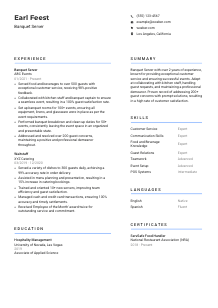
Since this posting requires strong English language competence, list English clearly and use an honest proficiency level such as Native or Fluent. This is especially important in banquet work, where instructions, timing cues, and guest questions need to be handled accurately in real time.
If you speak additional languages, include them. In many banquet settings, another language can help with guest comfort, smoother service recovery, and clearer communication around menu items or event needs. Spanish, for example, may be especially useful in some hospitality markets, including the example resume.
Use consistent labels such as Native, Fluent, Intermediate, or Basic. Overstating language ability can create problems fast in a guest-facing role where miscommunication affects service quality.
Languages matter most when they improve service. That might mean answering guest questions about dishes, helping clarify requests, or supporting smoother communication during fast-paced events. Frame them as practical service assets, not just extra credentials.
List only languages you could comfortably use on the job. A shorter, truthful language section is far more valuable than a long list that does not hold up during guest interaction or team communication.
For banquet service, language ability should show that you can communicate clearly under pressure and make guests feel looked after. Keep the section honest and directly tied to service quality.
Your summary should sound like someone ready to step into event operations, not like a generic hospitality profile. In a few lines, show your service background, the kind of banquet work you have handled, and the strengths that matter most in guest-facing event settings.
Before writing, pull out the role's most important needs: banquet or food service experience, guest service, food and beverage knowledge, teamwork, and professional communication. These points should shape the summary more than broad statements about being hardworking or passionate.
Lead with a direct line that states your profession and years of relevant experience. For example, "Banquet Server with 2+ years of experience" gives immediate context and helps the employer place you quickly.
Mention the abilities that matter most for banquet service, such as serving large guest counts, coordinating with kitchen staff, handling guest concerns, or maintaining polished service during setup and breakdown. The sample summary works because it connects experience with concrete strengths like resolving 200+ guest concerns and supporting successful events.
Aim for a short paragraph that can be read quickly before the employer moves into your experience bullets. Skip vague claims and use precise language that reflects banquet operations, guest service standards, and teamwork under event pressure.
By the end of your summary, the employer should already understand your service level, your event experience, and the kind of guest-facing value you bring to a banquet team.
A banquet server resume works best when it shows real event experience in practical terms: guest counts served, rooms set, service quality maintained, and coordination with the kitchen or banquet captain. That is what helps hiring teams picture you on the floor.
Use Wozber's free resume builder to organize those details into an ATS-friendly resume template, refine wording with AI support, and strengthen ATS optimization with an ATS resume scanner. The finished resume should make one thing easy to judge: you can step into banquet service and deliver a smooth guest experience from setup to breakdown.




