



Use Wozber and land your dream job
Create Resume
No registration required
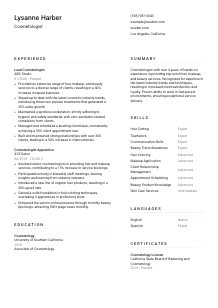
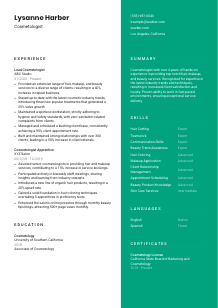
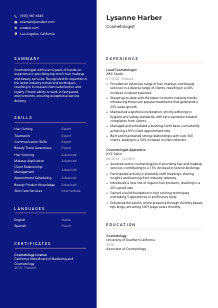
Crafting beauty, but your resume needs a makeover? Check out this Cosmetologist resume example, created with Wozber free resume builder. Learn how to bring out your artistic flair and product knowledge to match job expectations, making your cosmetology career as stunning as a flawless complexion!
Cosmetology work is judged in the chair, at the station, and across the full client experience. Hiring teams look past broad claims about creativity and want to see the range of services you can perform, how well you retain clients, how you handle sanitation standards, and whether you can keep pace in a busy salon or studio environment.
A tailored resume changes which strengths stand out first. When your wording matches the service mix, licensing requirements, and client-service expectations in the posting, both hiring teams and applicant tracking systems can quickly recognize relevant experience in cutting, coloring, styling, skin care, scheduling, and repeat-business growth. Wozber's free resume builder helps organize that content into an ATS-friendly resume format so your background reads clearly for the work the salon actually needs covered.
In cosmetology, accessibility matters. A salon cannot book an interview, confirm license details, or move quickly on a promising candidate if your contact information is incomplete or inconsistent. This section should confirm who you are, what role you do, and any practical requirement that affects eligibility.
Use your full name in a clear, readable format so it stands out immediately. For a cosmetologist, your name is often tied to repeat clients, referrals, and personal reputation, so avoid decorative formatting that makes it harder to read or search.
Place "Cosmetologist" directly under your name when that is the role you are applying for. This creates instant alignment with the posting and helps frame the rest of your resume around licensed beauty services rather than a broader beauty or wellness profile.
List a reliable phone number and a professional email address with no typos. In a fast-moving salon setting, managers often reach out quickly to fill schedules, so your booking-line equivalent on the resume needs to work without friction.
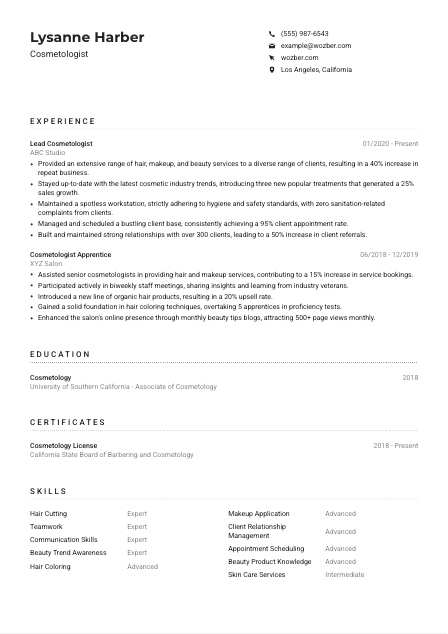
If a job specifies a city or state, add yours clearly. In this example, Los Angeles, California matters because the employer asked for a local candidate. Use location to remove doubt about availability, but treat city requirements as posting-specific rather than universal for every cosmetology role.
A website, portfolio, or polished LinkedIn profile can help when it shows service range, client work, or professional history. For cosmetologists, the most useful links display real styling, makeup, nail, or skin care results and keep the presentation consistent with the resume.
Your personal details should answer the practical questions first: who you are, how to reach you, what role you perform, and whether you meet any stated location requirement. When that information is easy to scan, the rest of the resume can stay focused on service quality and client results.




Cosmetology experience carries the most weight when it shows both technical range and client outcomes. Hiring managers want to see what services you delivered, how consistently you worked, whether clients came back, and how you contributed to revenue, referrals, or day-to-day salon operations.
Start with the actual service mix in the job ad, then shape your bullets around matching work. Here, that includes hair, makeup, nail or beauty services, skin care, client communication, sanitation, scheduling, and teamwork. The sample resume does this well by showing hands-on services plus operational duties like appointments and client retention.
Lead with your most recent salon or studio work so employers can quickly see your current service level, client volume, and responsibilities. In cosmetology, recent experience often says a lot about the techniques, products, and service standards you are actively using now.
Do not stop at "provided beauty services" or "worked with clients." Show what kind of services you performed, how you met client preferences, and what happened as a result. A bullet such as increasing repeat business through hair, makeup, and beauty services tells far more than a generic task list.
Metrics make your contribution easier to understand. Strong examples include repeat booking rates, referral growth, retail upsell results, sanitation records, service sales, client load, or appointment completion. The sample resume uses figures like 40% repeat-business growth and 95% appointment rate, which are highly relevant in a client-service environment.
Prioritize experience that matches the employer's service menu and work setting. If the job calls for cutting, coloring, styling, and skin care, those capabilities should appear before less related tasks. If you also have nail or bridal work and it matches the posting, bring that forward. Relevance in cosmetology comes from service overlap, pace, and client-facing responsibility.
The best experience section shows more than time spent in a salon. It shows service breadth, client trust, hygiene discipline, and commercial results. When those pieces are visible, employers can picture you handling appointments, maintaining standards, and building repeat business from day one.
Education matters in cosmetology because it shows how your training was built, especially when employers are weighing newer professionals against candidates with several years of salon experience. Keep this section straightforward and relevant to the practical skills behind your license and service work.
List the degree, diploma, or school program most directly connected to your work as a cosmetologist. In the example, an Associate of Cosmetology supports the candidate's background well because it clearly ties formal training to the profession.
Include school name, degree, field of study, and graduation year or date. Clean structure matters for ATS readability and also helps a salon manager quickly confirm where your technical training came from.
If the posting asks for a broad mix such as hair services, makeup, nails, or skin care, your education can reinforce that range. Mention program focus areas only when they strengthen the match and reflect what you were actually trained to do.
Advanced color theory, skin treatments, makeup application, sanitation practices, or product chemistry can be worth listing if they support the target role. This is especially useful early in your career, when coursework may help fill out technical depth that your work history is still building.
Awards, honors, competition placements, or leadership in a cosmetology program can add value when they connect to craft, discipline, or client service. Skip general student activities unless they clearly support salon work, teamwork, or technical growth.
Your education section should quickly show where your training started and how it supports the services you offer today. For cosmetology roles, that means keeping the focus on recognized training, relevant coursework, and any distinctions that strengthen your technical profile.
In cosmetology, credentials are not an extra detail. They are often the first compliance checkpoint. Employers need to know that you are licensed where required and current enough to work with confidence in a regulated, hygiene-sensitive environment.
If the job asks for a valid cosmetology license, list it prominently. In this posting, state licensure is mandatory, so the California State Board credential belongs at the top of the section. This is the clearest way to confirm you can legally perform services in that market.
Beyond the main license, include certifications that reinforce the treatments or specialties the employer needs. Advanced color, makeup artistry, skin care, or sanitation-related credentials can strengthen your profile when they match the services you actually provide.
Include issue dates, renewal ranges, or active status where relevant. For licensed beauty roles, dates help employers confirm that your credential is current and not an outdated line item from earlier training.
Beauty services evolve through new techniques, products, and client preferences. If you have recent training in trending treatments, product systems, or safety practices, include it to show that your methods stay current and salon-ready.
This section should remove any doubt about your eligibility to work and the seriousness of your professional development. For a cosmetologist, a current license plus relevant specialty training tells an employer you can step into services with the right technical and regulatory foundation.
A cosmetologist's skills section should balance hands-on service abilities with the interpersonal and operational skills that keep appointments running smoothly. Employers are hiring someone who can perform treatments, communicate well, maintain standards, and contribute to repeat business.
Start with the capabilities the employer called out directly. Here, that means cutting, coloring, styling, skin care services, communication, teamwork, and working in a fast-paced environment. Use the same language where it matches your real experience so the role alignment is immediate.
Do not list only beauty techniques. Client consultation, relationship management, product knowledge, appointment handling, and communication often matter just as much in salon hiring because they affect retention, referrals, and day-to-day service flow.
Group or order your skills so the most relevant ones appear first. A cosmetologist resume is easier to read when technical services such as hair cutting, hair coloring, makeup application, and skin care sit alongside practical strengths like teamwork and scheduling rather than appearing in a random list.
A useful skills section makes it easy to see your service range and how you work with clients and coworkers. That combination matters in cosmetology because technical execution, communication, and salon pace all shape the client experience.
Cosmetology is highly conversational work. Consultations, service adjustments, aftercare guidance, and product recommendations all depend on clear communication, so language skills can carry real weight, especially in diverse client markets.
If the posting requires fluency in English, say so directly using a clear proficiency level such as "Native" or "Fluent." That immediately addresses a stated hiring requirement and supports your ability to handle consultations, service explanations, and scheduling without confusion.
Additional languages can be a genuine advantage in salons serving varied communities. In the example, Spanish complements English well and could support broader client communication, but secondary languages should be included because they are useful to your work, not as filler.
Use honest labels such as Native, Fluent, Advanced, or Intermediate. In client-facing beauty work, overstating language ability can create problems during consultations, product discussions, or service instructions, so accuracy matters.
Language skills are most relevant when they improve consultations, comfort, retention, and referrals. If speaking another language helps you explain treatments, understand style preferences, or build rapport with returning clients, it belongs on the resume as a practical service advantage.
This section is most effective when it shows how you communicate with clients in real service settings. For cosmetology roles, strong language skills support smoother consultations, better trust, and a more personalized salon experience.
Your summary should quickly tell a salon what kind of cosmetologist you are, how much hands-on experience you bring, and which results or service strengths make you worth a closer look. Keep it specific enough to sound credible in a beauty-services setting, not generic enough to fit any customer-facing role.
Review the posting and pull out the top themes before you write. For this role, those include licensed practice, at least 2 years of experience, a wide service range, client satisfaction, teamwork, and fast-paced salon work. Your summary should reflect that mix rather than offering a vague personal statement.
Start with your title, years of experience, and main treatment areas. The example summary works because it quickly establishes more than 4 years of hands-on work in hair, makeup, and beauty services, which gives the reader an immediate sense of level and breadth.
Use the summary to spotlight the kind of performance that matters in cosmetology, such as client loyalty, trend awareness, service quality, or speed in a busy environment. If you have measurable outcomes like repeat-business growth or referral gains, a short reference can make the profile more believable.
Aim for a concise paragraph that reads naturally and matches the target role. Skip soft filler about passion or creativity unless it is backed by service expertise, specialties, or client results. Every line should support the case that you can perform services well, work smoothly with clients, and contribute to salon performance.
A well-written summary gives employers a quick read on your service range, experience level, and client-facing strengths before they reach the rest of the resume. For a cosmetologist, that should point clearly to licensed practice, reliable technique, and the ability to keep clients coming back.
You now have a clear structure for presenting your cosmetology background in a way that reflects real salon work. When your resume shows service range, current licensure, sanitation standards, client relationship strength, and measurable business impact, it becomes much easier for an employer to picture you in the role.
Use Wozber's free resume builder to tailor each section to the target posting, strengthen wording with role-specific terminology, and present your experience in an ATS-compliant resume. Wozber's ATS resume scanner can also help you spot missing requirements and tighten alignment before you apply. The goal is simple: make it easy to see that you can deliver quality services, work well with clients, and contribute to repeat bookings from the start.