



Use Wozber and land your dream job
Create Resume
No registration required
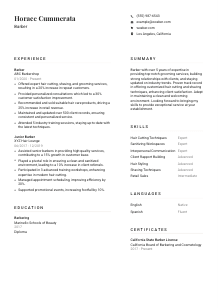
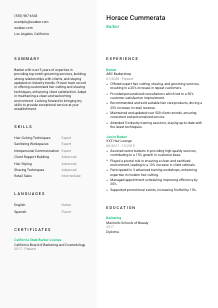
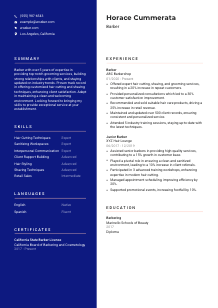
Trimming fades, but your resume looks rough around the edges? Refine your style with this Barber resume example, created with Wozber free resume builder. Learn how to shape your cutting-edge skills to match job criteria, ensuring your career stays as sharp as your shears!
Barber hiring moves quickly when a resume shows the work that matters behind the chair. Owners and managers want to see steady hands with classic cuts, fades, beard work, and straight-razor shaving, but they also look for signs of client retention, clean station habits, and consultations that turn one-time visits into regular bookings.
A tailored resume changes how that experience lands. When your wording mirrors the shop's services and requirements, an owner can spot license status, technique range, sanitation discipline, and customer service strength without hunting through vague bullets. Wozber's free resume builder helps organize that information in an ATS-friendly resume format, so the resume reads clearly to both screening systems and the people deciding who gets a trial shift or interview.
This section is straightforward, but it still does real work in a Barber resume. It should make you easy to contact, confirm basic eligibility, and immediately place you in the right lane for the role. For a client-facing trade where local availability, license status, and professional presentation matter, clean details set the right tone from the start.
Put your name at the top in a clear, readable format. Skip decorative styling and make it easy to scan, especially on mobile, where many shop owners first review applications.
Place "Barber" directly under your name if that is the role you are pursuing. If you are applying from a junior or assistant position but already performing full barbering services, using the target title helps frame your experience around cuts, shaves, grooming, and customer care rather than around support work alone.
Add a working phone number and a professional email address you check regularly. In shop hiring, interviews and working interviews are often scheduled fast, so missed calls or an unprofessional email can cost you momentum. If you include a website or profile, make sure it shows relevant work such as haircut photos, grooming results, service menu examples, or client-facing branding.
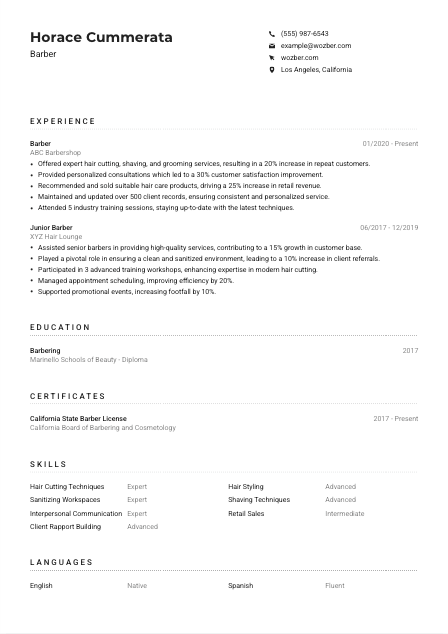
If the job asks for someone based in Los Angeles or willing to relocate, say so in this section. That removes a practical concern immediately. In the sample resume, listing Los Angeles, California aligns neatly with the posting, but for other applications, use the location details that match the employer's stated requirement.
Barbering is visual and reputation-driven, so a portfolio, Instagram business page, or booking profile can strengthen your application when it reflects your real work. Include it only if the content is current, professional, and consistent with the services you want to be hired for, whether that is skin fades, beard shaping, traditional cuts, or modern styling.
Your personal details should answer the practical first questions fast: who you are, what role you do, how to reach you, and whether you are available for the shop's location. Keep this section as polished as your station setup.




For Barbers, experience is where hiring teams decide whether you can handle real client traffic. They look past job titles and want to see the services you delivered, the customer relationships you built, and the standards you kept around sanitation, punctuality, and repeat business. This section should read like proof of daily performance in a working shop.
Start by marking the core services and responsibilities in the job ad. For Barber roles, that often includes haircutting, shaving, consultations, product recommendations, client record keeping, and hygiene standards. Those points should shape which bullets you emphasize and how you describe your work.
Show your most recent shop experience first, with your title, employer name, and dates. This makes your progression easy to follow, especially if you moved from junior barber or assistant work into a full barber role with more client ownership and revenue responsibility.
Do not stop at "provided barbering services." Show what kind of work you handled and what changed because of it. The sample resume does this well by tying consultations to a 30% improvement in customer satisfaction and linking service quality to a 20% increase in repeat customers. That kind of phrasing tells a shop owner you can build loyalty, not just complete appointments.
Barber resumes benefit from practical metrics such as repeat clients, retail product sales, satisfaction scores, referrals, appointment efficiency, or number of client records maintained. A line like increasing retail revenue by 25% through product recommendations shows commercial awareness, while maintaining 500+ client records shows consistency and attention to personalized service.
Keep the focus on client-facing grooming work, hygiene compliance, service quality, shop operations, and training that sharpened your technique. If an older role does not add anything to your case as a Barber, reduce it or remove it. Space is better spent on fades, hot towel shaves, consultation skills, and outcomes that matter in a busy chair schedule.
A strong experience section gives a hiring manager a clear picture of how you work with clients, how you contribute to shop revenue, and how reliably you maintain standards. Each bullet should help them imagine you stepping into the shop and performing from day one.
Barbering is hands-on, but formal training still matters because it shows where your technical foundation came from. Education helps confirm that you learned the fundamentals of cutting, shaving, sanitation, and state-regulated practice in a structured setting. Keep it clear and relevant.
Check whether the posting points to a barbering diploma, cosmetology school, or another recognized training path. Many Barber jobs focus more heavily on license status and practical experience, but education still supports your credibility and rounds out your professional background.
List the school, credential, field of study, and completion year. For example, a diploma in Barbering from a recognized beauty or barber school is enough to show the training base without overexplaining coursework.
If the role requires a state Barber License, your education and certification sections should work together logically. A barbering diploma followed by an active state license shows a complete path from training to legal practice, which is exactly what a hiring manager wants to confirm quickly.
Barber employers rarely need a long academic history unless it connects directly to the work. Keep the section focused on training that supports your technical services, sanitation standards, or customer care in a shop environment.
If you completed advanced coursework in straight-razor shaving, modern cutting techniques, scalp care, or men's grooming, include it when space allows. The same goes for honors or practical achievements that show stronger preparation for the kind of services the shop offers.
Education should confirm that your technique was built on formal instruction and industry standards. For most Barber resumes, concise and relevant wins over detail-heavy.
For a Barber, certifications are not decorative. They confirm legal eligibility to work, support client trust, and show commitment to current technique and hygiene standards. This section should make your required credentials easy to find at a glance.
If the job asks for a valid state Barber License or certification, list it before anything optional. That is a gatekeeping requirement, not a bonus. In the provided example, the California State Barber License is exactly the kind of credential that should sit front and center.
Lead with licenses, sanitation-related certifications, and advanced barbering training that strengthen your ability to perform services safely and professionally. Specialty workshops in modern cutting, shaving, beard design, or grooming trends can also help when they reflect the services the shop sells.
Add the issue date, renewal period, or active range when relevant. For regulated work, current status matters. A hiring manager should not have to guess whether your license is active and usable.
Barbering changes with style trends, tool techniques, and product knowledge. If you regularly attend workshops or brand training, include the strongest examples. The sample resume mentions multiple training sessions, which is a useful way to show that your methods stay current rather than stale.
When licensing and training are easy to spot, the employer can move on to the more interesting question of how well you cut, shave, consult, and retain clients. That is exactly where you want the conversation to go.
The skills section should reflect the real mix of technical execution and client work that defines barbering. A hiring manager wants to see whether you can deliver the cut, keep the station sanitary, communicate well during consultations, and support the business through rebookings or product sales.
Use the posting to identify the exact mix of service and people skills the shop values. In this case, that includes classic and modern cutting techniques, styling, shaving, communication, rapport building, and clean workspace practices. Those phrases help shape an ATS-friendly set of skills without drifting into generic wording.
List the skills you can back up with real experience. If you are strong in haircutting, shaving, sanitation, client consultations, record keeping, or retail product recommendations, show that clearly. The sample resume combines technical skills like Hair Cutting Techniques and Shaving Techniques with business-relevant skills like Retail Sales, which creates a fuller picture of value behind the chair.
Group the most important abilities near the top and avoid padding the section with vague traits. Specific skills such as fade work, beard grooming, straight-razor shaves, sanitizing workspaces, client rapport building, and interpersonal communication give hiring teams something concrete to recognize and compare.
Your skills section should mirror what clients experience in your chair and what a shop depends on every day. Keep it focused on techniques, hygiene, customer interaction, and service support you can demonstrate in an interview or trial service.
Barbering is conversational work. Language ability matters because consultations, service adjustments, retail recommendations, and everyday client rapport all depend on clear communication. If a shop serves a diverse neighborhood, additional languages can widen your usefulness right away.
Look for direct language requirements in the posting before you list this section. Here, English proficiency matters for customer interactions, so it should be clearly stated on the resume.
Place English prominently when the role calls for it. That tells the employer you can manage consultations, understand style requests, explain products, and handle service conversations without friction.
If you speak additional languages, include them when they would reasonably help in a shop setting. In many cities and neighborhoods, Spanish or another second language can improve consultations, strengthen repeat business, and help clients feel understood from the first visit.
Use straightforward proficiency levels such as Native, Fluent, Intermediate, or Basic. Accurate ratings matter because language skill in Barbering shows up quickly during consultations and client interaction.
Think beyond translation. Language skills can help you clarify haircut preferences, understand grooming routines, explain maintenance between visits, and build trust with clients who return every few weeks. That makes this section especially useful when communication is one of your strengths.
For a Barber, language skills matter most when they improve consultations and client loyalty. List them in a way that reinforces your ability to make people comfortable in the chair and clear about the service they are getting.
Your summary should quickly tell a shop owner what kind of Barber you are, how long you have worked, and what kind of client and service results follow your work. Keep it short, but make it specific enough to set the tone for the rest of the resume.
Open with your years of experience and your main area of value. A line such as "Barber with 5+ years of experience in haircutting, shaving, and men's grooming" gives immediate context and works better than a broad statement about being passionate or hardworking.
Bring in the capabilities the employer cares about most, such as personalized consultations, strong client rapport, sanitation standards, modern and classic techniques, or product recommendation skill. The sample summary points to customized grooming services and client satisfaction, which is a solid model because it reflects both technical delivery and customer experience.
Aim for a few lines, not a paragraph-long biography. Use wording that matches the kind of shop you are targeting, and cut anything generic. A strong summary should make a hiring manager expect reliable service quality, repeat clients, and a professional presence before they even reach your experience section.
Your summary should sound like someone a client would trust and a shop would want on the schedule. If it clearly conveys your experience, service strengths, and professionalism, the rest of the resume has a strong foundation.
A Barber resume should make four things easy to confirm: you are licensed where required, you can deliver the services the shop offers, you communicate well with clients, and you contribute to repeat business through consistent service. When each section supports those points, the application feels grounded in real shop performance rather than generic self-description.
Wozber helps you build that kind of application with structure that supports ATS optimization, clear sectioning, and role-specific tailoring. Use Wozber's free resume builder, ATS-friendly resume templates, and ATS resume scanner to match your wording to the job description and sharpen each section around the work you actually do. The result should make it easy for a hiring manager to picture you taking clients, maintaining standards, and fitting smoothly into the barbershop's daily flow.