



Use Wozber and land your dream job
Create Resume
No registration required
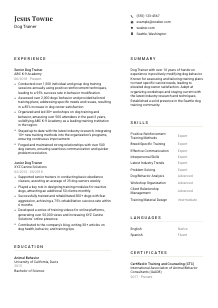
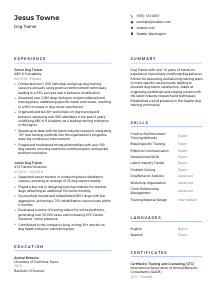
Teaching pups to sit pretty, but your resume isn't fetching the right responses? Check out this Dog Trainer resume example, created with Wozber free resume builder. Learn how to show off your leash of skills to align with job outlines, ensuring your career is always sitting and staying at its professional best!
Dog training work is judged in real sessions, not in broad claims. Hiring teams want to see how you read canine body language, adapt methods to the dog in front of you, and coach owners so the training holds once the session ends. Your resume should make that practical range visible, from behavior assessment to owner education and class leadership.
When those details are tailored to the posting, your background reads much more clearly in both ATS screening and human review. Wozber's free resume builder helps you match the language of the role in an ATS-compliant resume, so skills like positive reinforcement, behavior modification, and workshop instruction surface early instead of getting buried. That makes it easier to see whether you can step into sessions, build training plans, and work confidently with dogs and their owners.
For a Dog Trainer, the header should answer a few practical questions right away. Can you be reached easily, are you presenting yourself as a trainer rather than a generic animal-care applicant, and do you meet any location requirement named in the posting? Keep this section simple, accurate, and directly aligned with the role.
Use your full name as the most visible line in the header. Choose a clean, readable style that fits a professional service role where trust matters. Dog training often depends on referrals, repeat clients, and owner confidence, so your name should look established and easy to remember.
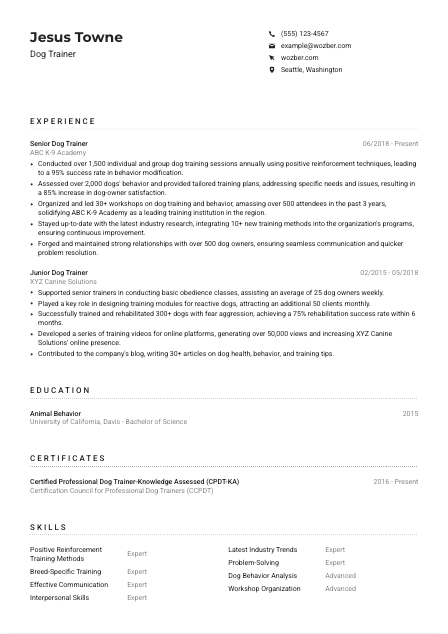
Place "Dog Trainer" directly under your name if that is the role you are pursuing. Matching the posted title helps position you correctly, especially when hiring teams are sorting applicants across related backgrounds such as kennel operations, veterinary support, grooming, or animal behavior assistance. In the example, using the exact title keeps the resume anchored to training work from the first line.
List a current phone number and a professional email address with no clutter or casual wording. Dog training roles involve scheduling sessions, confirming class times, and speaking with owners about behavior concerns, so accessibility matters. If you include a website, make sure it leads to useful material such as training philosophy, testimonials, class offerings, or behavior resources.
If the job requires you to be based in a specific area, show that in your header. This posting asks for Seattle, Washington, so listing Seattle and Washington immediately removes a practical barrier. Treat location as a tailoring choice tied to the employer's requirement, not something every Dog Trainer resume must emphasize.
A website, profile, or portfolio can strengthen your application when it shows real training work. Useful examples include workshop pages, owner education content, training videos, certifications, or client reviews. Keep it current and consistent with the methods and experience described elsewhere on the resume, especially if you emphasize positive reinforcement or behavior work.
Your personal details should tell the employer, at a glance, that you are a reachable, local, professionally presented Dog Trainer. That is all this section needs to do, and doing it cleanly helps the rest of the resume carry more weight.




Experience is where Dog Trainer resumes separate general animal-care exposure from professional training practice. Employers look for session volume, behavior cases handled, owner coaching, class leadership, and results that show your methods work over time. Use this section to show what kind of dogs you worked with, how you trained them, and what changed because of your work.
Before rewriting bullets, isolate the working priorities in the job description. Here, the key themes are positive reinforcement, behavior assessment, customized training plans, owner education, group sessions, and workshops. Your experience bullets should reflect those exact parts of the job when they match your background, using natural wording rather than pasted keywords.
Start with your most recent training role and work backward. For each position, include your title, employer, and dates so the reader can follow your development from assistant or junior work into more independent training responsibility. In a field where hands-on experience matters, clear chronology helps show how long you have been running sessions, handling behavior cases, or leading classes.
Replace generic duty statements with concrete outcomes tied to dog training practice. Numbers work well here when they reflect real measures such as sessions delivered, dogs assessed, owner satisfaction, workshop attendance, rehabilitation success, or client growth. The example does this effectively with metrics like 1,500 annual sessions and a 95% success rate in behavior modification, which immediately tells the reader the scale and effectiveness of the trainer's work.
Strong bullets explain how you trained, not only what you were responsible for. Mention positive reinforcement, behavior modification plans, obedience work, reactivity cases, fear-based behaviors, puppy socialization, or owner coaching when those reflect your experience. A bullet about assessing dogs and building tailored plans is especially useful because it shows both technical judgment and communication with owners, which are central to this profession.
Select achievements that support your candidacy for a Dog Trainer opening. Related experience in animal behavior, client education, class instruction, or program development can stay if it strengthens that story. Cut older or less relevant details that do not help explain your training approach, results, or ability to work directly with dogs and their owners.
By the end of this section, the reader should understand your training style, the kinds of cases you can handle, and the results you have delivered in real client settings. That is what turns experience from a list of jobs into a convincing case for hiring you.
Formal education is not always the deciding factor in dog training, but it can strengthen your professional foundation, especially when it relates to animal behavior, learning theory, or applied psychology. Include academic details in a way that supports your training practice rather than treating the section as filler.
Look at how the posting frames education and related knowledge. This one values experience in dog training or a related animal behavior field, so a degree such as Animal Behavior fits naturally. If your studies connect to learning, behavior, welfare, or species-specific handling, make that link clear through the degree and field name.
List the degree, school, field of study, and graduation year or date in a straightforward format. Employers reviewing training resumes do not need extra decoration here. They want to see whether your academic background supports your understanding of behavior, reinforcement, and canine development.
If your degree title alone does not show the connection, include selected coursework, research, or specialization related to animal behavior, breed traits, behavior analysis, learning theory, or training methodology. Do this only when it adds clarity. In the example, "Bachelor of Science in Animal Behavior" already makes the connection obvious, so extra detail may not be necessary.
Short courses, seminars, and workshops can strengthen this section, especially if they cover behavior cases, canine communication, aggression, fear responses, puppy development, or owner instruction. Dog training methods evolve, and this kind of study shows that your approach is informed by current practice rather than habit alone.
Honors, research projects, clubs, or capstone work are most useful when they directly support your value as a trainer. Early-career candidates can use them to show depth before they have years of session volume. If you are already experienced, keep only the details that reinforce professional strengths such as behavior analysis or training education.
Your education section should support your credibility in canine behavior and learning, not compete with your hands-on experience. When it is relevant and concise, it adds helpful context to the training work shown elsewhere on the page.
In dog training, certifications can quickly signal professional standards, continuing education, and commitment to recognized methods. They matter even more when a posting names preferred credentials, because they help employers distinguish between informal experience and structured professional training.
Start with certifications that directly match the employer's preferences. Here, credentials such as CPDT-KA or CTC are specifically mentioned, so they belong near the top if you hold them. When an employer lists recognized institutions, using the exact certification name helps your resume align cleanly with both ATS parsing and human review.
Put behavior and training credentials ahead of broader animal-care certificates. A hiring manager for a Dog Trainer role will care more about qualifications tied to canine training, behavior counseling, or reinforcement-based practice than unrelated coursework. The example's CPDT-KA and CTC entries work well because they directly support the advertised preference.
Add the certifying organization and the date earned or renewal period so the credential reads as current and verifiable. This is especially important for certifications that require ongoing education or periodic renewal. It shows that your professional development is active, not outdated.
If you have added recent seminars, specialty certificates, or continuing education in behavior cases, client coaching, or humane training methods, include the strongest ones. Dog training is a field shaped by evolving research on learning, stress, and behavior, so current credentials support the claim that your methods are up to date.
Your certifications should show recognized training knowledge and a current commitment to professional standards. For employers comparing trainers with similar experience, that extra layer of credibility can make a real difference.
A Dog Trainer skills section should reflect the tools you use in sessions, behavior assessments, and owner communication. Generic soft skills alone will not do much here. Employers want to see whether your methods, judgment, and client-facing abilities match the type of training they provide.
Start with the skills the employer actually names. In this job, that includes positive reinforcement, reward-based training, dog behavior, body language, breed-specific traits, communication, and interpersonal skills. Use those terms when they accurately describe your background, then add closely related abilities such as obedience training, behavior modification, workshop facilitation, or client education if they strengthen the picture.
Dog training is part behavior work and part owner coaching, so your list should reflect both. Pair practice-based skills such as dog behavior analysis or breed-specific training with communication skills that matter in consultations and follow-up guidance. The example does this well by combining positive reinforcement and behavior analysis with communication, interpersonal skill, and workshop organization.
Do not turn this section into a master inventory of everything you can do. Focus on the abilities that support the target role and that you can back up through experience. If a skill does not connect to training sessions, behavior outcomes, owner instruction, or program delivery, it usually does not belong here.
Your skills section should quickly show that you understand dogs, use sound training methods, and communicate effectively with owners. If those three areas come through clearly, the section is doing its job.
Language ability matters in dog training because much of the work happens through explanation, coaching, and relationship-building with owners. If the posting names a language requirement, address it directly and present your proficiency with the same level of clarity you would use in a client session.
When a role specifies language expectations, match that requirement clearly in your resume. This posting asks for superior English language skills, so English should appear first with an honest proficiency level. In a role that depends on explaining handling techniques, giving feedback, and leading classes, language is part of the job, not a side detail.
Additional languages can be a real asset in dog training businesses that serve diverse communities or run public classes. If you can coach owners, answer questions, or provide training support in another language, include it. The example's Spanish entry strengthens the resume because it suggests broader client reach without overstating its importance.
Choose standard terms such as Native, Fluent, Advanced, Intermediate, or Basic. Avoid vague descriptions that make it hard to judge how comfortably you can speak with clients, explain training plans, or handle workshop questions. Accuracy matters more than sounding impressive.
Present languages in the context of communication value, especially if your work involves consultations, classes, community outreach, or follow-up coaching. For most Dog Trainer roles, this is less about international reach and more about serving owners clearly and confidently in the market you work in.
If you are actively improving a second language, you can include it at the level you can honestly use in professional settings. Overstating language skill creates problems quickly in live sessions where owners need clear guidance on timing, cues, reinforcement, and safety. Be precise.
List languages that improve your ability to teach, explain, and connect with owners. In a client-facing training role, that practical communication value is what makes this section worth including.
The summary should give a quick, credible picture of how you work as a Dog Trainer. It is most effective when it covers your level of experience, training approach, and the kinds of outcomes you deliver, all in a few lines that feel grounded in real practice.
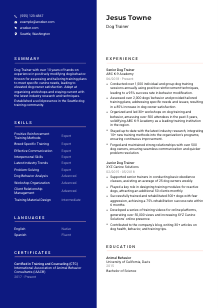
Start with your title and years of experience so the reader can place you immediately. A line such as "Dog Trainer with 10+ years of hands-on experience" works because it establishes both profession and depth. For this posting, that opening also satisfies the employer's requirement for more than 3 years of professional experience.
Use the summary to highlight the parts of your approach that align most closely with the role. Positive reinforcement, behavior assessment, customized training plans, owner education, and class leadership are all strong options when they reflect your background. The example summary succeeds because it centers behavior modification, tailored plans, and workshop leadership instead of vague passion statements.
Aim for a short paragraph that includes only the details most likely to matter in screening. Mentioning one or two outcomes, such as improved dog-owner satisfaction or successful behavior change, adds more value than broad claims about dedication. Every sentence should connect to daily training work or professional credibility.
Your summary should set up the rest of the resume by pointing toward what your experience section will prove. If you mention behavior assessment, owner coaching, or workshop delivery here, make sure the bullets below back it up with cases, session volume, or measurable results. That consistency makes the resume feel trustworthy and well tailored.
After reading the summary, an employer should already understand your training style, your level of experience, and the kind of outcomes you are known for. That gives the rest of the resume a clear direction and makes your application easier to remember.
A tailored Dog Trainer resume should show more than enthusiasm for working with dogs. It should show how you assess behavior, apply positive reinforcement, guide owners, and lead sessions or classes with results that hold up in practice.
Use Wozber's free resume builder to organize those details in an ATS-friendly resume template, then refine the wording with the ATS resume scanner so the language of the posting is reflected where it matters most. The finished resume should make it easy to judge your training approach, client communication, and readiness to step into the role.




