



Use Wozber and land your dream job
Create Resume
No registration required
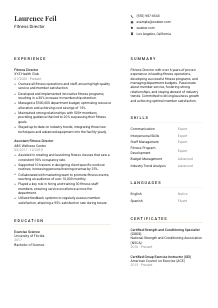
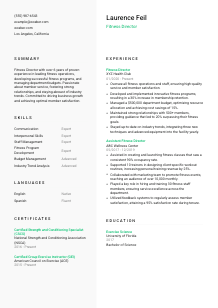
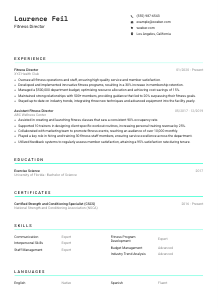
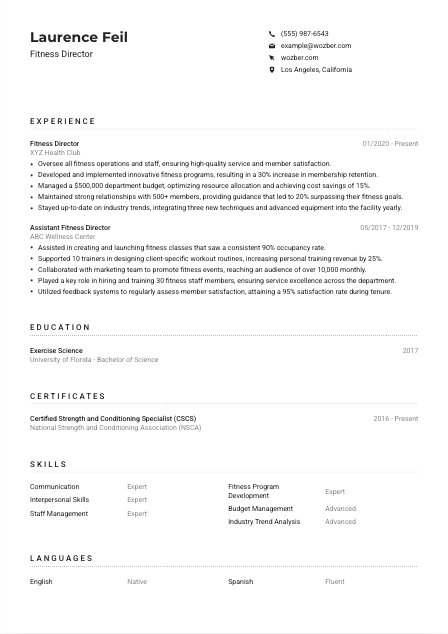
Toned abs, but your resume is feeling flabby? Check out this Fitness Director resume example, built with Wozber free resume builder. It shows how to flex your fitness leadership to match job requirements, ensuring your career regimen is as strong and impactful as your burpees!
A Fitness Director is trusted with more than training knowledge. The role sits at the center of member experience, staff performance, program design, and facility standards. Your resume needs to make that operational range visible quickly, showing that you can lead a team, build programs people actually use, and keep service quality high across the floor.
Resume tailoring matters here because hiring teams need to separate hands-on trainers from leaders who can run a department. Wozber's free resume builder helps you align your wording with the posting and create an ATS-compliant resume that surfaces the right terms, from fitness operations to budget management, so your leadership scope is clear from the first scan.
For a Fitness Director, the header is not a throwaway section. It confirms who you are, where you are based, and whether you match practical filters that may determine whether your application moves forward at all.
Place your name at the top in a clean, readable format. It should be the easiest element to spot, followed by the role you are targeting. Keep the presentation polished and professional, much like the standard you would set for a fitness team or member-facing department.
Add "Fitness Director" directly under your name when that is the position you are pursuing. Matching the job title helps recruiters and ATS software categorize your application correctly, and it immediately frames your background around leadership, operations, and programming rather than general fitness instruction.
List a current phone number and professional email address, and check them carefully. At this level, employers may move quickly when scheduling interviews about staff oversight, program ownership, and facility leadership. Do not lose that opportunity over a typo or an outdated address.
If a role requires candidates to be based in a specific market, include your city and state. In the example, listing Los Angeles, California directly supports a stated requirement. Use this kind of location detail when it answers a real job filter, not as filler.
A LinkedIn profile or personal website can help if it reinforces your resume with the same career timeline, certifications, recommendations, or club leadership background. Make sure it reflects your management experience, program results, and industry credentials consistently.
This section should answer the basic questions fast: who you are, what role you are targeting, and whether you meet practical requirements such as location and contactability. Then the rest of the resume can focus on your fitness leadership record.




Fitness Director hiring usually turns on past scope. Employers want to see whether you have led staff, improved member outcomes, launched programs, and handled the business side of a fitness operation without losing service quality.
Before writing bullets, identify the work the employer is emphasizing. For a Fitness Director, that often includes overseeing trainers and classes, improving member satisfaction, managing schedules and budgets, and keeping programming current. Then rewrite your experience so those priorities appear in your own track record, using language that matches the role naturally.
List roles in reverse chronological order with title, organization, and dates. That structure helps hiring teams follow your move from coaching or assistant leadership into full department ownership. If you have progressed from roles like Assistant Fitness Director into top-level club leadership, make that advancement easy to see.
Generic bullets such as "managed fitness operations" do not tell enough. Show what changed under your leadership. In the example, stronger bullets include increasing membership retention by 30%, improving personal training revenue, and helping members surpass their goals. Those are the kinds of results that show you can connect programming decisions to retention, revenue, and service quality.
Quantify the size of the operation whenever you can. Good metrics for this field include department budget, trainer headcount, class occupancy, member satisfaction, retention, revenue growth, number of members supported, or equipment and program rollouts. A bullet such as managing a $500,000 budget or supporting 500+ members gives your leadership real scale.
Choose examples that reflect the actual demands of directing a fitness department. Staff supervision, schedule ownership, trainer development, program launches, member engagement, and facility improvement matter more here than unrelated accomplishments. If you have broad experience, prioritize the parts that show you can lead a fitness team and deliver a strong member experience.
Your experience section should leave little doubt about what you have run, improved, and delivered. When hiring managers can see team size, program results, budget responsibility, and member outcomes, they can picture you leading the department.
For Fitness Director roles, education is often a formal requirement rather than a background detail. Hiring teams look for a relevant academic foundation in exercise science, kinesiology, or a related discipline because it supports safe programming, staff guidance, and credible leadership.
If the role asks for a bachelor's degree in Exercise Science, Kinesiology, or a related field, make sure that appears clearly. In the example, a Bachelor of Science in Exercise Science directly matches the requirement. When your degree aligns this closely, do not bury it.
List your degree, field of study, school, and graduation year or date. This makes it easy for recruiters to confirm your academic background quickly, especially when they are checking several minimum requirements at once.
The field of study matters in fitness leadership roles. A degree tied to exercise science, human performance, wellness, or kinesiology reinforces that your decisions about programming and training are grounded in relevant knowledge, not just practical experience.
If you are earlier in your career, relevant coursework in exercise physiology, program design, biomechanics, or sports management can help round out your profile. For more experienced candidates, this is usually less important than team leadership, member results, and operational performance.
Honors, research projects, or leadership roles in fitness-related organizations can be worth adding if they strengthen your case for this kind of position. Keep them only if they support the story of becoming a credible manager of programs, staff, or member wellness initiatives.
This section does not need extra decoration. It needs to show, clearly and quickly, that you meet the educational standard and that your academic background supports the work you would oversee.
Certifications carry real weight in fitness leadership because they show continued professional standards beyond a degree alone. For a Fitness Director, they also reassure employers that your guidance to staff and members is grounded in recognized practice.
Many Fitness Director postings ask for at least one nationally recognized certification, such as ACSM, NASM, ACE, or similar credentials. Put your most relevant and widely recognized certification first so the requirement is easy to confirm.
List certifications that connect directly to the department you would lead. In the example, credentials such as CSCS and ACE Group Exercise Instructor support both training expertise and program leadership. If you hold several certifications, lead with the ones most relevant to staff oversight, exercise programming, and facility leadership.
Add issue dates, renewal periods, or active status when applicable. This matters in an industry where best practices, equipment, and training standards evolve. Current credentials tell employers that your knowledge is active, not outdated.
Fitness leadership changes with new training methods, recovery approaches, equipment trends, and member expectations. Ongoing certification or continuing education helps demonstrate that you can update programming and guide staff with current standards in mind.
Handled well, this section does more than list acronyms. It shows that your operational decisions, coaching standards, and program recommendations come from recognized professional training.
This section should read like a snapshot of how you run a fitness department. The best skills lists combine operational leadership, member-facing judgment, and the business skills needed to keep programming and service standards on track.
Review the job description for recurring themes. For Fitness Director roles, those often include leadership, fitness program development, communication, interpersonal ability, budgeting, and staff management. Use that language where it matches your experience so the skills section reinforces the rest of your resume.
Prioritize skills you would use to run the department successfully, such as staff management, program design, member engagement, scheduling, performance evaluation, budget management, and service quality oversight. In the example, "Fitness Program Development" and "Staff Management" are especially well aligned with the role's core responsibilities.
Do not overload this section with every training method or soft skill you have ever used. A tighter list helps both recruiters and ATS systems read your profile accurately. Wozber's AI resume builder can help surface role-specific terminology and shape it into an ATS-friendly resume format without turning the section into a keyword dump.
A strong skills section tells the reader that you can lead trainers, build effective programs, manage resources, and maintain member trust. That is the mix employers need to see for this position.
Communication is part of daily operations in a fitness facility. A Fitness Director gives guidance to members, coaches staff, handles concerns, and often works with a diverse community, so language proficiency can matter more than it does in many back-office roles.
If the posting states that English is mandatory, list it clearly with your proficiency level. That instantly confirms your ability to lead staff conversations, deliver member guidance, and handle operational communication without ambiguity.
Use clear labels such as "Native," "Fluent," or "Conversational." In member-facing environments, vague descriptions do not help. Employers want to know how comfortably you can coach, resolve issues, and communicate expectations across the team.
Extra languages can be valuable in clubs that serve broad local communities. In the example, Spanish adds practical value in a market like Los Angeles, where it could help with member rapport and staff communication. Treat this as a tailoring choice based on the audience you may serve.
Do not overstate proficiency. If you can greet members and handle simple exchanges but not detailed coaching conversations, label that honestly. Credibility matters, especially in a role that depends on trust and clear instruction.
When relevant, think of language skills as part of the member experience. Being able to explain a program, answer concerns, or build rapport across different member groups can strengthen retention and satisfaction, which are central outcomes in fitness management.
This section works best when it supports the real communication demands of the job. Lead with required English proficiency, then add other languages that can strengthen member support or team coordination.
The summary needs to establish your level fast. For a Fitness Director, that means leading with management experience, program results, and the business or member outcomes you have influenced, not with broad enthusiasm for fitness.
Look at the posting and identify the few themes that appear most often. In this case, that would include leading fitness operations, building successful programs, managing staff and budgets, and maintaining member satisfaction. Your summary should echo those priorities in condensed form.
Start with a direct line that establishes your level, such as being a Fitness Director or fitness operations leader with 5+ years in management. The example's "over 6 years" works because it immediately places the candidate above the minimum experience threshold.
Choose achievements that prove you can lead outcomes, not just perform tasks. Program retention gains, revenue growth, budget oversight, trainer development, or high member satisfaction all work well here. Keep the examples close to what the employer needs to trust you with.
Aim for a short paragraph that can be scanned in seconds. Replace general statements about passion or dedication with specifics about operations, programming, member service, and leadership scope. The summary should prepare the reader to expect measurable results in the experience section.
When this section is written well, the hiring team can tell within a few lines that you are not applying as a trainer who wants to move up. You already present as someone who can lead the floor, the staff, and the member experience.
A Fitness Director resume needs to show that you can run a department, not simply coach well. When your experience, certifications, education, and summary all point to operational ownership, member results, and staff leadership, the application becomes much easier to read with confidence.
Use Wozber's free resume builder to organize that story in an ATS-friendly resume template, then refine it with the ATS resume scanner and AI-assisted tailoring features so the language matches the role you want. The finished resume should make one thing clear right away: you are ready to lead a fitness operation.




