




Use Wozber and land your dream job
Create Resume
No registration required
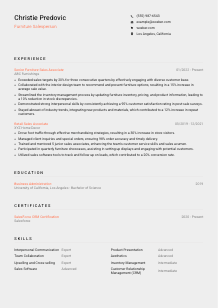
Pitching cozy home setups, but your resume feels out of place? Browse this Furniture Salesperson resume example, created with Wozber free resume builder. Learn how to blend your sales flair with showrooms of potential, making your career decor just as inviting as your favorite display!
Furniture sales is part retail performance, part consultation. Hiring teams want to see how you move a customer from first conversation to final purchase by understanding room needs, style preferences, budget limits, and delivery expectations. Your resume should make that sales process visible, not just state that you worked in a store.
A tailored resume also helps separate general retail backgrounds from candidates who can sell higher-consideration home purchases. Using Wozber's free resume builder to align your wording with the posting and keep an ATS-friendly resume format makes it easier to surface the right details first, such as target attainment, product presentation, inventory accuracy, and customer-facing communication.
For showroom and retail sales roles, the top of the resume needs to answer a few practical questions fast: who you are, what role you are targeting, and whether you meet basic logistics such as location and availability. Keep this section clean and useful.
Use your full name in a clear, readable font so it stands out immediately. For a customer-facing sales role, presentation matters, and a clean header sets the tone before a hiring manager reaches your sales results or product knowledge.
Place "Furniture Salesperson" directly under your name when that is the role you are pursuing. Matching the posted title helps frame the rest of your resume around showroom sales, customer advising, and furniture presentation rather than broad retail work.
List a current phone number and a professional email address that you check regularly. If you include a website or profile, make sure it supports your application with relevant sales, retail, or design-related information rather than unrelated content.
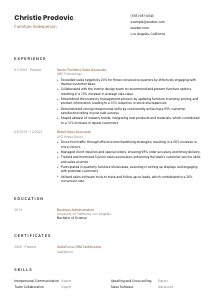
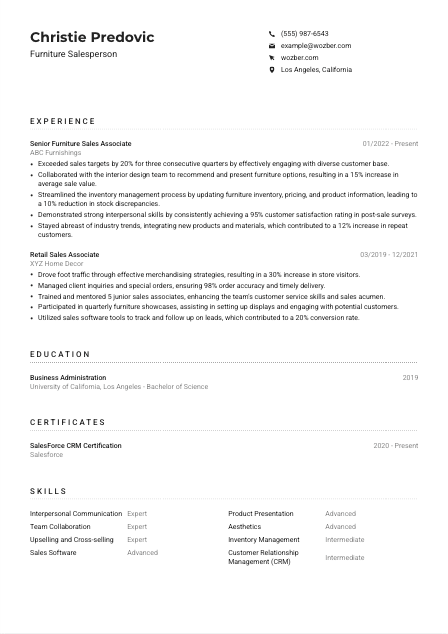
If an employer specifies a city or region, show that detail in your contact section. Here, listing Los Angeles, California directly addresses a stated requirement and removes uncertainty about local eligibility or commute planning. Treat location this way when it is relevant to the opening, not as a rule for every application.
A LinkedIn profile or personal site can reinforce your background, especially if it reflects retail sales experience, vendor relationships, or home decor knowledge. Check that job titles, dates, and achievements match your resume so recruiters do not run into conflicting information.
This section should quickly confirm that you are reachable, professionally presented, and aligned with the opening's basic requirements. Then the hiring manager can move straight to the part that matters most in furniture sales: how you sell, advise, and follow through.




Experience carries the most weight in furniture sales because the job blends relationship-building with product knowledge and day-to-day retail execution. Your bullet points should show how you handled customer conversations, guided product choices, used sales systems, and contributed to revenue or service quality.
Before rewriting your experience, mark the responsibilities and requirements that define the role. In this case, the employer is asking for sales experience, customer engagement, sales software use, target attainment, furniture recommendations tied to budget, coordination with delivery, and awareness of product and design trends. Those are the themes your bullets should answer.
List each position in reverse chronological order with title, employer, and dates. Then make the bullets do the real work by focusing on sales floor performance, client advising, merchandising, order handling, CRM or POS usage, and collaboration with delivery or inventory teams. If your background includes both general retail and furniture-specific work, give more space to the experience closest to consultative home furnishing sales.
Numbers are especially persuasive in this field because they show whether you can convert conversations into revenue. Use metrics tied to actual store performance, such as sales target attainment, average ticket growth, conversion rate, repeat customers, order accuracy, customer satisfaction, or reduced stock discrepancies. The sample resume does this well with results like exceeding targets by 20%, raising average sale value by 15%, and improving customer satisfaction to 95%.
Furniture sales is rarely just greeting shoppers and closing a transaction. Show that you can recommend pieces based on style and budget, maintain accurate product information, follow special orders, coordinate delivery timing, and update inventory or pricing in the sales system. These details tell an employer you can handle the operational side of the showroom as well as the customer-facing side.
Your work history should reveal how your sales ability has grown. That can mean moving from general retail into furniture or home decor, taking on mentoring responsibilities, handling higher-value sales, or becoming more involved in merchandising and design-informed recommendations. In the example, the progression from retail sales associate to senior furniture sales associate makes that development easy to follow.
A hiring manager should be able to scan this section and picture you engaging customers, recommending the right pieces, keeping orders accurate, and hitting numbers. If your experience reads that clearly, the resume is doing its job.
Education usually supports a furniture sales resume rather than carrying it. Keep it straightforward, and use it to reinforce commercial awareness, communication, or design-adjacent knowledge when those elements genuinely connect to the work you do.
List your degree, field of study, school, and graduation year. Even when a posting does not require a specific degree, education still adds context, especially if it supports customer communication, business judgment, merchandising, or retail operations.
This section should be easy to scan in a few seconds. One concise entry is often enough for an experienced furniture salesperson, especially when your sales history and performance metrics already carry the strongest proof.
If your degree connects to the role, make that relevance visible. A Business Administration degree, for example, supports sales planning, customer management, and commercial awareness. If you studied interior design, merchandising, marketing, or communications, those can also strengthen the connection.
Relevant coursework or academic projects can be useful if you are early in your career or changing into furniture sales from another field. Focus on classes that support showroom selling, visual presentation, consumer behavior, retail management, or design principles. Leave them out if they add bulk without improving your case.
Clubs, leadership roles, or campus work can stay if they reveal something useful for the role, such as customer service, event presentation, team leadership, or an interest in interiors and merchandising. For experienced candidates, this information should stay secondary to real sales achievements.
Keep this section tidy and relevant. It should add context to your commercial and customer-facing strengths without distracting from the showroom results that matter most.
Certifications are helpful when they reinforce how you sell, manage customer information, or understand the product category. They are especially useful in furniture sales when they point to CRM fluency, product expertise, or continued learning in home furnishings.
Review the posting for any stated or implied technical needs, then choose certifications that support those needs. For this opening, sales software proficiency and furniture knowledge matter, so credentials related to CRM systems or home furnishings make sense. The example resume uses both a Salesforce certification and a home furnishings credential for that reason.
A short list of certificates that clearly support sales execution is stronger than a long list of unrelated training. If a certification improves your credibility in customer relationship management, retail systems, product presentation, or the furnishings category, include it. If not, leave it off.
Include the year earned, and if relevant, show whether the credential is active. This helps employers understand whether your training reflects current tools and practices, especially for software, CRM workflows, or vendor-backed product education.
Furniture trends, materials, finishes, and customer expectations change over time. Certifications can show that you keep your product knowledge and selling approach current, which matters when customers rely on you for informed recommendations instead of basic transactional help.
Well-chosen certificates can strengthen your resume quickly, especially when they support the sales systems, product knowledge, and category expertise the role calls for. Keep the list focused and current.
For a furniture salesperson, the skills section should read like the toolkit behind your results. Hiring teams look for a mix of customer communication, selling ability, system fluency, product presentation, and enough design awareness to guide buying decisions with confidence.
Start with the language used in the job description. Here, that includes interpersonal communication, sales software, customer engagement, meeting sales targets, written and oral English, and familiarity with interior design concepts. Building your skills list from the posting helps your resume stay relevant and supports ATS optimization.
Lead with the abilities most likely to matter in the hiring decision. For furniture sales, that often means consultative selling, upselling and cross-selling, customer relationship management, product presentation, inventory awareness, and teamwork with delivery or merchandising staff. The example skills list handles this well by putting communication and selling strengths near the top.
Choose skills you can back up in your experience section. A tighter list works better than a long inventory of generic abilities. If you claim sales software proficiency, your work history should also show CRM use, lead follow-up, price updates, or order management. If you list aesthetics or interior design awareness, support it with furniture recommendations, display work, or collaboration with design teams.
When this section is done well, it quickly confirms that you can communicate with customers, work inside sales systems, present products well, and contribute to revenue. Every skill should connect to how you actually perform on the sales floor.
Language skills can be valuable in furniture retail because the work depends on conversation, trust, and clear follow-through on orders, financing, or delivery details. Keep this section practical and tied to customer communication rather than treating it as a generic extra.
If the posting specifies a language requirement, list it clearly with your proficiency level. This role asks for effective oral and written English communication, so English should appear prominently on the resume.
Put the most relevant language first, usually the one required by the employer or most useful in your customer base. In many retail markets, an additional language can be a real advantage when helping shoppers compare options, understand materials, or confirm delivery details.
Additional languages are worth including when they help you serve a broader range of walk-in customers or build rapport in a diverse market. In the sample resume, fluent Spanish adds useful context for a customer-facing role in Los Angeles, but extra languages should always be presented as an advantage, not a requirement unless the employer says so.
Stick with standard terms such as native, fluent, intermediate, or basic. That gives hiring teams a realistic sense of how comfortably you can handle live conversations, written follow-up, and service issues without overstatement.
List languages that help in actual showroom interactions, special orders, or customer support. If a language has no practical connection to the role, it does not need to take up valuable resume space.
In furniture sales, language ability matters when it helps you communicate clearly, build trust, and reduce friction in the buying process. Keep the section honest and relevant to the customer environment you want to work in.
The summary should quickly establish what kind of furniture salesperson you are. Focus on the mix that matters most here: sales performance, customer advising, product knowledge, and enough design awareness to recommend pieces that fit both space and budget.
Start with a direct line that identifies you as a Furniture Salesperson and states your years of relevant experience. If you have worked specifically in furniture or home decor, say so early. That instantly places you closer to the employer's needs than a broad retail summary would.
Choose the qualifications that define your value for the target role. Good options here include exceeding sales targets, guiding customers toward the right products, using sales software confidently, and understanding interior design concepts well enough to make credible recommendations.
Aim for three to five lines. Use that space to name what you do well, not to repeat soft claims. The sample summary works because it combines industry experience, target attainment, customer relationships, and budget-conscious product recommendations in a short space.
Use language that reflects the day-to-day reality of the job. Terms like customer preferences, budget constraints, home decor industry, repeat business, or showroom sales tell the reader more than broad statements about being motivated or people-oriented. This short section should sound grounded in real retail performance.
A well-written summary gives hiring teams a fast read on your sales background and your ability to guide furniture purchases with confidence. Once that is clear, the rest of the resume can back it up with numbers, systems, and customer results. Wozber's AI resume builder can help tighten that wording and keep the final version ATS-compliant for furniture sales openings.
Your resume should now show more than a general retail background. It should make it easy to see that you can engage customers, recommend the right pieces for their style and budget, manage showroom details accurately, and contribute to sales targets.
Use Wozber to refine the wording, check ATS alignment, and organize your content in an ATS-friendly resume template that keeps your strongest results easy to find. The finished resume should give a hiring team a clear read on your readiness to sell, advise, and follow through in a furniture showroom.