



Use Wozber and land your dream job
Create Resume
No registration required
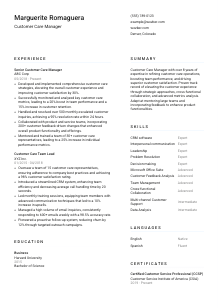
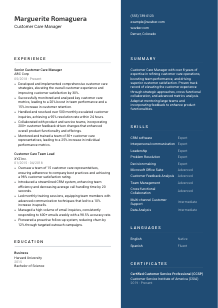
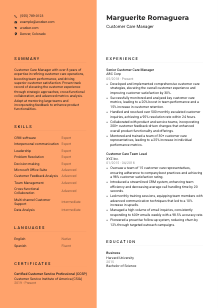
Nailing customer queries, but your resume is on hold? Tune in to this Customer Care Manager resume example, built with Wozber free resume builder. Show your professional service and leadership skills in line with job standards, ensuring your career support line is always clear for the next opportunity!
Customer care leadership is measured in service outcomes, team performance, and how well issues are resolved when customers are already frustrated. A Customer Care Manager resume needs to show more than people skills. It should make clear that you can improve satisfaction, guide frontline teams, handle escalations, and turn customer feedback into better service operations.
When that story is tailored to the job description, hiring teams can quickly see whether your background matches the scope they need, from CRM-driven reporting to team coaching and complaint resolution. Wozber's free resume builder helps you shape that experience into an ATS-compliant resume, so the right metrics, leadership examples, and customer care language surface early and read clearly in screening.
For a Customer Care Manager, the header should confirm professional readiness in seconds. Keep it clean and practical so the employer can immediately see your identity, target role, and contact details without hunting through the page.
Use your full name in a clear, readable font size that stands out from the rest of the page. Customer care leadership depends on trust and professionalism, and your resume should reflect that from the first line. Avoid nicknames or decorative formatting that distracts from the substance of your application.
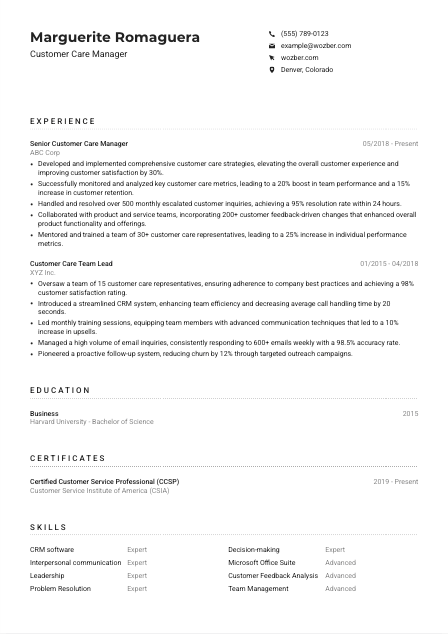
If you are applying for a Customer Care Manager opening and that title reflects your experience, use it directly under your name. This helps position your background around the role being filled and keeps the headline aligned with both the posting and ATS parsing. In the example, using "Customer Care Manager" makes the target role unmistakable right away.
List a reliable phone number and a professional email address. These details seem basic, but for a role centered on communication, accuracy matters. A clean email such as firstname.lastname is usually best, and every digit in your phone number should be double-checked before sending.
Some customer care leadership roles require local presence for team management, office collaboration, or regional support coverage. Here, Denver, Colorado is explicitly requested, so listing it in your header removes an immediate question about eligibility. Only include this kind of location detail when it is relevant to the opening you are targeting.
A LinkedIn profile can strengthen your application when it mirrors your resume and expands on leadership scope, promotions, or recommendations. For a Customer Care Manager, that profile might reinforce experience with team oversight, service metrics, or cross-functional work with product and operations teams. Make sure the dates, titles, and achievements match what appears on the resume.
This section does not need flair. It needs accuracy, alignment, and a professional first read that supports the leadership story the rest of the resume will prove.




This section carries the most weight for a Customer Care Manager. Hiring teams want to see whether you have led support operations, improved service performance, managed escalations, and coached teams against real metrics such as satisfaction, retention, resolution time, or productivity.
Read the description closely and identify the operational priorities behind it. In this case, the employer wants someone who can build customer care procedures, monitor metrics, resolve escalations, collaborate across teams, and lead staff. Your bullets should speak directly to those responsibilities using language that reflects your actual work, not generic management claims.
Lead with your most recent position and make each entry easy to scan with job title, employer, and dates. For customer care leadership roles, progression matters. Moving from team lead to senior manager, for example, tells a stronger story when your scope grows from supervising representatives to shaping strategy, reporting, and department performance.
Customer care managers are hired to improve service delivery, not simply oversee daily volume. Replace broad statements like "managed support team" with specifics about what changed under your leadership. The example does this well by tying strategy work to a 30% rise in customer satisfaction and team coaching to a 25% improvement in individual performance metrics.
Use numbers that belong naturally in customer care operations. Customer satisfaction scores, retention rates, response times, resolution rates, inquiry volume, escalation volume, and team size all help an employer understand your scale and results. Strong examples here include resolving 500+ escalated inquiries each month with a 95% resolution rate within 24 hours and improving retention by 15%.
Every bullet should strengthen your case for leading a customer care function. Prioritize achievements tied to service strategy, KPI improvement, CRM usage, complaint handling, training, and cross-functional feedback loops. If an older detail does not help explain your leadership, customer impact, or operational judgment, leave it out and make room for work that does.
A Customer Care Manager resume reads best when the experience section shows scope, results, and leadership decisions in plain terms. Hiring teams should be able to see how you improved service performance and how large a team or operation you were trusted to run.
Education usually plays a supporting role for experienced customer care managers, but it still matters when the posting calls for a specific degree level or business-related background. Present it clearly so the employer can confirm the requirement without digging.
If the job asks for a bachelor's degree in Business, Management, or a related field, make sure your education section states that information plainly. In the example, a Bachelor of Science in Business aligns well with the posted requirement. When your degree is related but not identical in wording, list the exact field and let the relevance speak for itself.
Include your degree, field of study, school name, and graduation year or date in a consistent structure. Customer care leadership roles are often reviewed quickly, and a straightforward format keeps the section easy to read in both human review and ATS screening.
If your academic background matches the requirement, reflect that language naturally. For example, if the role requests business or management education, do not bury a relevant field under abbreviations or incomplete labels. Clear wording helps the resume line up with the posting without sounding forced.
Most mid-career and senior Customer Care Manager candidates do not need coursework listed. It can help if you are earlier in your career or if a few classes directly support the role, such as operations management, business analytics, communications, or organizational leadership. If your experience already proves those capabilities, keep the section lean.
Honors, leadership roles, or notable academic projects can add value when they support management potential or customer-facing business knowledge. Keep them brief and relevant. For an experienced candidate, they should not take attention away from service metrics, team leadership, and operational results in the experience section.
For this level of role, education should quickly answer one question: do you meet the degree requirement? Once that is clear, let your customer care results carry the stronger part of the case.
Certifications are not always required for Customer Care Manager roles, but the right one can reinforce your credibility in customer service standards, leadership development, or support operations. Use this section to show professional development that actually matters to the work.
Choose certificates that connect to service quality, customer experience, complaint handling, coaching, or operations management. A credential such as Certified Customer Service Professional fits naturally because it supports the core work of improving customer outcomes and managing support teams. If the posting does not request certifications, relevance matters more than volume.
A short, focused list works better than a long collection of marginal credentials. Prioritize items that strengthen your case as someone who can lead service teams, improve process quality, or guide customer-facing performance. Leave out unrelated training that does not support customer care management responsibilities.
Include the completion year and, if applicable, the current validity period. This helps employers understand whether your certification is recent, maintained, or still active. In customer care roles where service practices, tools, and expectations evolve, current credentials can signal continued professional investment.
The best certification section suggests that you keep sharpening your approach to customer experience and team leadership. That might mean formal training in service excellence, conflict resolution, quality assurance, or management. Keep the message practical: you stay current in ways that improve how you run customer care operations.
A relevant certification will not replace experience, but it can strengthen the picture of a manager who takes service quality, coaching, and continuous improvement seriously.
For a Customer Care Manager, the skills section should reinforce the operating toolkit behind your results. Hiring teams look for a mix of service leadership, communication, CRM fluency, problem resolution, and data awareness that supports better customer outcomes and stronger team performance.
Start with the capabilities the employer actually named. Here, that includes CRM software, Microsoft Office Suite, leadership, interpersonal communication, and customer care performance management. Then add adjacent strengths that naturally support the work, such as escalation handling, feedback analysis, coaching, or multi-channel support oversight.
Do not turn this section into a catch-all list. Select skills that are already supported by your work history, achievements, and summary. In the example, CRM software, leadership, customer feedback analysis, and team management all align with bullets about improving retention, reducing handling time, and mentoring large teams.
Group your strongest, most relevant abilities and avoid overloading the page with every platform or trait you have touched. A concise set of skills is easier to scan and gives more weight to each entry. For this role, practical skills tied to service delivery and team performance matter more than generic soft-skill filler.
Your skills section should make the rest of the resume feel more believable. When the listed capabilities line up with your service metrics, leadership scope, and systems knowledge, the profile reads as consistent and credible.
Customer care managers spend their time translating problems into solutions for customers, agents, and internal teams. If a role requires a specific language, present that clearly. Any additional language ability should support the real communication needs of the job, not just fill space.
When the posting says English is essential, include English clearly in this section with an honest proficiency level. That confirms you meet a stated requirement and supports the communication-heavy nature of customer care leadership, where coaching, escalation handling, and written follow-up all matter.
List the strongest and most role-relevant language first. If English is required, it should appear at the top unless your resume format already makes native fluency obvious elsewhere. A clear order helps both recruiters and ATS systems read the section quickly.
Additional languages can be valuable in customer-facing environments, especially when they help with regional support, team communication, or service accessibility. In the example, Spanish adds useful breadth, but it works best as a supporting asset rather than overshadowing the required English proficiency.
Terms like Native, Fluent, Intermediate, or Basic give a practical snapshot of how well you can communicate. Avoid exaggerating. In customer care, language claims are easy to test during interviews, and overstatement can damage credibility quickly.
Language skills matter most when they improve communication quality, customer understanding, or team leadership. If a second language has helped you manage escalations, support diverse customer groups, or coach multilingual teams, make sure the rest of the resume gives that context where relevant.
For a Customer Care Manager, language skills are useful when they support clearer service, smoother escalation handling, and stronger communication across customers and teams. Keep that connection visible.
The summary sits at the top of the resume, so it should quickly frame your level, leadership scope, and customer care impact. For this role, a good summary gives the reader an immediate sense of how you improve service operations and lead teams against measurable goals.
Focus on the parts of customer care leadership that matter most in hiring: strategy, team management, escalated issue resolution, service improvement, and performance metrics. Avoid broad statements about being passionate or hardworking. A hiring manager needs to see how you operate, not just how you describe yourself.
Start with a direct line such as "Customer Care Manager with 8+ years of experience" if that reflects your background. This immediately establishes seniority and relevance. In the example, the opening does this well and gives the employer a quick anchor before moving into achievements and strengths.
Use the summary to connect your leadership profile to results. That could mean improving customer satisfaction, lifting retention, mentoring larger teams, or turning customer feedback into service improvements. Keep the examples broad enough to fit the summary, but specific enough to signal real operational impact.
Aim for a short paragraph that can be scanned in seconds. Every phrase should earn its place by connecting to the target role. If the employer cares about customer care metrics, CRM usage, and team leadership, those ideas should appear early and in natural language rather than as a keyword block.
A well-written summary makes the rest of the resume easier to read. By the time someone reaches your experience section, they should already expect to see customer care strategy, measurable service gains, and confident team leadership backed up in detail.
A Customer Care Manager resume works when each section points to the same conclusion: you can lead teams, improve service metrics, resolve complex issues, and help shape a better customer experience. When the title, summary, experience, and skills all reinforce that story, the application reads with much more authority.
Use Wozber's free resume builder to organize that story in an ATS-friendly resume template, then refine the language with its ATS resume scanner and AI resume builder features so the final version reflects the job's terminology and priorities. The finished resume should make it easy to judge your ability to run customer care operations with strong results.




