



Use Wozber and land your dream job
Create Resume
No registration required
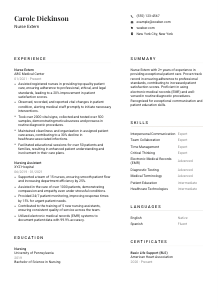
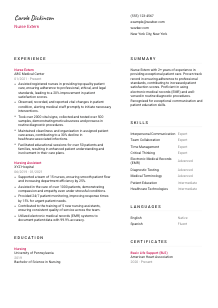
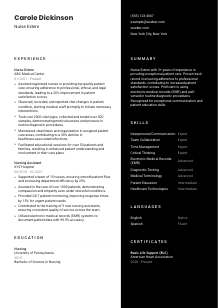
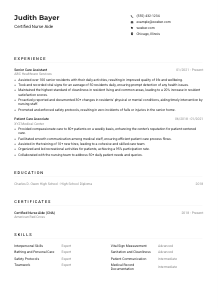
Juggling ward rounds, but your resume feels feverish? Check out this Nurse Extern resume example, created with Wozber free resume builder. Learn how to showcase your bedside skills in a way that matches job requirements, keeping your nursing career in peak condition!
Nurse Extern resumes are read through a patient-care lens. Hiring teams want to see whether you can support bedside workflows, follow RN direction, document accurately, and respond appropriately when a patient's condition changes. If your resume stays vague about clinical exposure, routine procedures, or communication on the unit, it becomes much harder to place you in a care team quickly.
A tailored resume helps the employer distinguish between general healthcare support experience and training that maps to extern-level nursing work. Using Wozber's free resume builder to align your language with the posting and present it in an ATS-friendly resume format makes details like clinical rotations, BLS status, EMR use, and supervised patient-care tasks easier to pick up, both in applicant tracking systems and in a nurse manager's first review.
In healthcare hiring, small administrative misses can raise unnecessary doubts. Your personal details should confirm who you are, how to reach you, and whether you meet any basic logistics the employer has already stated.
Place your full name at the top in a clean, readable format. It should stand out immediately, the way a patient label needs to be unmistakable in a clinical setting. Skip nicknames unless they are the name you use professionally.
Add "Nurse Extern" directly beneath your name if that is the role you are pursuing. This helps frame the rest of the resume correctly from the first line and keeps your positioning clear, especially if your recent title was Nursing Assistant, Patient Care Technician, or another support role.
List a reliable phone number and a professional email address. In a hospital hiring process, interview requests and onboarding messages often move quickly, so accuracy matters. Keep the format simple and professional, such as firstname.lastname@email.com.
If the posting asks for someone based in New York City, New York, show that clearly in this section. For this opening, that detail helps remove a practical screening question right away. You do not need a full street address. City and state are enough.
If you have a LinkedIn profile or nursing-focused professional page, include it only if it is current and consistent with your resume. For a Nurse Extern, that can reinforce your nursing program status, healthcare experience, certifications, and volunteer or clinical activity.
Keep this section clean and factual. It should tell the employer they can contact you easily, that you are applying for the right kind of role, and, where relevant, that you already meet location expectations.




For a Nurse Extern, experience is where clinical readiness becomes visible. Hiring teams look for supervised patient-care tasks, unit support, accurate observation, and dependable follow-through, not broad claims about being hardworking or compassionate.
Read the job description closely and mark the duties that appear repeatedly or carry direct patient-care responsibility. Here, that includes assisting registered nurses, observing and reporting changes in condition, taking vital signs, collecting samples, supporting patient education, maintaining clean care areas, and using EMR systems. Those are the experiences your bullets should reflect first.
Start with your most recent role and work backward. Prioritize positions in hospitals, clinics, long-term care, or other patient-care environments. If you have both healthcare and non-healthcare work, keep the focus on roles that show exposure to patient monitoring, documentation, team-based care, or routine clinical procedures.
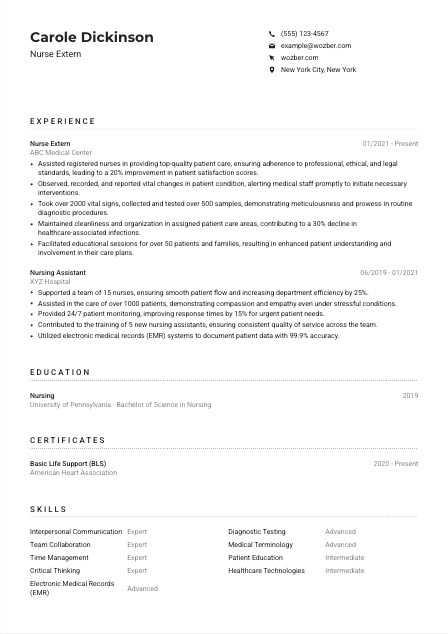
Each bullet should show what you did, who you supported, and what changed because of your work. Good Nurse Extern bullets often mention patient care assistance, timely reporting to nurses, sample collection, vital signs, room readiness, or patient and family support. The example resume does this well by tying tasks to outcomes such as patient satisfaction and lower infection rates instead of listing duties alone.
Quantify your scope where you can. Relevant metrics include number of patients supported, vital signs taken, samples collected, accuracy in EMR documentation, response-time improvement, infection reduction, or patient education volume. In the sample, "took over 2000 vital signs" and "documented patient data with 99.9% accuracy" give the hiring team a much clearer picture of pace and reliability.
Space on the page should go to experience that strengthens your case for supervised nursing practice. If an older role does not connect to patient care, team coordination, healthcare technology, or high-responsibility service work, trim it back or remove it. A Nurse Extern resume should read like someone already comfortable in a clinical environment.
Your experience section should make it easy to picture you on the unit. Show that you can support nurses, document carefully, handle routine patient-care tasks, and contribute to safe, organized care under supervision.
Education matters more than usual for a Nurse Extern because the role depends on where you are in your nursing training. This section needs to show active progress toward licensure, not just attendance at a school.
Name the degree, school, field of study, and date information in a straightforward format. If you are currently enrolled, say so. For this role, the employer specifically wants someone in an accredited nursing program who has completed the second clinical rotation, so your education details should make that progression easy to understand.
Use a consistent structure for each entry: degree, major, institution, and graduation or expected graduation date. Nurse managers and HR teams often review many applications quickly, so clarity matters more than decorative formatting.
If your main degree line does not fully show your clinical preparation, add a brief note about relevant rotations, simulation labs, or coursework. Medical-surgical, fundamentals, adult health, patient assessment, or communication-focused training can help show you are ready for extern responsibilities such as observation, reporting, and supervised procedures.
Student nursing associations, clinical honors, volunteer care work, and peer mentoring can strengthen this section when they support the story of hands-on development. Keep the focus on activities tied to patient care, healthcare teamwork, or academic performance in nursing rather than general campus involvement.
If you have completed projects, labs, or training experiences that connect directly to care delivery, include them when space allows. For a Nurse Extern, practical exposure matters. The resume should suggest that your classroom learning is already translating into safe performance in clinical settings.
By the end of the education section, the employer should understand where you are in nursing school and why that training supports extern-level patient care. Make your academic path read like active clinical preparation.
In nursing support roles, certifications are not extra decoration. They often determine whether you can be scheduled, onboarded, or cleared for patient contact without delay.
If the employer names a certification directly, list it prominently and exactly. Here, Current Basic Life Support (BLS) from the American Heart Association is a stated requirement, so it should appear clearly in your certificates section and match the official wording as closely as possible.
Order certifications by relevance to the role. BLS should come before less essential items because it speaks directly to clinical preparedness. If you also hold certifications such as CNA, phlebotomy, EKG, or similar patient-care credentials, include them if they are current and support the kind of supervised tasks the extern role involves.
Healthcare employers need to know whether a certification is active. Include issue or renewal dates and, if applicable, expiration dates. In the sample resume, the BLS entry clearly shows ongoing validity, which helps remove uncertainty early in screening.
As you build toward RN practice, updated credentials show reliability and initiative. New certifications are most useful when they strengthen real extern duties, such as patient monitoring, emergency response support, or routine clinical procedures. Relevance matters more than volume.
Your certifications should show that you can step into a clinical environment without avoidable compliance gaps. Current, relevant credentials make your application easier to move forward.
The best Nurse Extern skills sections combine technical accuracy with unit-level teamwork. Employers want to see that you can handle routine clinical tasks, communicate clearly, and work within established care protocols.
Use the job description to identify the exact abilities the employer values. In this case, EMR proficiency, communication, collaboration, and comfort with healthcare technology are all named directly. Add related clinical skills that support the listed duties, such as vital signs, specimen collection, patient observation, medical terminology, or patient education, if you genuinely have them.
Only list skills you can support elsewhere in the resume. If you claim EMR proficiency, your experience section should show you documented patient information. If you list patient education or diagnostic testing, there should be bullets that show where you used those skills in practice. The sample resume handles this well by backing up EMR and diagnostic skills with measurable experience.
Group or order skills so the most relevant ones appear first. For this role, bedside support skills, communication, teamwork, and documentation should carry more weight than broad workplace traits. A concise, role-focused list reads better in both ATS optimization and human review than a long inventory of generic strengths.
Choose skills that reflect real patient-care work and supervised nursing support. When the list matches both the posting and your experience, it strengthens the whole resume.
Language ability matters in nursing because misunderstandings can affect comfort, trust, education, and care compliance. Even when only one language is required, this section can still add practical value.
If the role requires fluent English, list English first and state your level clearly. For this position, that is a direct requirement, so do not leave it implied elsewhere on the resume.
Start with the languages you use most confidently in clinical or professional settings. Use clear labels such as Native, Fluent, Intermediate, or Basic. That gives the employer a realistic sense of how you could communicate with patients, families, and staff.
Extra languages can be valuable in hospitals and community-facing settings, especially when patient populations are diverse. In the example resume, Spanish adds useful context because it may support patient communication beyond the English requirement.
Not every Nurse Extern role will prioritize the same language needs, but some units and communities benefit from multilingual staff. If an additional language has helped you explain care instructions, reassure families, or support patient understanding, it is worth listing.
Do not overstate proficiency, especially in healthcare. If you can manage casual conversation but not clinical explanations, reflect that honestly. Clear self-assessment protects both your credibility and patient communication standards.
Language skills can strengthen patient interaction and team communication, but only when they are presented honestly. List what you can truly use in a care setting.
Your summary should tell the reader, in a few lines, what kind of nursing trainee you are and what patient-care experience you already bring. For a Nurse Extern, the most useful summaries connect training, hands-on support work, and one or two relevant strengths or outcomes.
Start with a direct description of who you are professionally. Mention that you are a Nurse Extern or nursing student, then add your amount of relevant healthcare experience. Keep it specific to clinical work rather than general enthusiasm.
Choose two or three details that line up closely with the job description. Strong options here include experience assisting registered nurses, comfort with EMR systems, BLS certification, observation and reporting skills, or patient education support. The sample summary succeeds because it quickly connects patient care, professional standards, EMR use, and routine procedures.
A short summary gets stronger when it includes one measurable or clearly defined result. That could be improvement in patient satisfaction, strong documentation accuracy, high-volume vital sign collection, or dependable support in a fast-paced unit. Keep it brief, but make it specific.
Aim for three to five lines. Every phrase should help the employer picture you working safely and effectively in a supervised nursing role. Avoid broad statements about passion or motivation unless they are backed by patient-care context.
This section should give the hiring team a fast, credible read on your clinical foundation. If they finish it with a clear sense of your nursing progress and unit-level usefulness, it is doing its job.
A Nurse Extern resume works best when it stays close to the realities of the role: nursing program progress, current BLS status, supervised clinical tasks, accurate documentation, and steady support for patients and registered nurses. Each section should help the employer see that you can step into the unit and contribute safely.
Use Wozber's free resume builder to organize that experience into an ATS-compliant resume, refine your wording with role-specific terminology, and check alignment with an ATS resume scanner before you apply. The finished document should make your clinical preparation and day-to-day usefulness easy to judge.




