



Use Wozber and land your dream job
Create Resume
No registration required
Sculpting bodies, but your resume feels out of shape? Get into prime training with this Fitness Instructor resume example, built with Wozber free resume builder. Learn how to flex your training talents to match job criteria, making sure your career journey stays as fit and strong as your clients!
Fitness instructors are hired on the strength of what happens on the floor. Can you lead a room with energy, correct form in real time, adapt movements for different ability levels, and keep clients progressing without compromising safety? A resume for this field needs to reflect that blend of coaching presence, exercise knowledge, and practical judgment.
A tailored resume changes which part of your background gets noticed first. When group class delivery, personal program design, client motivation, and injury prevention are easy to find, hiring teams can quickly place you in the right lane instead of guessing whether you are a general wellness candidate or a coach ready to run sessions. Wozber's free resume builder helps organize that story in an ATS-friendly resume format, so your coaching scope and certifications come through clearly in both ATS screening and human review.
In fitness hiring, the header does more than identify you. It should immediately tell a gym, studio, or wellness center who you are, how to reach you, and whether you meet practical requirements such as location and professional presence.
Use your full name in a clear, readable format so it stands out at the top of the page. In a client-facing role where trust and recognition matter, your name should be easy to spot without decorative styling or crowded formatting.
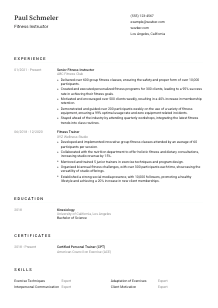
Place "Fitness Instructor" directly below your name if that is the role you are pursuing. If your recent title was "Personal Trainer" or "Senior Fitness Instructor," you can still align the header to the job target while your experience section shows the progression. That direct title match helps frame the rest of your resume around class instruction, client coaching, and safe exercise delivery.
List a reliable phone number and a professional email address. Since this role depends on fast scheduling, interviews, trial classes, and client-facing communication, even small errors in your contact details can cost you an opportunity. If you include a website or profile, make sure it reflects your coaching work, certifications, and fitness brand consistently.
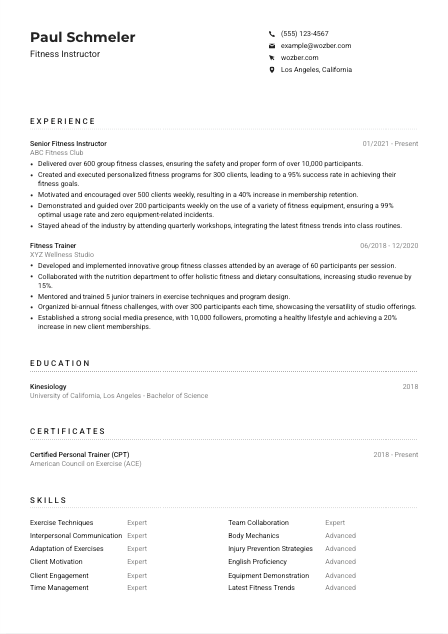
If the employer wants someone based in a specific area, state your city and state clearly. In the example, listing Los Angeles, California immediately addresses a stated requirement and removes doubt about availability for on-site classes or client sessions. If you are relocating, say so plainly instead of leaving the employer to guess.
A LinkedIn profile, professional website, or training page can help if it shows useful material such as certifications, class specialties, testimonials, community events, or fitness content. Skip personal links that do not support your coaching credibility. Any profile you include should reinforce the same professional identity shown on the resume.
Your personal details should make three things instantly clear: your role, your availability, and your professionalism. When the header is clean and role-aligned, hiring teams can move straight to your coaching experience and qualifications.




This is the section that carries the most weight for a Fitness Instructor. Employers want to see class leadership, program design, client results, safe equipment use, and the ability to keep people engaged over time, whether in a group studio, gym floor, or one-on-one setting.
Read the job description and mark the work patterns that matter most: leading group classes, building personalized programs, motivating clients, correcting form, demonstrating equipment use, and applying injury prevention principles. Then shape your bullets so those responsibilities appear in your own language and are backed by real outcomes. This keeps your resume aligned with the actual coaching work, not just general fitness enthusiasm.
List your positions starting with the most recent, including job title, employer, and dates. That structure helps employers track your development from trainer to senior instructor, or from studio coaching to broader class leadership. In fitness hiring, progression often shows up through larger class sizes, more complex client populations, or greater responsibility for programming and mentoring.
Each role should include accomplishments that reflect what you delivered for clients or the business. Good bullets show action plus outcome, such as designing individualized training plans, improving client retention, mentoring junior trainers, or launching popular class formats. The example does this well by tying personalized fitness programs to a 95% goal-attainment rate, which makes the coaching impact concrete.
Metrics make your experience easier to trust. Useful numbers in this field include classes taught, participants coached, weekly client volume, retention improvement, attendance, program completion rates, incident reduction, or revenue growth tied to new offerings. For example, "Delivered over 600 group fitness classes" and "motivated over 500 clients weekly" quickly convey scale and consistency.
Keep the focus on the work that matches the role you want now. Prioritize class instruction, personal training, exercise modification, safety practices, equipment guidance, and client engagement. If you have older or less relevant experience, trim it down so your strongest coaching evidence is easy to scan in the first few seconds.
Your experience section should show how you coach, how many people you have supported, and what changed because of your instruction. When the bullets connect class leadership and client outcomes with numbers, employers can picture you running sessions in their facility.
Education is not always the main filter for Fitness Instructor roles, but it can strengthen your profile when it connects directly to movement science, coaching, health, or performance. Presented well, it adds depth behind your practical instruction experience.
If you have a degree or diploma in kinesiology, exercise science, sports medicine, physical education, or a related field, include it prominently. Even when the job posting focuses more on experience and certification, this background supports your understanding of anatomy, body mechanics, and training principles. The example's Kinesiology degree is a strong fit because it connects naturally to exercise instruction and injury prevention.
List the school, degree, field of study, and graduation year. Employers do not need a dense academic record here. They need to quickly see whether your education supports the kind of coaching, movement analysis, and client guidance the role requires.
Choose wording that highlights relevant study areas when the degree title alone may not tell the whole story. A background tied to biomechanics, exercise physiology, wellness, or rehabilitation can reinforce your ability to teach proper form and adjust workouts safely for different clients.
If you are early in your career or your degree is broad, you can add selected coursework or training in areas such as strength and conditioning, anatomy, nutrition, or corrective exercise. Keep it brief and role-linked. There is no need to recreate a transcript unless those details strengthen a clear gap in experience.
Sports teams, coaching roles, wellness clubs, or performance projects can help if they show leadership, training exposure, or applied movement knowledge. For experienced instructors, these details should stay secondary to client results and class delivery. Use them when they add context, not filler.
Education helps when it supports the way you instruct, modify, and protect clients during training. Keep the section straightforward, and let it complement the hands-on work shown elsewhere in your resume.
Certifications are a core credibility marker in fitness hiring. They show that your coaching methods are grounded in recognized training standards and that you are qualified to lead sessions safely and professionally.
When a posting asks for a nationally recognized certification such as ACE, NASM, or AFAA, list matching credentials clearly. This is often a direct screening item, especially for gyms and studios that need instructors who can start coaching within established safety and compliance standards. In the example, both ACE and NASM map cleanly to the requirement.
Lead with credentials that support group instruction, personal training, program design, or client safety. If you hold several certifications, the most relevant ones should appear first so employers do not have to hunt for the qualification they named in the posting.
Write the certification name, issuing organization, and date or active period. This helps employers confirm that your credentials are current and from reputable bodies. In fitness roles, expired or vague certifications can raise immediate concerns about readiness to coach.
The field changes constantly through updated exercise standards, specialty methods, and continuing education. If you renew certifications or add new ones over time, that ongoing maintenance supports the job requirement to stay informed on trends and techniques. It also suggests you take safety, coaching quality, and professional development seriously.
A hiring manager should be able to glance at this section and know you meet the baseline professional standard for instruction. Current, relevant certifications remove doubt and strengthen every claim you make about coaching ability.
A Fitness Instructor skills section should read like the toolkit you use in classes and client sessions. Focus on the abilities that drive safe instruction, consistent motivation, and effective program delivery, not a long list of generic strengths.
Use the job description to identify both technical and interpersonal skills. For this kind of role, that usually includes exercise technique, body mechanics, injury prevention, communication, exercise modification, equipment instruction, and client motivation. Those terms are close to how employers describe the work, so they also support ATS optimization when they match your real background.
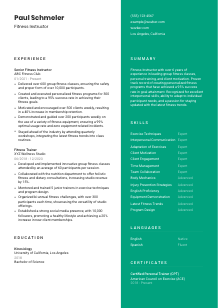
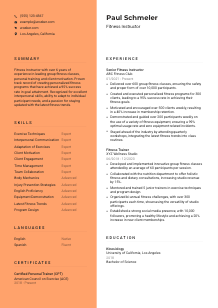
Fitness instruction is part technical execution and part live client engagement. Include hard skills such as program design, movement correction, and equipment demonstration alongside soft skills like interpersonal communication and motivation. The example balances both, which helps show that the candidate can teach safely and keep participants engaged.
Choose the skills most relevant to the position instead of trying to cover every strength you have. A shorter list built around training delivery, participant safety, and client progress is more persuasive than a broad inventory of unrelated traits. Every skill listed should be something you can support with experience, results, or credentials elsewhere on the resume.
The best skill lists reflect the real demands of the job: coaching people through movement, adapting on the fly, and keeping sessions effective and safe. If a skill would matter on the gym floor, in a class studio, or during a client check-in, it belongs here.
Language ability matters in fitness because instruction happens live. You are explaining form, adjusting movement, motivating clients, and responding quickly when someone looks uncomfortable or confused. Clear communication can directly affect both the client experience and session safety.
If the role requires English proficiency, list English first and state your level clearly. In customer-facing fitness settings, employers need confidence that you can explain exercises, answer questions, and give immediate corrections without friction.
Additional languages can be valuable, especially in diverse communities or facilities serving a broad member base. A second language may help with onboarding, rapport, and instruction for clients who engage more comfortably in that language. In a market like Los Angeles, that can be a practical advantage.
Use clear levels such as Native, Fluent, Advanced, or Conversational. Avoid overstating ability, particularly in a role where misunderstanding cues about equipment use, pace, or form could affect the client experience.
If your background includes working with multilingual groups, community wellness programs, or culturally diverse memberships, language skills can support the broader coaching story on your resume. Mention them when they align with the people you are likely to train, not just because they look impressive.
If you are actively improving a language that helps with your client base, it can be worth noting through an honest proficiency level. This works best when the language supports your day-to-day coaching environment and shows a practical effort to communicate with more clients effectively.
For a Fitness Instructor, language skills are part of service quality and safe instruction. List them clearly, keep the ratings honest, and use them to reinforce your ability to connect with the people you coach.
Your summary should quickly place you in the employer's hiring lane. In a few lines, it needs to cover your experience level, your main coaching environment, and the results or strengths that make you effective with clients and class participants.
Before writing, identify the few points that matter most for the job. For a Fitness Instructor, that often means years of experience, group class leadership, personal training, exercise modification, communication style, and recognized certifications. Your summary should bring those together without sounding copied from the posting.
Start with who you are and how long you have been doing the work. A line like "Fitness Instructor with 6+ years of experience leading group classes and personal training sessions" gives immediate context and tells the employer what environment you are used to operating in.
Include a metric, specialty, or outcome that shows how you perform, not just what you do. The example uses a 95% client goal-attainment rate, which is memorable because it ties program design to results. You could also highlight class volume, retention gains, or experience coaching a wide range of fitness levels.
Stay within a short paragraph and make every phrase earn its place. Focus on the coaching strengths most relevant to the target role, such as participant safety, motivating delivery, or personalized programming. This section should prepare the reader for the evidence in your experience section, not repeat every detail from it.
A well-written summary should make your coaching style, experience level, and value clear within seconds. When it is tailored to the role, the rest of the resume reads with the right expectations from the start.
A Fitness Instructor resume works when it shows practical coaching ability in the same terms the job uses: classes led, clients supported, programs built, safety maintained, and motivation delivered consistently. Keep your strongest evidence near the top, support it with numbers where possible, and make certifications and core skills easy to find.
Use Wozber's free resume builder to shape that content into an ATS-compliant resume, then review it with the ATS resume scanner to check how well your experience, certifications, and coaching terminology match the role. The final draft should make one thing clear right away: you can lead safe, engaging fitness sessions and help clients make real progress.




