



Use Wozber and land your dream job
Create Resume
No registration required
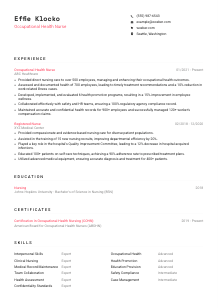
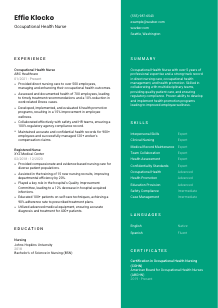
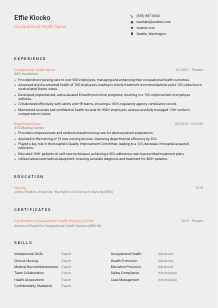
Keeping workers in tip-top shape, but your resume feels a bit under the weather? Check out this Occupational Health Nurse resume example, created with Wozber free resume builder. Learn how to smoothly blend your healthcare acumen with job requirements, making your career radiantly healthy from shift to shift!
Occupational health nursing sits at the point where clinical judgment meets workplace risk. Hiring teams want to see that you can assess injuries and illness, document care accurately, protect confidentiality, and work closely with safety and HR when job duties, restrictions, or workers' compensation issues are involved. Your resume needs to make that operating range visible, not blur it into a generic nursing profile.
A tailored resume changes how quickly your occupational health background is recognized, especially when an ATS is screening for terms tied to employee care, compliance, and case documentation. Wozber's free resume builder helps you organize that language into an ATS-compliant resume so the reader can quickly see whether you've handled employee assessments, health programs, and recordkeeping at the level the role requires.
Occupational health roles are practical hires. Before anyone reads your clinical experience, they check whether they can contact you, whether your credentials are easy to identify, and whether basic logistics line up with the role. Keep this section clean, direct, and relevant to a healthcare environment where accuracy matters.
Use your full name at the top in a clear, readable style. It should stand out immediately, much like a professional identifier on a badge or chart, so the hiring team can quickly connect your application to your license and experience.
Place "Occupational Health Nurse" directly beneath your name when that is the role you are pursuing. Matching the posted title helps frame the rest of the resume around employee health, workplace injury care, screenings, and compliance rather than general bedside nursing.
List a reliable phone number and a professional email address based on your name. In a field that depends on precise records and timely follow-up, even your contact section should reflect clarity and attention to detail.
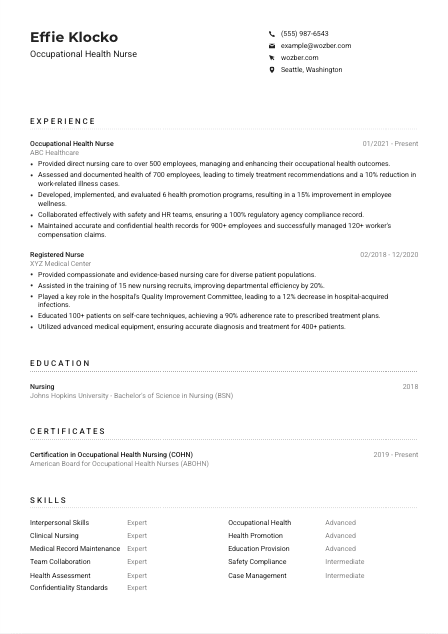
If a job requires you to be based in a specific area, include your city and state. For the Seattle opening here, listing "Seattle, Washington" immediately removes a logistical question and helps the employer focus on your nursing background instead of relocation timing.
Include a LinkedIn profile or professional website only if it supports your candidacy with consistent information, licensure details, or occupational health credentials. A useful link can reinforce your background, but it should never distract from the core resume.
This section should answer the practical basics in seconds. When your name, title, contact details, and any location requirement are easy to confirm, the reader can move straight to your clinical and workplace health qualifications.




This is where employers look for the work you have actually handled. In occupational health, that usually means injury and illness care, employee assessments, documentation quality, health promotion, coordination with other departments, and familiarity with compliance-driven workflows. Strong bullets show what you managed, who you supported, and what changed because of your work.
Start by marking the responsibilities that appear central to the role. For this position, direct care for work-related issues, pre-employment screenings, recommendations on treatment or modified duty, health promotion, collaboration with safety and HR, confidential records, and workers' compensation management all deserve space in your experience section. Those are the operating priorities your resume should echo.
List your most recent nursing role first, then work backward with job title, employer, and dates. This format helps the reader see whether you moved from general clinical nursing into occupational health, as the example resume does by showing RN experience before a dedicated Occupational Health Nurse role.
Write bullets that pair action with outcome. Instead of saying you provided employee care, show the scale, setting, and result. The example does this well with lines about caring for more than 500 employees, reducing work-related illness cases, and improving wellness through six health promotion programs. That kind of detail tells the employer how you practice, not just what your title was.
Quantify the parts of the job that are naturally measured. Employee population served, number of claims managed, reduction in incident rates, number of screenings completed, compliance results, program participation, or case resolution volume are all stronger than vague statements about being effective. Metrics work best when they connect directly to care quality, risk reduction, or program outcomes.
General nursing experience is valuable, especially if you are moving into occupational health, but your bullets should lean toward assessment, education, documentation, quality improvement, triage, and coordination that transfer well to workplace care. Keep examples that support the target role and remove details that do not strengthen your case for employee health practice.
Your experience should make it easy to picture you handling employee cases, documentation, and cross-functional coordination from day one. If the bullets show scope, outcomes, and occupational health relevance, the resume is doing its job.
Education is straightforward in nursing resumes, but it still matters because many employers screen for the required degree before they weigh experience. For occupational health roles, this section should confirm your nursing foundation quickly and without clutter.
If the posting calls for a BSN, write your degree exactly and prominently. Here, "Bachelor's of Science in Nursing (BSN)" aligns directly with the stated requirement and removes any ambiguity during the first review.
List the degree, field, school, and graduation year in an easy-to-scan order. Recruiters and nurse managers should be able to confirm your academic qualification at a glance without digging through extra wording.
When a role specifies an accredited nursing degree, do not bury that information. Put the nursing credential front and center so your education section supports the licensure and experience shown elsewhere on the resume.
If you are early in your career, you can include coursework, clinical placements, or academic projects related to public health, community health, case management, or workplace wellness. For more experienced occupational health nurses, those details are usually less important than recent job outcomes.
Honors, leadership roles, or notable nursing projects belong here only if they strengthen your story for occupational health practice. Choose items that show clinical rigor, education skills, or exposure to population health, not generic campus involvement.
Keep this section lean and exact. For an occupational health nurse, the main job of education is to confirm the nursing degree requirement quickly and support the clinical credibility shown in your experience.
Credentials carry real weight in occupational health because they tell employers you meet licensing requirements and, in some cases, bring specialized knowledge in employee health, safety-related care, and regulatory practice. List the certifications that matter most to the role first.
Place required and preferred certifications at the top of the section. For this opening, that means your Registered Nurse license in the state of practice and, if you hold it, a COHN credential or related occupational health certification.
Do not crowd this section with every course completion or minor credential. Prioritize licenses and certifications that support employee care, occupational health practice, case management, screenings, or regulatory knowledge.
Show the year earned and, where relevant, the active period. For nursing employers, dates help confirm that your RN license and occupational health certification are current and maintained appropriately.
Occupational health work changes with regulation, documentation standards, and workplace risk practices. Maintaining certifications and continuing education shows that your knowledge has kept pace with the field, especially if your role involves compliance or workers' compensation processes.
This section should quickly confirm that you meet the licensing baseline and, ideally, bring added occupational health specialization. Put the most job-relevant credentials first so the employer sees your clinical standing right away.
The best skills sections for occupational health nurses do not read like a generic nursing keyword list. They should reflect the mix of clinical care, documentation, employee communication, program support, and cross-functional coordination the work actually requires. Choose skills that match how the role is practiced.
Look beyond the obvious nursing terms in the posting. Here, the employer names interpersonal skills, collaboration, and English fluency, while the responsibilities imply health assessment, record maintenance, case management, health education, and safety-related coordination.
Lead with the capabilities that matter most in occupational health work. Skills such as clinical nursing, occupational health, health assessment, medical record maintenance, confidentiality standards, health promotion, and team collaboration should appear before broader or less relevant items.
This role depends on both. You need clinical judgment for injury assessment and screening, and you also need communication skills to educate employees, work with HR and safety teams, and document recommendations clearly. The sample skills list works because it shows both sides of the job rather than treating soft skills as an afterthought.
Your skills section should sound like someone who can run an employee health workflow, not just someone with a nursing license. Prioritize the abilities that support assessment, documentation, education, coordination, and compliance.
Language matters in occupational health because the work often includes employee interviews, return-to-work guidance, health education, and coordination across departments. If a language is required, it should be easy to spot. Additional languages can strengthen your profile when they support a diverse workforce.
If the employer requires English fluency, list English clearly with an accurate proficiency level. That is especially important in roles involving clinical documentation, education materials, and communication about workplace restrictions or treatment follow-up.
Order the section by job relevance, not personal preference. If English is mandatory, it belongs at the top so there is no doubt that you meet a core communication requirement.
Additional languages can be useful in workplaces with multilingual employee populations. A second language like Spanish may help with education, intake conversations, or explaining next steps after an injury, even when it is not listed as a formal requirement.
Use plain labels such as "Native," "Fluent," "Intermediate," or "Basic." In healthcare settings, overstating language ability can create problems, so accuracy matters more than impressiveness.
Frame language skills as a practical asset for employee interaction and education, not as a decorative extra. In occupational health, clear communication affects documentation quality, understanding of care instructions, and trust with the workforce.
List languages in a way that supports the realities of the job. The employer should be able to see immediately that you can handle required communication and, where relevant, serve a broader employee population.
Your summary should quickly place you in the right nursing lane. For occupational health positions, that means combining your clinical background with the workplace-facing parts of the job, such as employee assessment, documentation, health promotion, and collaboration with internal teams. Keep it short, specific, and tied to real strengths.
Before writing, identify the few themes that define the job. In this case, direct employee care, occupational health management, multidisciplinary collaboration, and regulatory awareness are more useful than broad claims about being passionate or dedicated.
Start with a direct line that names your specialty and years of experience, such as an Occupational Health Nurse with 5+ years in clinical and employee health settings. That gives the reader immediate context for the rest of the resume.
Use the next sentence to highlight two or three role-specific capabilities, such as assessing work-related injuries, managing employee health records, running wellness initiatives, or collaborating with safety and HR. The sample summary works best where it connects occupational health management and health promotion to measurable outcomes.
Aim for a concise paragraph, usually three to four sentences. Include enough substance to show scope and value, but save detailed metrics and examples for the experience section where they carry more weight.
A well-built summary tells the reader, within a few lines, that you understand employee health work and have the background to step into it. It should point clearly toward occupational health practice, not drift into generic nursing language.
A focused occupational health nurse resume should show three things fast: solid nursing credentials, experience handling employee health issues, and the judgment to work within documentation, compliance, and confidentiality standards.
Use Wozber's AI resume builder to tighten role-specific wording, improve ATS optimization, and present your background in an ATS-friendly resume format that keeps employee care, health programs, and workplace coordination easy to recognize.
When those pieces are in place, your resume gives hiring teams a clear read on whether you can manage the clinical and workplace demands of the role.




