



Use Wozber and land your dream job
Create Resume
No registration required
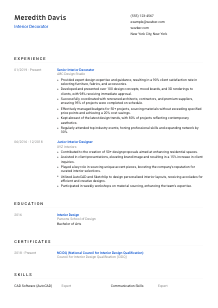
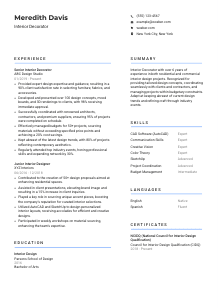
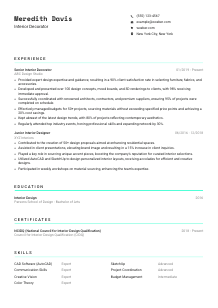
Curating spaces, but your resume feels out of place? Explore this Interior Decorator resume example, created with Wozber free resume builder. Learn how to shape a design-forward profile that meshes seamlessly with job blueprints, setting your career in just the right light!
Interior decorator hiring usually turns on one practical question fast: can you turn a client's taste, budget, and floor plan into a finished space that feels intentional and gets delivered without chaos. A resume for this field needs to show more than aesthetic sense. It should make your concept development, sourcing judgment, vendor coordination, and project follow-through easy to see.
When that story is tailored to the posting, your background reads less like a general creative profile and more like working experience in presentations, selections, and project execution. Wozber's free resume builder helps shape that into an ATS-compliant resume by aligning your wording with the job description and keeping the layout clean for screening. That matters when a hiring team needs to quickly spot who has handled real client approvals, budget limits, and cross-functional coordination.
For an interior decorator, the header does one simple but important job: it identifies you as a design professional who is easy to contact and already aligned with practical requirements such as title and location. Keep it clean, current, and specific.
Use your full name as the most visible text in the header. Interior decorating is a presentation-driven field, and a polished header quietly reinforces that you understand visual hierarchy and restraint. Skip decorative labels or crowded contact lines that make the top of the page harder to scan.
Match your title to the role you want when it reflects your actual experience. If the posting says "Interior Decorator," use that phrasing directly under your name. This helps both ATS systems and hiring teams place you in the right lane immediately, especially when they are sorting between decorators, interior designers, stylists, and design coordinators.
List a phone number, professional email, and relevant website or portfolio link if you have one. In a client-facing design role, sloppy contact details create the wrong impression fast. Make sure every link works and that your online presence shows the same projects, titles, and dates reflected on the resume.
Some jobs have clear on-site or city-based requirements. Here, New York City is stated directly, so including "New York City, New York" in the header removes an immediate point of doubt. Treat that as targeted tailoring, not a rule for every decorator resume.
A LinkedIn profile or portfolio site can strengthen your application when it includes project images, client-facing work, vendor collaboration, or design software output such as renderings and layout samples. Keep it aligned with your resume so a hiring manager does not find different job titles, outdated dates, or missing projects.
Your personal details should confirm that you are reachable, professionally presented, and aligned with practical requirements. That gives the rest of the resume room to focus on your design judgment and project work.




Interior decorating experience is strongest when it shows how your ideas moved from concept to approved selections to finished spaces. Hiring teams look for proof that you can guide clients, coordinate with outside partners, and keep choices realistic within budget and schedule.
Start by identifying the work the employer needs done most often. In this posting, that includes client guidance on furniture and finishes, mood boards and renderings, coordination with architects and contractors, and budget-conscious sourcing. Those themes should shape which bullets you keep, rewrite, or move higher in each role.
List jobs in reverse chronological order with company name, title, and dates. Then use bullets to show the scope of your projects. Residential versus commercial work, client-facing responsibilities, and collaboration with suppliers or contractors all help define the level at which you have operated.
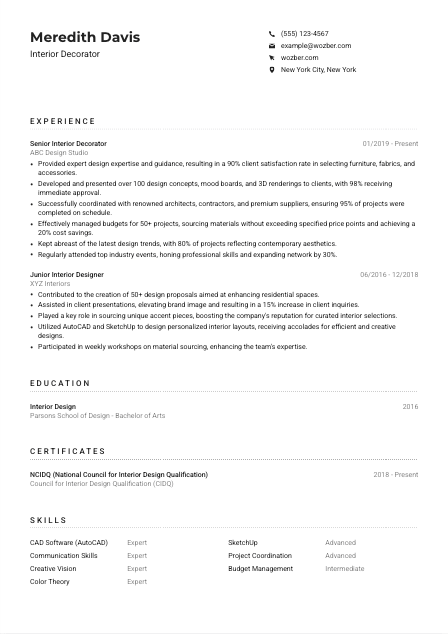
Generic lines about "helping with design" are too thin for this profession. Use bullets that show what you produced and what happened next: design concepts approved, materials sourced within target budgets, projects delivered on time, or client satisfaction improved. The sample resume does this well by tying design guidance to a 90% satisfaction rate and concept presentations to high approval rates.
Interior decorating has plenty of metrics that feel credible on a resume. Include the number of projects handled, approval rates on presentations, cost savings from sourcing, schedule performance, repeat client business, or budget ranges managed. Numbers like "100+ design concepts," "50+ projects," or "20% cost savings" tell a hiring manager far more than broad claims about creativity.
Prioritize experience that shows selections, presentations, sourcing, design software use, contractor coordination, and client communication. If older bullets focus on unrelated administrative tasks, rewrite them or remove them. Each line should help the reader picture you handling a live decorating project from concept to install.
The best experience sections show how you manage actual interiors work, not just that you held design-adjacent titles. If your bullets show client decisions, design output, coordination, budgets, and results, the hiring team can picture you in the role.
Formal education matters in interior decorating because it gives employers context for your training in space planning, materials, design principles, and presentation methods. Keep this section clear and give the degree requirement exactly the visibility it deserves.
When a role asks for a bachelor's degree in Interior Design or a related field, place that degree clearly in this section. If you have the direct match, say so plainly. The example resume's Bachelor of Arts in Interior Design is a good illustration of how to mirror the requirement without extra explanation.
List your degree, field of study, school, and graduation year in a consistent order. That makes it easy for recruiters and ATS tools to identify the credential quickly. For this profession, clarity matters more than dressing up the education section with decorative wording.
If your degree is in Interior Design, Environmental Design, Architecture, or another related field, name it accurately. Avoid vague shorthand. Specific academic wording helps distinguish you from applicants whose background is more general or only loosely tied to interiors work.
This is especially useful early in your career or when your experience is narrower than the target role. Studio work in residential design, materials and finishes, CAD drafting, 3D visualization, or client presentation projects can reinforce your readiness for concept development and selection work.
Honors, design competitions, student showcases, or leadership in design-related organizations can be worth adding if they connect to the work. A portfolio award or exhibition mention says more for this field than a generic campus activity with no design relevance.
Education should confirm that your design foundation is in place and easy to verify. Once that is established, the rest of the resume can focus on project judgment, execution, and client work.
Certifications carry weight in interior decorating when they reflect recognized industry standards or current professional development. They are especially useful when the employer names one directly or when they reinforce your technical and regulatory knowledge.
If the employer mentions a credential such as NCIDQ, include it prominently when you hold it. That kind of direct match immediately strengthens alignment. In the sample resume, NCIDQ is listed clearly with the issuing body, which is exactly the level of detail a hiring manager needs.
Choose certifications that support interiors work, space planning, product knowledge, sustainability, materials, or professional standards. A short, relevant list lands better than a long list of loosely related courses that do not affect how you would perform in client projects.
For active credentials, recently completed certificates, or certifications that require renewal, add the dates. That helps show whether your credential is current and whether you are staying engaged with industry standards and continuing education.
Interior decorating shifts with materials, vendor offerings, software workflows, and design trends. If you complete training in rendering tools, product sourcing, sustainable materials, or code-aware design practice, update this section so your resume reflects current working knowledge rather than a static credential history.
A well-chosen certification section adds credibility without taking over the page. It should support the story that you are current, qualified, and ready to work at the level the role requires.
A useful skills section for an interior decorator balances design tools with execution skills. The mix should reflect how you actually work, from concept presentation and software use to sourcing, client communication, and budget control.
Start with the skills the job calls out and then confirm that your experience supports them. For this posting, software such as AutoCAD or SketchUp belongs near the top, along with client communication and coordination. Then add adjacent strengths that matter in practice, such as space planning, mood boards, FF&E selection, material sourcing, color theory, or vendor management.
Lead with the tools and abilities most likely to affect day-one performance. For many decorator roles, that means design software, presentation development, sourcing, and stakeholder communication before broader traits. The sample resume gets this mostly right by putting AutoCAD, communication, and creative vision in prominent positions.
Do not turn this section into an inventory of every design-related term you know. Choose the skills that support the role you are targeting and that also appear elsewhere in your resume through projects or accomplishments. A focused list is more convincing because it connects directly to how you have worked.
Your skills section should reflect the way interior decorating actually gets done. When the list covers software, selections, coordination, and communication in the right balance, it supports the experience section instead of repeating it.
Language ability matters in interior decorating when it affects client trust, presentations, contractor communication, or the range of households and partners you can work with. Keep this section factual and tied to communication on the job.
If the posting states that English proficiency is required, list English first with an accurate level. That confirms you can handle client conversations, presentations, emails, and coordination across vendors or contractors without ambiguity.
Extra language ability can be a real asset in residential and commercial environments, especially in diverse markets or client-facing studios. A second language may help with consultations, sourcing conversations, or relationship building, but only include it when you can use it professionally.
Use clear labels such as Native, Fluent, Advanced, or Conversational. Interior decorating relies on detailed discussions about finishes, measurements, budgets, and revisions, so overstating your ability can create problems once interviews move into practical scenarios.
If you work in a market with international clients, multilingual households, or supplier networks across regions, language capability can add value beyond the baseline requirement. Present it as a practical communication strength, not as filler.
A short, accurate language section is enough. In the example, English and Spanish are listed clearly with proficiency levels, which works because it supports a client-facing profile without distracting from project experience.
For this profession, language skills matter when they improve consultations, presentations, and project coordination. Keep the section honest and useful, and let it support the broader story of how you work with people.
The summary is where an interior decorator quickly establishes level, project focus, and the kind of work they are trusted to handle. A few precise lines can frame your experience before the hiring manager reaches the project bullets.
Review the posting and identify the two or three themes that define success in the job. Here, those themes include client design guidance, concept presentation, coordination with contractors and suppliers, and budget-aware sourcing. Use those ideas to shape the summary rather than writing a broad statement about passion for design.
Start with a direct line such as "Interior Decorator with 6+ years of experience in residential and commercial projects." That immediately tells the reader your level and domain. If your background is mainly residential, hospitality, staging, or commercial office work, name that focus honestly.
Choose strengths that are central to the role and supported by the experience section. Good examples include developing client-approved concepts, sourcing furnishings within price points, producing mood boards and renderings, or coordinating installations with contractors and suppliers. The sample summary works because it connects design concepts, coordination, and budget management in one compact statement.
Aim for three to five lines with concrete wording. A concise summary is especially important in a field where hiring managers may already be reviewing portfolios, work samples, or project imagery alongside the resume. Make every phrase do a job.
A strong summary should tell the reader what kind of interior decorator you are and what kind of projects you can carry. If it names your level, focus, and working strengths clearly, the rest of the resume has a strong opening.
A well-tailored interior decorator resume should show how you guide selections, present concepts, coordinate project partners, and keep design decisions grounded in budget and schedule. Those are the details that move you beyond a generic creative profile and into serious consideration.
Use Wozber's AI resume builder to tighten wording, align your background with the posting, and present it in an ATS-friendly resume format that keeps key experience easy to scan. The finished resume should make one thing clear fast: you can translate taste, planning, and coordination into finished spaces clients approve.




