



Use Wozber and land your dream job
Create Resume
No registration required
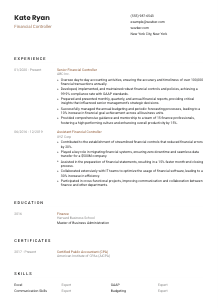
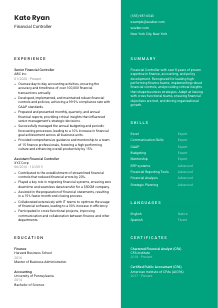
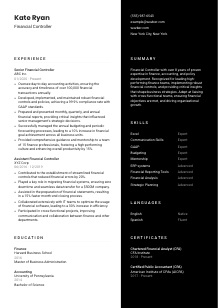
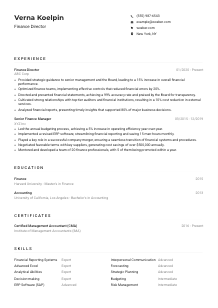
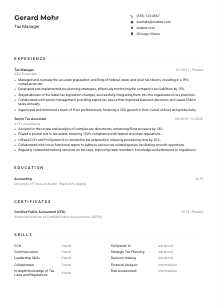
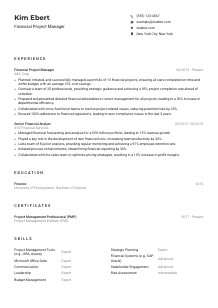
Balancing ledgers, but your resume doesn't add up? Crunch numbers with this Financial Controller resume example, created with Wozber free resume builder. Learn how to present your fiscal finesse to match job specifications, so your career accounts for both growth and dividends!

Financial Controllers sit where accounting accuracy meets business decision-making. The work is judged in close cycles: clean month-end closes, reliable reporting, disciplined controls, and the ability to explain financial movement to leadership without losing the detail behind the numbers. Your resume should make that operating standard visible quickly, especially if you've handled ownership over close processes, GAAP compliance, budgeting, forecasting, or finance team leadership.
When that story is tailored well, hiring teams can separate a true controller profile from a broader accounting candidate much faster. Wozber's free resume builder helps organize your experience into an ATS-friendly resume format that mirrors the language of the role, so core strengths like control design, reporting cadence, and cross-functional finance support are easy to recognize. That clarity matters when the role calls for someone who can own the numbers and guide the team behind them.
In controller hiring, even the header should reflect precision. This section is straightforward, but it still carries weight because it confirms professional presentation, role focus, and any practical requirement that could affect next-step screening.
Use your full name in a clear, readable format at the top of the page. For a Financial Controller, polished presentation matters because the role itself depends on accuracy, order, and trust. Keep the styling simple and professional rather than decorative.
Place "Financial Controller" directly under your name when that is the role you are pursuing. Matching the target title helps position you correctly from the first line, especially when employers are sorting between candidates from adjacent backgrounds such as accounting manager, finance manager, or assistant controller.
Your contact information should be easy to scan and free of distractions.
If a job requires candidates to be based in a specific city, list your location clearly. In the example here, stating New York City, New York immediately answers a stated requirement and removes a basic screening doubt before the employer gets into your reporting or controls experience.
A LinkedIn profile or personal website can help if it supports your controller background with consistent job titles, certifications, and career progression. Keep it aligned with your resume. For finance leadership candidates, mismatched dates, incomplete roles, or vague descriptions can raise unnecessary questions.
Your personal details do not need flair. They need accuracy, professionalism, and any essential logistics the employer has already flagged, so the rest of the resume can stay focused on financial oversight, reporting discipline, and leadership scope.




For a Financial Controller, experience is where employers look for operating depth. They want to see who has owned close processes, improved controls, produced reliable reporting, partnered with business leaders, and managed a finance team in a real business environment.
Pull out the work that defines the role before rewriting your bullets. For controller positions, that usually includes day-to-day accounting oversight, financial controls, GAAP adherence, monthly and quarterly reporting, budgeting, forecasting, and team leadership. In the provided description, those are the clearest priorities, so your experience section should bring matching responsibilities to the top rather than burying them under general accounting tasks.
List roles in reverse chronological order and make the progression easy to follow. Employers hiring a Financial Controller usually want more than 7 years of growing finance and accounting responsibility, with several years in a comparable leadership seat. Titles such as Assistant Financial Controller and Senior Financial Controller already suggest that path, but your bullets should also show how your scope expanded across reporting, controls, systems, and team management.
Your bullets should connect duties to business results. Instead of saying you were responsible for reporting, show what you produced and how it mattered. The example resume does this well by tying financial reporting to senior management decisions and by linking budgeting and forecasting work to a 10% increase in financial goal achievement. That is the kind of detail that tells an employer you did more than maintain process.
Quantification is especially persuasive in controller resumes because the job itself revolves around measurable accuracy, timeliness, compliance, scale, and efficiency. Useful metrics include transaction volume, close speed, error reduction, compliance rates, team size, budget scope, or process efficiency. Results like "100,000 financial transactions annually," "99.9% compliance," and "15% faster month-end closing" sound credible because they reflect real finance performance measures.
Trim accomplishments that do not strengthen your case for controller-level work. Prioritize bullets about controls, financial statements, audit readiness, forecasting, ERP improvements, cross-functional partnership, and mentoring staff. If you include system migration or process change work, connect it back to reporting continuity, data integrity, or finance efficiency, as the sample does with zero downtime during a financial systems migration.
By the end of your experience section, the hiring team should understand the scale of your accounting oversight, the quality of your reporting, the strength of your controls, and the level of leadership you bring to the finance function. Those are the details that move a controller resume forward.
Education matters in controller hiring because it confirms the technical foundation behind your accounting judgment. Keep this section clean and factual, with enough detail to show that your academic background supports the reporting, compliance, and analytical demands of the job.
If the role asks for a bachelor's degree in Finance, Accounting, or a related field, make sure that qualification is easy to find. A Bachelor of Science in Accounting clearly satisfies the requirement. If you also hold an MBA in Finance or another advanced degree, include it above the bachelor's degree because it strengthens your profile for senior finance leadership.
List each entry with degree, field of study, school, and graduation year. Financial Controller resumes benefit from consistency and order. A clean education section supports the overall impression that you understand how to present information clearly, which matters in a role built around financial reporting and documentation.
An advanced finance or business degree can reinforce readiness for broader planning and decision support responsibilities. In the example, an MBA in Finance complements the accounting background and helps frame the candidate as someone prepared not only for technical accounting work, but also for budgeting, forecasting, and management communication.
Most experienced controllers do not need a long education section. Include honors, finance-heavy coursework, or notable distinctions only if they add something useful, such as stronger grounding in accounting, corporate finance, or financial analysis. Keep the emphasis on relevance rather than completeness.
Ongoing learning matters in finance because standards, systems, and reporting expectations evolve. You do not need to turn education into a second certifications section, but if you have recent executive courses, technical accounting training, or advanced finance study that strengthens your candidacy, include it where it fits naturally.
Your education section should confirm that your controller experience rests on solid accounting and finance training. When presented clearly, it supports the technical credibility already shown in your work history.
Few credentials carry as much weight in controller hiring as recognized finance and accounting certifications. They signal technical depth, professional discipline, and current engagement with standards that affect reporting, compliance, and financial leadership.
If the job asks for a CPA or CFA, list that certification prominently. This is one of the first qualifications many employers will check for in a Financial Controller search. In the example, both CPA and CFA are included, which immediately strengthens the candidate's standing for a role involving reporting oversight and financial analysis.
Lead with certifications that support controller work directly. CPA is especially relevant for GAAP, controls, financial statements, and audit-facing responsibilities. CFA can add value where the role leans more heavily into analysis, forecasting, or capital planning. Less related certificates should not crowd out the ones most connected to the target position.
Show when the certification was earned and whether it is current. That helps employers understand the depth and recency of your professional standing. Active dates also reinforce that you maintain your credentials, which matters in finance roles shaped by changing standards and continuing education requirements.
If you hold credentials that require renewal, make sure the information is up to date. A Financial Controller often works at the center of compliance and financial policy, so stale certification details can create avoidable doubt. Present the credentials that most clearly support your authority in the seat you are targeting.
This section should leave no question about your professional credentials. For controller roles, the right certification lineup can quickly reinforce your command of accounting standards, financial analysis, and senior-level responsibility.
A Financial Controller skills section should read like the toolkit behind reliable reporting and disciplined financial operations. Focus on capabilities that support close management, control design, analysis, system use, and communication with both finance staff and business leaders.
Start with the capabilities named in the posting, then add adjacent skills you genuinely use. Here, the employer asks for Excel, ERP systems, financial reporting tools, and strong communication. Those should be present if they reflect your background, along with finance-specific strengths such as GAAP, budgeting, forecasting, financial analysis, internal controls, and team leadership.
Not all skills carry the same weight. Prioritize the ones most central to controller performance, such as financial reporting, GAAP, budgeting, forecasting, ERP fluency, and analytical review. In the example, Excel, GAAP, budgeting, and financial analysis belong near the top because they connect directly to daily controller responsibilities and leadership reporting.
Mirror the language of the job description where it accurately matches your experience. That helps with ATS optimization and also makes the resume easier to read for finance leaders scanning for familiar terminology. Wozber's AI resume builder can help surface role-specific phrasing and missing skill terms, so your skills section stays aligned without turning into a keyword list.
Your skills section should back up the story told in your experience. When the right tools and capabilities appear here, employers can quickly connect your past work to the reporting, control, and planning demands of a Financial Controller role.
Language ability usually plays a supporting role on a Financial Controller resume, but it still matters when the job requires clear communication with leadership, auditors, business units, or international teams. Keep this section honest and brief.
If the posting requires professional English, list English at the top with an accurate proficiency level. For a controller, that requirement reaches beyond conversation. It affects report writing, policy documentation, management presentations, and cross-functional communication.
Additional languages can help if the company works across regions, manages foreign entities, or collaborates with international stakeholders. They are useful supporting details, especially in finance environments where reporting, vendor coordination, or operational communication crosses borders.
Use clear levels such as native, fluent, intermediate, or basic. Avoid overstating your ability. In senior finance roles, language gaps show up quickly in meetings, reporting discussions, and written communication, so accuracy matters.
A second language will rarely outweigh weak accounting or reporting experience, but it can strengthen your profile when the rest of the resume already supports controller-level work. For example, Spanish may be useful in a business with multilingual teams or regional operations, but it should remain a supplement rather than a headline qualification.
If the target company has a global footprint, language skills may deserve a bit more attention. If the role is primarily domestic, keep the section compact. Either way, present languages in a way that supports the actual communication demands of the finance function.
Languages should strengthen the practical picture of how you operate in the role. For a Financial Controller, that usually means confirming professional English and, where relevant, showing added flexibility in cross-border or multilingual business settings.
The summary should sound like a senior finance professional who understands the numbers, the controls behind them, and the business decisions they support. Keep it short, but make sure it captures your level, core strengths, and the kind of finance environment you have handled.
Before writing, identify the two or three themes the employer cares about most. In this case, that includes accounting oversight, financial controls, reporting, forecasting, and team leadership. Your summary should reflect those priorities directly instead of opening with broad claims about being results-driven or detail-oriented.
Start with a straightforward line that establishes seniority, such as "Financial Controller with 8+ years of finance and accounting experience." That gives immediate context and aligns well when the employer asks for at least 7 years of progressive experience, including several years in a similar role.
Use the next lines to connect your background to the role's core demands. Mention areas like GAAP compliance, financial reporting, budgeting, forecasting, ERP-backed process improvement, and mentoring finance teams if they reflect your actual work. The sample summary does this effectively by combining controls, team leadership, cross-functional partnership, and business insight.
Aim for three to five lines. That is enough space to establish your experience, technical grounding, and leadership value without repeating bullet points from the experience section. A concise summary works best when every phrase earns its place and supports the controller narrative you build throughout the resume.
A well-written summary gives the hiring team a fast read on your controller profile before they move into the detail. It should make your combination of accounting command, reporting ownership, and finance leadership easy to understand from the start.
A Financial Controller resume works best when it shows clear ownership over reporting, controls, budgeting, forecasting, and finance team performance. If those themes are easy to find, backed by metrics, and written in the language the employer uses, your application will read like someone prepared to step into a high-accountability finance seat.
Use Wozber's free resume builder to shape that story into an ATS-compliant resume, refine the wording with AI where needed, and keep the structure clean from header to summary. The finished document should make one thing obvious: you can protect the integrity of the numbers and lead the finance operation behind them.




