



Use Wozber and land your dream job
Create Resume
No registration required
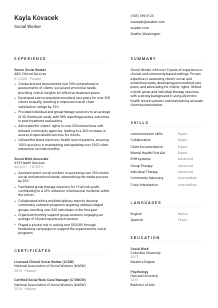
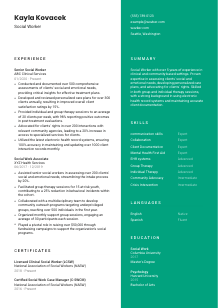
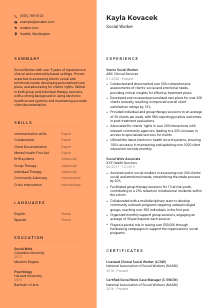
Stitching social fabric, but your resume feels a bit frayed? Check out this Social Worker resume example, put together with Wozber free resume builder. It shows how to thread your community care skills through the job needle, creating a career tapestry that weaves support and empathy in all the right places!
Social work resumes are read through the lens of real client responsibility. Hiring teams want to see how you assess psychosocial needs, build care plans, document interventions, and work with families, providers, and community agencies without losing accuracy or compassion. If those parts are buried under broad statements about helping people, your actual practice can be easy to miss.
A tailored resume changes that reading immediately by making your caseload scope, clinical setting, documentation habits, and license level visible in the language employers already use. Wozber's free resume builder helps you shape an ATS-compliant resume around those terms so screening systems and hiring managers can quickly connect your background to the role, whether that means assessment, therapy, discharge planning, advocacy, or care coordination.
For social work roles, the header does more than identify you. It tells the employer whether you are reachable, licensed for the market, and already aligned with practical requirements such as location and professional title. Keep it clean, direct, and easy to verify.
Place your full name at the top in a clear, readable format. Use the same version of your name across your resume, license records, LinkedIn profile, and application portal so there is no confusion when employers cross-check credentials or references.
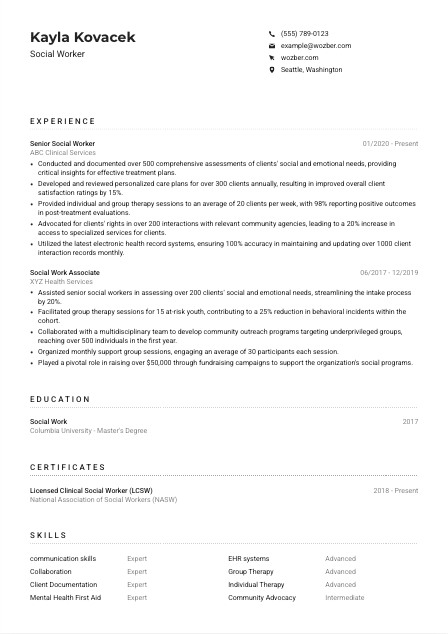
Add "Social Worker" directly under your name, or a more specific version when it fits your background, such as "Clinical Social Worker" or "Medical Social Worker." In the example resume, the title stays simple because it matches the posting directly and makes the intended role obvious at a glance.
List the phone number and email address you actively monitor. Social work hiring often moves through screening calls, interview scheduling, and credential follow-up, so missed messages can slow the process.
If the employer specifies a city or state, include it. Here, "Seattle, Washington" matters because the job asks for a candidate already located there. For other roles, city and state are usually enough unless relocation or multi-state licensing is relevant.
A LinkedIn profile can help when it supports your resume with the same work history, license details, or community-facing work. Personal websites are less common in social work, so include one only if it contains relevant publications, presentations, program work, or professional advocacy content.
Do not include age, marital status, gender, photo, or other non-job-related details. Social work resumes gain strength from licensure, setting, population served, and case outcomes, not from personal identifiers that do not help with hiring decisions.
A focused personal details section should confirm who you are, how to reach you, and whether you meet practical requirements such as title and location. That gives the employer a clean starting point before they review your clinical work, care coordination, and documentation experience.




This section carries the most weight for a Social Worker resume. Employers look for evidence that you can assess needs, manage documentation, collaborate across disciplines, and move clients toward safer, more stable outcomes. Your bullets should reflect actual practice, not generic descriptions of being compassionate or supportive.
Before you write or revise bullets, identify the work patterns in the job description. For this role, that includes assessments, individualized care plans, therapy, referrals, advocacy, and accurate EHR documentation. Once those themes are clear, rewrite your experience so the employer sees direct overlap instead of having to infer it.
List each position in reverse chronological order and make the basics easy to scan. Social work hiring often involves multiple reviewers, including HR and clinical leaders, so clarity helps everyone read your background the same way.
Most social work resumes say they conducted assessments or developed care plans. Go further and show volume, scope, and results. The example does this well by citing more than 500 assessments, 300 care plans reviewed annually, and 1000 client records maintained monthly. Metrics like caseload volume, therapy sessions per week, referral access gains, attendance, or satisfaction improvements make your work more concrete when they reflect real practice.
Highlight the parts of your work that show how you operated with clients and the larger care network. That can include individual or group therapy, crisis intervention, discharge planning, family meetings, school coordination, housing referrals, or advocacy with community agencies. One of the strongest bullets in the sample ties advocacy to a 20% increase in access to specialized services, which shows both client-facing work and system navigation.
Do not treat every past role equally. Keep the bullets that connect to the population, setting, and workflow of the job you want now. If you are targeting a clinical or medical social work position, bring forward assessment, treatment planning, interdisciplinary collaboration, and EHR-based documentation. Older fundraising or general outreach work can stay, but it should not crowd out the client-care experience the employer is hiring for.
Your experience section should show what kind of social work you have actually done, who you served, how you documented it, and what changed because of your involvement. When those details are specific, a hiring team can picture you handling their caseload, care planning, and agency coordination work with much less guesswork.
Education carries particular weight in social work because degree level is tied to scope of practice, licensure, and eligibility for many clinical roles. This section should make your academic path easy to confirm, especially when the posting specifies a Master of Social Work.
When a posting calls for a Master's degree in Social Work, make sure your MSW is unmistakable. List the degree and field exactly and place it before less relevant education if needed. In the example, the Columbia University Master's Degree in Social Work directly answers one of the core requirements.
Use a consistent format so reviewers can confirm your qualifications quickly. For licensed social work roles, they mainly need to see the degree, field, school, and in many cases the graduation date.
If you are earlier in your career, selected coursework, practicum placements, or capstone work can strengthen this section. Focus on clinically relevant areas such as mental health, trauma, case management, crisis intervention, family systems, or medical social work rather than listing every academic topic.
Academic honors, research assistance, or leadership in social justice, counseling, or community service organizations can add value when they connect to your professional direction. Keep these details brief and relevant, especially if you already have several years of post-degree practice.
If you have completed continuing education that materially supports your target role, you can mention it here or in certifications, depending on the format of your resume. Training in trauma-informed care, suicide prevention, substance use, or healthcare navigation can be worth surfacing when it supports the jobs you are targeting.
For social work roles, education is not background filler. It confirms that you meet the academic threshold for supervised practice, licensure, and clinical responsibility. Present it clearly so the reader can move from your credentials to your client work without stopping to decode your qualifications.
In social work, credentials often determine whether you can be hired at all. A license such as LCSW or LMSW can carry more weight than an optional certificate, especially in clinical, hospital, and behavioral health settings. This section should make required credentials visible fast.
Start with the license or certification the posting names, especially when it is mandatory for practice in that setting or state. Here, the role asks for a valid social work license such as LCSW or LMSW, so that credential should appear before broader professional development items.
Include certifications that support the work you want to do now. Case management, trauma-informed care, crisis response, behavioral health, or substance use credentials can strengthen your profile when they align with the employer's population or care model. In the example, the LCSW and Certified Social Work Case Manager credentials both reinforce clinical credibility and service coordination.
Include dates so employers can tell whether a credential is current. That matters in regulated roles where expired licensure can stop an application from moving forward, even when the rest of the resume is strong.
Use this section to show that your training has kept pace with practice standards, documentation demands, and specialized populations. A short list of current, relevant credentials is usually stronger than a long list of outdated workshops that do not relate to your target role.
Licenses and focused certifications help employers confirm that you can step into the level of client care the role requires. Keep this section current, easy to scan, and centered on the credentials that matter most for your setting and scope of practice.
The best social work skills sections read like a snapshot of how you actually work. Employers expect a mix of clinical, interpersonal, documentation, and systems-facing abilities, especially when roles involve treatment planning, EHR use, therapy, and coordination with outside agencies.
Start with the job description and pull out the capabilities the employer named or implied. In this case, that includes assessment, communication with diverse populations, individualized care planning, therapy, advocacy, referrals, and EHR proficiency. Mirror that wording when it matches your experience so both ATS screening and human review pick up the connection.
Lead with the skills that drive performance in the target setting. For a clinical social work opening, that often means psychosocial assessment, case management, individual and group therapy, crisis intervention, treatment documentation, interdisciplinary collaboration, and EHR systems. The example skill list works best where it prioritizes documentation, therapy, communication, and EHR use over less central extras.
Group or order your skills so the section is easy to scan in a few seconds. Favor concrete terms over broad traits. "Client Documentation," "Group Therapy," and "Community Advocacy" tell an employer more than general claims such as "people skills" or "hard worker." If you use proficiency labels, apply them consistently and only where they reflect real confidence in practice.
A hiring team should be able to glance at your skills section and understand the kind of caseload, documentation, and client interaction you are prepared to manage. Keep it focused on practical social work capabilities, not generic strengths that could belong on any resume.
Language skills can materially affect social work practice. They shape intake quality, rapport, family communication, and access to services, especially in settings that serve multilingual communities. Present them clearly, with the same care you use when documenting client communication capacity.
If the posting states a required language, list it first with an honest proficiency level. This role specifically requires the ability to understand and speak English, so English should be placed at the top of the section.
Put the language you use most confidently in professional settings first. For many applicants, that will be English. Clear ordering helps employers quickly confirm whether you can handle assessments, therapy sessions, documentation, and interagency communication in the required language.
Additional languages can strengthen your application, particularly in community health, school social work, hospital settings, or outreach-focused roles. In the example, Spanish adds practical value because it suggests broader access to clients and families, even though the posting only requires English.
Choose familiar terms that can be understood quickly by recruiters and clinical supervisors.
Only emphasize additional languages when they genuinely support the work. If you have used another language in intake, counseling support, community outreach, or family meetings, that relevance makes the language section much more credible than listing languages with no practical connection to your experience.
Language ability matters most when it improves communication, trust, and service access. Present your proficiency clearly so employers can judge where you can work independently and where interpretation or additional support may still be needed.
For Social Worker roles, the summary should quickly answer three questions: how long you have practiced, what kind of settings or populations you know, and which core functions you can handle from day one. This is where you frame your experience before the reader gets into the full record.
Review the posting and identify the few requirements that should shape your opening paragraph. For this position, the summary should reflect clinical or medical social work experience, assessment, care planning, therapy, advocacy, and EHR documentation. That gives the reader an immediate map of your relevance.
Start with a concise line that states your profession, years of experience, and environment. The sample summary does this effectively with "over 5 years of experience in clinical and community-based settings," which tells the employer both seniority and practice context in one sentence.
Follow with two or three strengths that connect directly to the job's daily work. For social work roles, that may include conducting comprehensive assessments, developing individualized care plans, facilitating therapy sessions, coordinating referrals, advocating across agencies, or maintaining accurate client records. Choose the mix that best reflects your own practice.
Aim for three to five lines with specific language and no filler. Skip soft claims that are already assumed in the profession unless you tie them to work, such as rapport-building with diverse populations or accurate documentation in high-volume caseloads. A concise summary works best when it sounds like the opening of a case record: clear, grounded, and informative.
A well-written summary helps the reader understand your level of practice before they reach your detailed experience. When it names your setting, scope, and strongest functions clearly, the rest of the resume lands faster and with more credibility.
You now have a structure that shows more than commitment to helping others. It shows how you assess clients, coordinate care, document accurately, work across agencies, and support measurable progress. Use Wozber's free resume builder to organize that experience into an ATS-friendly resume format that matches the language of the roles you are targeting.
If you want sharper tailoring, use Wozber's ATS resume scanner and AI resume builder tools to compare your draft against the posting, surface missing requirements, and strengthen the wording in key sections. Finish with an ATS-friendly resume template that keeps your license, clinical experience, and client-care outcomes easy to read. Your resume should now make it easy to judge whether you can step into the caseload, documentation, and advocacy demands of the role.




