



Use Wozber and land your dream job
Create Resume
No registration required
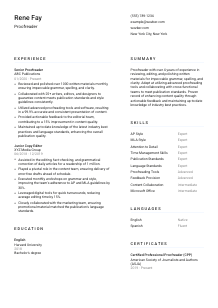
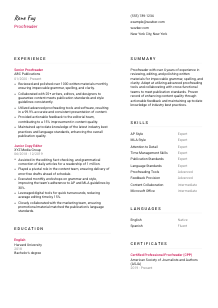
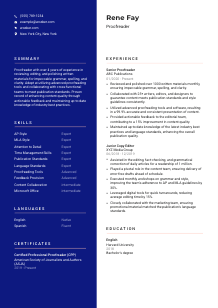
Spotting grammar gaffes, but your resume reads iffy? Learn from this Proofreader resume example, created with Wozber free resume builder. It shows how to align your language-loving skills with job expectations, and land a career where excellence is always underlined, not overlooked!
Proofreading work is judged in tiny margins. One missed style inconsistency, one punctuation slip, or one unclear correction can affect publication quality, brand credibility, and production speed. Your resume needs to reflect that standard from the first line, showing not only that you know grammar and style guides, but that you can protect copy quality under real deadlines.
A targeted resume also helps separate proofreading experience from adjacent writing or editing work. Hiring teams want to see where you handled final review, enforced style standards, used proofreading tools, and improved copy before publication. Wozber's free resume builder supports that tailoring in an ATS-friendly resume format, so your resume surfaces the terminology and editorial scope that make your background readable both to screening systems and to the team reviewing publication-ready work.
For a Proofreader, even the header carries weight. Misspellings, inconsistent formatting, or vague professional labeling can raise doubts before a hiring manager reaches your experience section. Keep this area clean, accurate, and aligned with the practical details the employer asked for.
Use your full name exactly as you want it to appear in interview scheduling and hiring records. Make it easy to read at a glance, with no nicknames, decorative styling, or distracting formatting. In a detail-sensitive role, a clean header quietly reinforces editorial discipline.
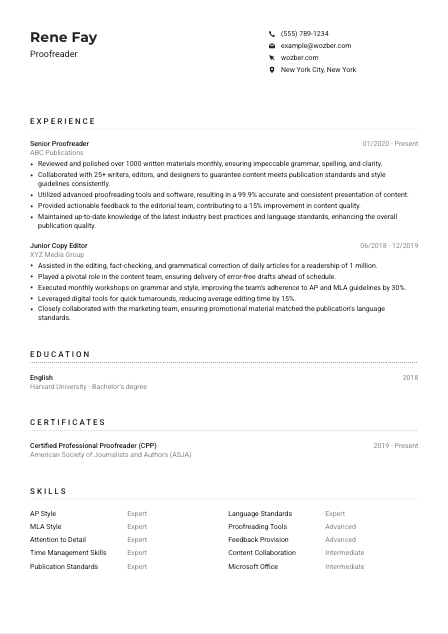
Place "Proofreader" under your name if that is the role you are targeting. This helps position your background immediately, especially if your recent titles include nearby functions such as Copy Editor or Content Editor. In the example resume, the target title is explicit, which removes ambiguity from the start.
Include a current phone number and a professional email address that you check regularly. Use a straightforward email format, ideally based on your name. If a hiring editor wants to move quickly after reviewing writing samples or portfolio links, your contact details should not slow that process down.
If the employer asks for a specific location, list it clearly in your header. Here, the role calls for someone based in New York City, New York, so showing that match is useful and practical. For other proofreading roles, only include location details that support the application instead of adding unnecessary personal information.
Include LinkedIn or a personal site if it supports your editorial background with publication work, portfolio samples, freelance services, or certifications. Make sure the content is current and polished. A broken link, outdated profile, or inconsistent job history creates exactly the kind of avoidable error proofreading teams are hired to catch.
Your header should confirm that you are reachable, professionally presented, and aligned with any stated logistics. For a proofreading application, precision starts here.




This section carries the most weight because proofreading is evaluated through output. Hiring managers want to see the volume of material you handled, the standards you worked to, the teams you supported, and the quality improvements you contributed to. Focus on work that shows publication-ready review, consistency, and dependable turnaround.
Mark the responsibilities that define the role and echo them through your bullets where they reflect your real work. For proofreading jobs, that usually means final review for grammar, spelling, punctuation, clarity, style-guide adherence, collaboration with writers and editors, and the use of proofreading software. This keeps your experience section anchored in actual editorial workflow rather than generic content support.
List your most recent position first, followed by earlier relevant roles. Include job title, employer, and dates for each entry. This format helps hiring teams quickly see whether you have recent hands-on proofreading experience and whether your background meets requirements such as 3+ years in professional editorial work.
Each bullet should show the kind of copy you handled and the result of your work. Strong proofreading bullets mention publication materials, review volume, error reduction, style consistency, turnaround speed, or improvements in editorial quality. The example resume does this well with details like reviewing more than 1000 written materials monthly and giving feedback that improved content quality by 15%.
Quantify work where the metric makes sense. Useful proofreader metrics include number of documents reviewed, monthly output, accuracy rate, turnaround improvement, readership scale, team size, or adherence gains tied to style standards. A line such as "99.9% accurate presentation of content" or "reduced average editing time by 15%" is more persuasive than saying you worked carefully.
Prioritize experience that shows proofreading, copyediting, fact-checking, publication review, or editorial quality control. If part of your background sits in marketing, communications, or content operations, keep the bullets that demonstrate language standards, review workflows, and collaboration with writers or designers. Relevance matters more than listing every task you handled.
This section should make it easy to picture you handling live copy, protecting style consistency, and improving quality without slowing production. Show the editorial scope, the standards, and the results.
Most proofreading openings do not need a long academic narrative, but they do expect a clear match on foundational language training. Present your education so the hiring team can quickly confirm that you meet the posted requirement and that your background supports careful editorial work.
Check the listed education criteria before you write this section. Here, the employer asks for a bachelor's degree in English, Journalism, Communications, or a related field. If you hold one of those degrees, make that match easy to spot instead of burying it in extra detail.
List your degree, field of study, school, and graduation year or date. That is usually enough for proofreading roles. Clear structure matters because this section is often reviewed quickly, especially when the degree serves as a baseline qualification rather than the main hiring differentiator.
If your degree directly supports editorial work, let that alignment do its job. A bachelor's degree in English, like the one shown in the example, speaks naturally to close reading, grammar, textual analysis, and language mechanics. Similar relevance applies to Journalism or Communications degrees with editing-heavy coursework.
Relevant coursework can help if you are earlier in your career or if your degree title is broad. Include subjects such as editing, publishing, rhetoric, technical writing, media law, or style-intensive writing only when they sharpen your fit for the role. If you already have strong proofreading experience, keep the section lean.
Honors, student publication work, writing center roles, or editing leadership can strengthen this section when they reflect attention to language and revision standards. Skip unrelated activities. Every added line should support your case as someone trusted with written material before it goes public.
Your education should confirm that you meet the stated degree requirement and have a solid language foundation. Keep it clear, relevant, and easy to verify.
Certifications are not mandatory for every proofreading job, but they can add weight when they show formal training in proofreading standards, editing practice, or language mechanics. Use this section to highlight credentials that support the kind of detail-focused work the role requires.
Start with credentials the employer already recognizes. In this case, Certified Professional Proofreader "CPP" is listed as a plus, so it deserves clear placement if you have it. When a certificate appears in the job description, it can help your resume match both ATS screening and human review more closely.
Focus on certifications tied to proofreading, copyediting, editing, publishing, or professional writing standards. A short, relevant list works better than a broad catalog of unrelated training. This section should strengthen your editorial profile, not dilute it.
Add the issuing organization and the completion or active date so the credential feels complete and current. The example resume does this by naming the issuing body for the CPP certification and showing the date range. That level of detail gives the certificate more credibility.
Proofreading standards evolve through changes in house style, digital publishing workflows, and language usage. If you maintain certifications or complete continuing education in editorial practice, style guides, or publishing tools, include that progression. It shows that your standards are current, not fixed in the past.
Use this section to show extra commitment to editorial quality and professional standards. For experienced proofreaders, the right credential can reinforce trust quickly.
Proofreading resumes are screened for precision, but also for practical editorial capability. Your skills section should show the standards, tools, and working habits you actually use, from style guides to time management under deadline. Keep it focused on what helps you deliver accurate copy consistently.
Start with the skills the employer calls out directly. In this posting, that includes grammar, punctuation, style rules, attention to detail, time management, collaboration, and proofreading software. These are the terms most likely to matter in ATS optimization and in a first editorial scan of your resume.
Include a mix of hard and soft skills that reflect how proofreading is actually done. Style-guide knowledge such as AP, MLA, and Chicago belongs here, along with proofreading tools, publication standards, and workflow strengths like deadline management and feedback delivery. The example resume handles this well by combining editorial standards with practical collaboration and software use.
Do not overcrowd this section with general office skills unless they support the work directly. A hiring editor needs to see proofreading judgment first. Choose the skills you would expect to use while reviewing copy, marking corrections, maintaining consistency, and communicating changes clearly to writers or designers.
Your skills list should quickly confirm that you know the rules, can work within editorial systems, and can keep quality high under deadline.
For a Proofreader, language proficiency can matter beyond basic communication. Additional languages may support multilingual publications, translated content review, international audiences, or cross-market editorial teams. Include this section when it adds practical value to the kind of content you may be asked to review.
Some proofreading jobs focus entirely on English-language content, while others support bilingual publications, global marketing, or translated materials. If the posting names a required or preferred language, place it prominently and state your proficiency clearly.
List languages in the order that best supports the position. For many proofreading roles, English will lead because it reflects the primary working language. If a second language is relevant to the audience or publication mix, place it next rather than treating it like an afterthought.
Even when not required, another language can add value if the employer publishes for multilingual readers or works across regions. In the example resume, fluent Spanish broadens the candidate's usefulness without distracting from core English proofreading expertise.
Choose clear terms such as "Native," "Fluent," "Intermediate," or "Basic." Avoid overstating your ability. In language-sensitive roles, inflated claims are easy to spot once live editing or review tasks begin.
If you include this section, think about the kind of material the employer produces. Language skills are most persuasive when they suggest practical editorial value, such as reviewing localized copy, checking translated assets, or supporting audience-specific tone and terminology.
When they are relevant, language skills can widen your editorial range and show stronger support for diverse content environments. Keep the section accurate and purposeful.
Your summary should read like the opening note from someone trusted with final copy. In a few lines, show your years of experience, the editorial standards you work to, and the kind of results you deliver. Keep it specific enough to separate you from general content professionals.
Before writing, note the recurring priorities in the posting. For proofreading jobs, that often includes style accuracy, clarity, consistency, turnaround discipline, collaboration with editorial teams, and familiarity with proofreading tools. Those themes should shape your opening language.
Lead with a direct description such as "Proofreader with 4+ years of experience" or the equivalent truth of your background. This gives immediate context and helps the reader place your experience level quickly. The example summary does this effectively by opening with years of experience and core proofreading functions.
Mention the capabilities that matter most for the target position, such as command of AP, MLA, or Chicago, high-volume document review, editorial collaboration, or actionable feedback that improves content quality. Choose points you can support elsewhere in the resume so the summary feels credible and connected.
Aim for a compact paragraph, usually three to five lines. Avoid broad claims about passion or perfectionism. A better summary names the work you do, the standards you apply, and the value you bring to publication quality. Clear language suits the profession better than grand phrasing.
After reading these opening lines, a hiring team should already understand your proofreading background, your command of editorial standards, and the kind of copy environment you can step into with confidence.
A proofreader's resume should feel edited before anyone says a word about it. Consistent formatting, accurate language, clear metrics, and direct alignment with the posting all matter because they reflect the same judgment you will use on published copy.
Use Wozber's free resume builder to shape that content into an ATS-compliant resume, then refine the language with Wozber's ATS resume scanner so the right style, proofreading, and editorial keywords appear where they naturally belong. The final result should make one thing easy to see: you can protect quality on the page.




